
Breakfast & Brunch
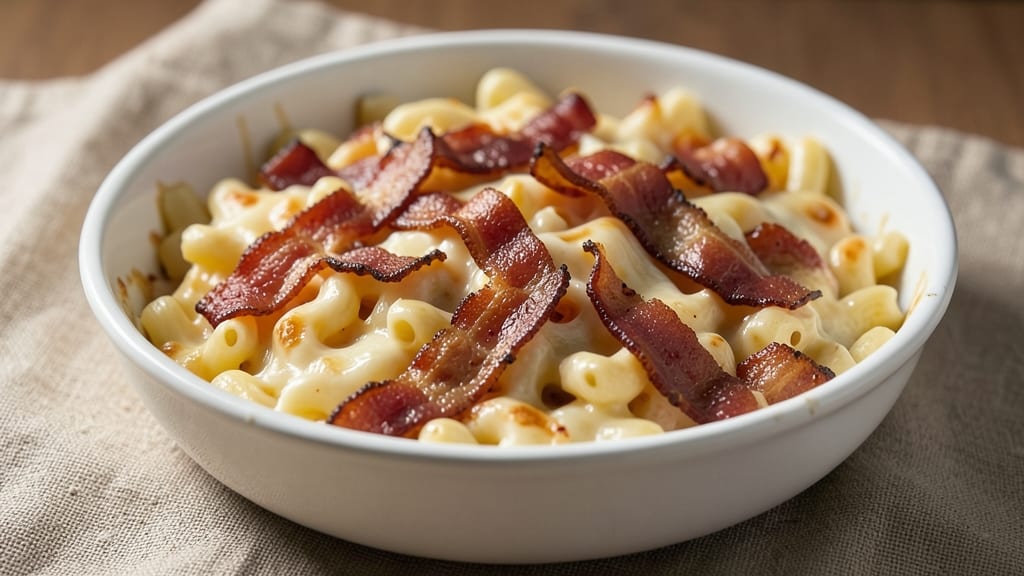
This bacon mac and cheese recipe stovetop delivers the perfect balance of crispy bacon bites and velvety melted cheese—all made in one pot. The secret lies in cooking the bacon first to render its fat, which creates a rich base for the creamy cheese sauce.
With just a few simple ingredients and about 30 minutes, you'll have a comforting, restaurant-quality dish ready to serve.
The stovetop method ensures a smooth, lump-free sauce by whisking melted butter and flour into a roux before adding milk and cheese gradually. This technique guarantees a creamy texture without the need for a blender.
The bacon adds a smoky depth, while sharp cheddar and a touch of cream cheese create the perfect melty fusion.
By the time you're done, you'll have a crispy-edged, cheesy, and satisfying dish that's ideal for weeknight dinners or weekend brunch. The bacon stays perfectly crisp, and the mac and cheese is rich enough to stand alone or pair with a simple side salad.
This recipe is foolproof and designed to impress.
Optional garnishes like chopped chives or extra crispy bacon bits add freshness and texture. The best part? Every bite combines the smoky, salty crunch of bacon with the creamy, cheesy goodness of macaroni—making it a crowd-pleaser every time.
Ingredients for bacon mac and cheese recipe stovetop
Crispy bacon, creamy cheese, and perfectly cooked pasta—this stovetop mac and cheese is a game-changer.
| Ingredient | Amount | Notes |
|---|---|---|
| Elbow Macaroni 🍝 | 12 oz | Dry, medium or short elbow |
| Thick-Cut Bacon 🥓 | 8 oz | Center-cut, cut into 1/2-inch pieces |
| Unsalted Butter 🧈 | 4 tbsp | Cold, cut into small cubes |
| All-Purpose Flour 🌾 | ¼ cup | Sifted, for smooth roux |
| Sharp Cheddar Cheese 🧀 | 2 cups | Shredded, block preferred |
| Cream Cheese 🧀 | 4 oz | Softened, for creaminess |
| Whole Milk 🥛 | 2 cups | Warm, not hot |
| Yellow Onion 🧅 | ½ whole | Diced, for depth |
| Garlic Cloves 🧄 | 2 cloves | Minced, fresh preferred |
| Kosher Salt 🧂 | 1 ½ tsp | Diamond Crystal preferred |
| Ground Black Pepper 🌶️ | ½ tsp | Freshly cracked |
| Fresh Chives 🌿 | 2 tbsp | Chopped, for garnish |
The bacon is non-negotiable here—thick-cut center-cut stays crispy and renders the best fat for your sauce. Costco or Trader Joe's always have the good stuff in bulk. Look for pieces with good marbling; they crisp up faster and taste richer. The sharp cheddar makes all the difference—Kraft or Cabot are solid choices, but a block of Parmigiano-Reggiano mixed in takes it to the next level. Freshly shred your own cheese if you can; pre-shredded gets clumpy. For the pasta, De Cecco or Barilla hold up best to the creamy sauce without turning mushy.
No thick-cut bacon? Regular bacon cut into 1/2-inch pieces works in a pinch, but it won’t be as crispy. Swap whole milk for half-and-half or heavy cream if you want extra richness, but it’ll make the sauce heavier. The cream cheese is what gives this sauce that ultra-smooth texture—Philadelphia brand is foolproof. No cream cheese? Add an extra 1/4 cup of sharp cheddar for a similar melt. The onion and garlic are flavor anchors—don’t skip them, even if you’re in a hurry. For a smokier depth, add 1/2 tsp smoked paprika to the roux. And if you’re feeling fancy, toss in 1/4 cup cooked jalapeños for a little kick.
This dish tastes even better the next day—reheats beautifully in the microwave or oven. Store leftovers in an airtight container for up to 5 days, or freeze portions for 3 months. The bacon stays crispy if you reheat it in a 350°F oven for 10 minutes—just sprinkle a little water on top first. For meal prep, cook the mac and cheese without the bacon, then crisp it fresh when serving. The cheese sauce thickens as it cools, so add a splash of milk when reheating if it seems too stiff. Garnish with extra crispy bacon bits and fresh chives right before serving—trust me on this.
Why You'll Love This Recipe
- One-Pot Magic: I swear by this recipe—no dirty dishes, just one pot, one spatula, and boom, dinner’s done. The bacon renders right into the cheese sauce while the pasta cooks, so you’re not juggling three pans like some kind of culinary acrobat.
- Crispy-Creamy Obsession: That thick-cut bacon? It gets properly crispy, then melts into the sauce for layers of smoky, salty goodness. The sharp cheddar? It’s the star—gooey, tangy, and just sharp enough to cut through the richness. (Yes, even on a Tuesday night.)
- Leftovers That Don’t Suck: Between us, most mac and cheese gets sad in the fridge. Not this one. The stovetop method keeps it creamy but not gloppy, so reheating is a breeze—microwave or stovetop, it’s still ridiculously good. Pack it for lunch or freeze it for lazy days.
- Budget Feast for Everyone: Elbow mac, thick-cut bacon, and a block of cheddar stretch this dish to feed four for under $10. Honestly, it’s my go-to when friends drop by unannounced or the kids demand “real food” after pizza night. Cheap, filling, and no one complains.
Step-by-step instructions for crispy bacon mac and cheese
Here's how to make restaurant-quality stovetop mac and cheese with perfectly crispy bacon and ultra-creamy sauce.
Cook the Bacon Until Crispy
Place the 8 oz thick-cut bacon in a large, deep skillet over medium heat. Let it cook undisturbed for 8-10 minutes, flipping occasionally, until the bacon is deep golden brown and crispy. You'll want those fat pockets to render out completely—this is the secret to flavorful sauce later.
Once crispy, use a slotted spoon to transfer the bacon to a paper towel-lined plate. Leave the rendered fat in the skillet—this is liquid gold for your sauce. You should have about ¼ cup of bacon fat remaining. If you need more fat, add 1 tablespoon of the unsalted butter to the skillet now.
Build the Creamy Cheese Sauce
Reduce the heat to medium-low and add the ½ whole yellow onion and 2 cloves garlic cloves to the skillet with the bacon fat. Cook for 3-4 minutes until the onion is translucent and the garlic is fragrant—don't let it brown or it'll turn bitter.
Sprinkle the ¼ cup all-purpose flour over the onions and garlic, stirring constantly for 1-2 minutes to cook off the raw flour taste. Slowly pour in the 2 cups whole milk, whisking continuously to prevent lumps from forming. Let the mixture simmer for 3-4 minutes until it thickens slightly but isn't pasty.
Add Cheeses and Finish the Sauce
Reduce the heat to low and gradually add the 2 cups sharp cheddar cheese and 4 oz cream cheese, stirring constantly until completely melted and smooth. The sauce should be thick and velvety, coating the back of a spoon. If it's too thick, whisk in 1-2 tablespoons of warm milk to reach your desired consistency.
Season with 1.5 teaspoons kosher salt and ½ teaspoon freshly cracked black pepper. Taste and adjust seasoning—you might need a bit more salt to balance the richness. Keep the sauce warm over low heat while you prepare the pasta.
Cook and Combine the Pasta
Bring a large pot of well-salted water to a boil and cook the 12 oz elbow macaroni for 1 minute less than the package instructions (usually 10-11 minutes). Reserve ½ cup pasta water before draining, then add the drained pasta to the skillet with the cheese sauce.
Toss everything together vigorously for 1-2 minutes until the pasta is fully coated. If needed, add 1-2 tablespoons of reserved pasta water to loosen the sauce. The pasta should be tender but still have a bite, and the sauce should cling beautifully to each strand.
Serve with Crispy Bacon and Fresh Chives
Transfer the mac and cheese to serving bowls, top each portion with 2 ounces of crispy bacon, and garnish with ½ tablespoon chopped fresh chives. The contrast of crispy bacon with the creamy, cheesy pasta is what makes this dish irresistible.
Serve immediately while the bacon is still crispy and the sauce is hot. The first bite should deliver salty, smoky bacon, sharp cheddar, and creamy texture all in one perfect mouthful. Leftovers? Reheat with a splash of milk to restore creaminess—just don't let it sit too long or the bacon will soften.
Pro Tips For Making Bacon Mac And Cheese Recipe Stovetop
- CRANK THE HEAT FOR BACON: Start your thick-cut bacon in a cold, dry skillet—no oil needed. Once it hits the pan, crank the heat to medium-high and resist the urge to poke it; the fat will render faster and the edges will crisp up properly. (I used to rush this, and my bacon always ended up greasy instead of crisp.)
- GRATE CHEESE LIKE A PRO: Use a box grater with medium holes for sharp cheddar—it melts faster and distributes evenly. Skip the food processor unless you want a gluey mess; pre-shredded cheese has anti-caking agents that soak up moisture. (Yes, I’ve learned this the hard way.)
- DON’T DUMP THE BACON FAT: After cooking the bacon, pour the rendered fat into a measuring cup—you’ll need about 2 tablespoons for the roux. This adds flavor without extra oil, and it’s a great shortcut if you’re lazy about measuring. (Your future self will thank you.)
- STIR CONSTANTLY DURING ROUX: Once you add flour to the butter and bacon fat, stir like your life depends on it—especially in the first 2 minutes. If you walk away, even for 30 seconds, you’ll get lumps or a burnt roux. (I’ve burned three batches; now I set a timer.)
Essential equipment for bacon mac and cheese recipe stovetop
Skillet Selection
Your choice of pan makes all the difference. I always use a 12-inch cast iron skillet for its excellent heat retention and even cooking. A heavy-bottomed stainless steel pan like All-Clad works too—just avoid nonstick, as the high heat can damage the coating.
The skillet needs to be large enough to fit the macaroni comfortably without crowding, which can lead to uneven cooking. 🔥
Whisk Essentials
Invest in a balloon whisk with a long handle for this recipe—it's perfect for creating a smooth roux and preventing lumps in the cheese sauce. I recommend the OXO Good Grips Balloon Whisk for its durability and comfortable grip.
A French whisk also works well, but the balloon whisk's wider surface area makes quick work of blending ingredients. Keep your whisk clean and dry between uses to extend its life.
Measuring Tools
Precision matters when working with cheese and milk ratios. Use a digital kitchen scale for accurate measurements of cheese (especially the cream cheese) to ensure the perfect sauce consistency. For dry ingredients, a stainless steel measuring cups set like Farberware gives you the most accurate results.
A fine-mesh strainer comes in handy if you're shredding your own cheese to catch any stray bits that could make your sauce grainy.
Pasta Tools
Cooking pasta perfectly requires the right tools. A large pasta pot with a tall, narrow shape (like Cuisinart's 8-quart pot) ensures enough water to prevent the pasta from sticking. For draining, a fine-mesh colander with long handles lets you easily transfer the pasta to your skillet.
I also recommend a wooden pasta spoon for stirring—it won't scratch your skillet like metal utensils can. A ladle helps when reserving pasta water for adjusting sauce consistency.
Cheese Shredder
Freshly shredded cheese makes all the difference in texture. A box grater works fine, but for efficiency, I use a mandoline with a cheese attachment—it gives you perfectly even shreds every time. If you don't have one, a food processor with a grating blade is a great alternative.
Just be sure to pulse the cheese in short bursts to avoid melting it. For the cream cheese, I find a plastic spatula works best for cutting it into small cubes before adding to the sauce.
Serving Essentials
Presentation matters! Use deep, oven-safe bowls (like Corelle Stoneware) to serve your mac and cheese—this keeps everything hot while you're serving. A small offset spatula helps transfer the dish neatly.
For garnishing, keep fresh chives in a small jar of water on your counter and use sharp kitchen shears to chop them quickly. A tongs makes it easy to add crispy bacon bits on top without breaking them. 💫
Nutrition facts
Frequently asked questions
Can I make this bacon mac and cheese without cream cheese?
Replace the 4 oz cream cheese with an extra ½ cup sharp cheddar and 1 tablespoon unsalted butter for richness. The sauce will still be creamy, though slightly thicker. For extra smoothness, whisk in 2 tablespoons milk while heating to compensate for the missing creaminess.
Why did my cheese sauce get grainy?
Graininess usually happens from three things: uneven heating, low-quality cheese, or adding cheese too fast. Always melt cheeses gradually over low heat while whisking constantly. Pre-shredded cheese contains anti-caking agents that make sauces grainy—use a box grater for block cheese instead. If it happens, strain the sauce through a fine-mesh sieve to remove any lumps.
Can I use a different type of pasta?
Elbow macaroni is ideal for its shape, but you can swap for penne, cavatappi, or cavatappi shells—all hold sauce well. Avoid long pasta like spaghetti or linguine, as it won't cling as nicely. For a fun twist, try rotini or fusilli, but reduce cooking time by 1 minute to prevent overcooking. The sauce consistency should remain the same regardless of shape.
How do I keep the bacon crispy when reheating?
Store leftovers with the bacon on top of the mac and cheese. To reheat, cover with a damp paper towel and microwave for 30 seconds, then finish in a 350°F oven for 5-7 minutes. The steam from the towel keeps the bacon crispy while warming the pasta. For extra crunch, add fresh bacon bits on top before serving.
What's the best way to make this dish ahead of time?
Prepare the mac and cheese without the bacon and let it cool completely. Store in an airtight container for up to 5 days or freeze for 3 months. Cook fresh bacon separately and add it just before serving. If reheating from frozen, thaw overnight in the fridge, then warm through on the stovetop with a splash of milk to restore creaminess.