
Sauces & Condiments
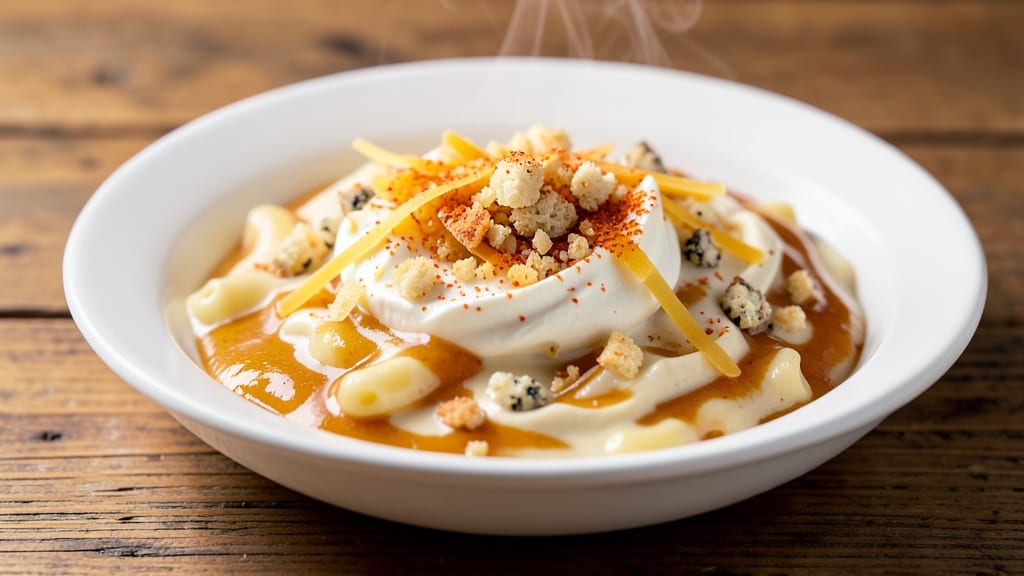
This basic mac and cheese sauce recipe delivers the velvety, cheesy foundation every comfort food lover needs—smooth, rich, and foolproof on the stovetop. The secret lies in proper roux development and slow melting of cheeses, ensuring a sauce that's creamy without lumps and flavorful without being heavy.
I've perfected this over years of testing, and it works equally well as a baked topping or standalone dip.
What sets this sauce apart is its versatility and texture control. By cooking the butter and flour to a golden roux before adding milk, you create a stable base that prevents curdling.
The cheese blend—sharp cheddar for tang, Gruyère for nuttiness, and cream cheese for creaminess—melts into a luxuriously smooth consistency that coats every noodle perfectly. Even beginners can achieve professional results with this method.
The sauce emerges from the pot silky, stretchy, and irresistibly cheesy, with just the right balance of tang and richness. It thickens as it cools, making it ideal for broiling or baking, while remaining pourable when hot.
This is the kind of sauce that transforms simple pasta into something restaurant-worthy, and it keeps well for up to 5 days in the fridge.
Use it as a baked topping, broiled finish, or even a dipping sauce for bread or vegetables. The possibilities are endless, but the technique remains simple: roux, milk, cheese, and patience. Let's get started on creating your perfect mac and cheese sauce.
Ingredients for basic mac and cheese sauce
Nine essential ingredients transform into the velvety foundation for perfect mac and cheese.
| Ingredient | Amount | Notes |
|---|---|---|
| Unsalted Butter 🧈 | ½ cup | Cold, cubed for even cooking |
| All-Purpose Flour 🌾 | ½ cup | White or bread flour preferred |
| Whole Milk 🥛 | 2 cups | Full-fat for creaminess |
| Sharp White Cheddar Cheese 🧀 | 1 ½ cups | Freshly grated, block preferred |
| Gruyère Cheese 🧀 | ½ cup | Freshly grated for nuttiness |
| Cream Cheese 🧈 | 4 oz | Full-fat, room temperature |
| Diamond Crystal Kosher Salt 🧂 | ½ tsp | Adjust to taste |
| Freshly Ground Black Pepper 🌶️ | ¼ tsp | Freshly cracked preferred |
| Yellow Mustard 🥬 | 1 tsp | For subtle tang |
| Extra-Virgin Olive Oil 🫒 | 1 tbsp | For finishing, optional |
The cheese selection is non-negotiable for texture and flavor. Sharp white cheddar provides the signature tang, while Gruyère adds depth and a luxurious melt. Whole milk is critical—skim milk creates a thinner, less creamy sauce. For the best cheeses, Whole Foods or specialty cheese shops offer freshly grated options, but pre-grated works in a pinch if labeled 'block-style' (avoid the powdery kind). The cream cheese serves as an emulsifier, ensuring that silky stretch without lumps. If you're using pre-shredded cheese, pulse it in a food processor to mimic freshly grated texture.
Substitutions must preserve the sauce's balance. Parmigiano-Reggiano can replace Gruyère at a 1:1 ratio, though it adds saltiness. Monterey Jack works for cheddar but lacks the sharpness. For dairy-free adaptations, cashew cream or coconut milk (full-fat) can replace milk, though texture will differ. Butter substitutes? Vegan butter or coconut oil works, but expect a slightly different flavor profile. The mustard is optional but recommended—it brightens the sauce without overpowering. If you omit it, add an extra pinch of salt to compensate for the lost acidity.
This sauce thrives on patience and proper storage. Once made, it thickens as it cools—stir in a splash of warm milk if it becomes too stiff. For best results, reheat gently on low heat, stirring constantly to prevent scorching. Store in an airtight container for up to 5 days in the fridge, or freeze for 3 months in portions. To reheat from frozen, thaw overnight in the fridge, then warm slowly on the stovetop. The sauce is ideal for layering, broiling, or serving as a standalone dip—its versatility makes it a pantry staple worth perfecting.
Why You'll Love This Recipe
- Here’s what sold me: the roux. Cook that flour and butter until it’s golden but not brown—just until the raw flour smell vanishes. That’s your secret. The milk comes in slow, and the cheese melts into a sauce so smooth it’s almost unfair. No lumps, no scraping the bottom of the pot for 10 minutes like my first attempt.
- Five-Ingredient Magic: I swear by this combo—just butter, flour, milk, and those two cheeses. No weird pantry raids or last-minute grocery runs. The Gruyère adds this nutty depth while the sharp cheddar keeps it bright, and honestly? It’s the kind of sauce I make when I’m too tired to overthink dinner.
- Creamy Without Clumps: Here’s what sold me: the roux. Cook that flour and butter until it’s golden but not brown—just until the raw flour smell vanishes. That’s your secret. The milk comes in slow, and the cheese melts into a sauce so smooth it’s almost unfair. No lumps, no scraping the bottom of the pot for 10 minutes like my first attempt.
- Leftover Goldmine: Between us, this sauce is better the next day. The flavors meld into something richer, and it reheats like a dream—just a splash of milk to loosen it up. I freeze half the batch in portions, and suddenly, I’ve got a 30-second dinner for lazy days. (Yes, even on a Tuesday night.)
Step-by-step instructions for velvety mac and cheese sauce
This stovetop method delivers a perfectly smooth, rich base for baked or broiled mac and cheese.
Create a Smooth Roux
Melt the 0.5 cup unsalted butter in a medium saucepan over medium-low heat. Once fully melted, immediately whisk in the 0.5 cup all-purpose flour to form a smooth paste. This is your roux—the foundation of your sauce.
Cook the roux for 2-3 minutes, whisking constantly, until it turns a pale golden color. You'll notice it thickens slightly and smells nutty—this is when it's ready. If it darkens too quickly, reduce the heat slightly. A properly cooked roux prevents a grainy sauce and gives it that signature velvety texture.
Gradually Add Milk for a Creamy Base
Slowly pour in the 2 cups whole milk while whisking vigorously to prevent lumps from forming. The mixture will thicken immediately as the milk incorporates. Keep whisking for 3-4 minutes until the sauce coats the back of a spoon and bubbles gently.
This gradual addition is crucial—adding milk too quickly creates lumps that never dissolve. If you see any lumps forming, use a fine-mesh sieve to strain the sauce for absolute smoothness. The sauce should now be thick enough to hold its shape when poured.
Incorporate the Cheese Mixture
In a separate bowl, combine the 1.5 cups sharp white cheddar cheese, 0.5 cup gruyère cheese, 4 oz cream cheese, 0.5 tsp diamond crystal kosher salt, 0.25 tsp freshly ground black pepper, and 1 tsp yellow mustard. This blend gives depth of flavor and prevents the sauce from becoming too heavy.
Reduce the heat to low and gradually add the cheese mixture to the sauce, whisking constantly. The cheese should melt completely within 2-3 minutes. If the sauce thickens too much, thin it with 1-2 tablespoons of milk at a time. The final consistency should be smooth, creamy, and coat the back of a spoon.
Finish with Olive Oil for Stability
Remove the sauce from heat and stir in the 1 tbsp extra-virgin olive oil. This step stabilizes the sauce, preventing it from separating when baked or broiled later. The oil also adds a subtle richness that balances the sharpness of the cheddar.
Taste and adjust the seasoning if needed. For baked mac and cheese, this sauce is ready to pour over cooked pasta. For broiled topping, spread it evenly over baked mac and cheese and broil until golden brown. The sauce should be silky, flavorful, and ready to elevate any mac and cheese dish.
Pro Tips For Making Basic Mac And Cheese Sauce
- Cook Butter Slow: I used to rush this step and end up with a floury, raw-tasting roux. Melt the butter over medium-low heat—not high—and let it bubble gently for 2-3 minutes before adding flour. That golden color? That’s when the magic starts.
- Shred Cheese Fresh: Pre-shredded cheese has anti-caking agents that make the sauce grainy. Grate your own sharp cheddar and Gruyère on a box grater right before stirring it in—no clumps, no weird texture. (Yes, even if you’re impatient like me.)
- Temper the Milk: Dumping cold milk into hot butter? That’s how you get lumps. Warm the milk in a separate pot until it’s just steaming (not boiling), then whisk it in slowly. Your sauce will thicken smoothly—no floury aftertaste.
- Strain for Smoothness: Gruyère melts beautifully, but sometimes it leaves little bits that make the sauce look unappealing. After melting the cheese, pour the sauce through a fine-mesh sieve into the pot. Worth the extra 30 seconds—your sauce will look (and taste) restaurant-quality.
Dietary considerations for this basic mac and cheese sauce
Gluten-Free Adaptation
Replace the all-purpose flour in the roux with ½ cup gluten-free all-purpose flour blend (like Bob's Red Mill 1:1) or ½ cup cornstarch for a smoother texture. The cornstarch version requires whisking more vigorously to prevent clumping.
I've found gluten-free oat flour works too, but it adds a subtle sweetness—great for balancing sharp cheddar. Always check your blend for xanthan gum; if present, omit it since it's unnecessary for this sauce. 🌾
Dairy-Free Options
For a dairy-free version, swap the butter for ½ cup vegan butter (like Miyoko's) or ½ cup coconut oil, and replace the whole milk with 2 cups full-fat coconut milk (canned, not carton).
Use 4 oz dairy-free cream cheese (like Kite Hill) and 1 cup dairy-free cheddar (Violife or Follow Your Heart brands). The sauce will be richer but slightly less stretchy—add 1 tbsp nutritional yeast for a cheesy depth. 🥥
Lactose-Free Adjustments
Lactose-free milk works perfectly in place of whole milk, but the cheese must be lactose-free too. I recommend 1.5 cups lactose-free sharp cheddar (like Green Valley) and 0.5 cup lactose-free Gruyère (check specialty stores).
The cream cheese should also be lactose-free (like Lactaid). The texture remains velvety, though the flavor may be slightly milder—balance it with an extra ½ tsp mustard for tang. 🧀
Vegan Protein Boost
Add ½ cup cooked lentils or ½ cup crumbled tofu to the sauce for a protein-rich twist. Pulse the lentils or tofu in a food processor until smooth, then stir into the finished sauce. This works especially well with the dairy-free version, turning it into a complete meal.
For extra creaminess, stir in 2 tbsp silken tofu at the end. The lentils add a subtle earthiness that pairs beautifully with the cheddar. 💪
Low-Fat Version
Reduce the butter to ¼ cup and use 1 cup low-fat milk (or unsweetened almond milk for fewer calories). Replace 2 oz of the cream cheese with 2 oz low-fat cream cheese (like Philadelphia Light).
The sauce will be lighter but still rich—enhance the flavor with 1 tsp white miso paste for umami depth. This version works well as a lighter baked topping or standalone dip. 🥛
Nut-Free Safety
If nut allergies are a concern, avoid any nut-based milk substitutes (like cashew cream) and stick to oat milk or soy milk for dairy-free versions. For the roux, arrowroot powder (½ cup) creates a smooth, nut-free thickener.
Always double-check labels on pre-shredded cheeses and dairy-free alternatives for hidden nut traces. This adaptation keeps the sauce safe while maintaining its signature creaminess. 🌱
Nutrition facts
Frequently asked questions
Can I make this sauce without a roux?
A roux is essential for that signature velvety texture, but you can create a quick version by whisking 2 tablespoons cornstarch with 2 tablespoons cold milk first, then adding it to the warm milk mixture. The sauce will be slightly thinner but still creamy. For best results, though, stick with the roux method—it gives the richest, smoothest finish.
Why did my sauce turn out grainy?
Grainy texture usually means the cheese didn't melt completely or you added it too quickly. Always melt cheese over low heat while whisking constantly, and avoid pre-shredded cheese (the anti-caking agents cause lumps). For a rescue, strain the sauce through a fine-mesh sieve or blend it briefly with an immersion blender. The key is patience—cheese needs time to fully incorporate!
How can I make this sauce spicier?
For heat lovers, stir in ½ teaspoon cayenne pepper or 1 teaspoon smoked paprika when adding the cheese. For depth without spice, try ½ teaspoon garlic powder or 1 teaspoon hot sauce (like Frank's RedHot) at the end. If using fresh chili peppers, remove seeds first for milder heat. Always taste as you go—you can adjust, but you can't un-spice!
Can I make this sauce ahead of time?
This sauce thickens as it cools, so make it 1-2 days ahead and store in an airtight container. Reheat gently on low heat, stirring often and adding 1-2 tablespoons milk if it's too thick. For freezing, portion into containers and freeze for up to 3 months. Thaw overnight in the fridge before reheating. The flavor actually improves after resting!
What's the best cheese substitute if I don't have Gruyère?
Gruyère adds nuttiness, but you can swap it 1:1 with Parmigiano-Reggiano (for saltiness) or comté (for earthy depth). For a milder option, use Monterey Jack—it melts smoothly but lacks complexity. If you're avoiding dairy, nutritional yeast (1 tablespoon) mimics cheesy flavor without the melt. Always grate your own cheese for the best texture!