
Appetizers
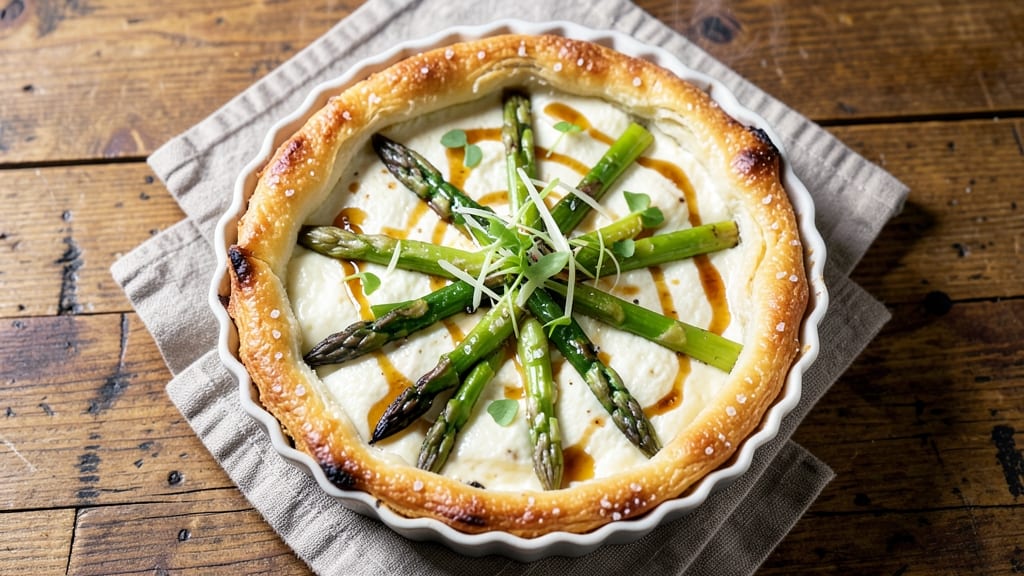
This asparagus goat cheese tart recipe delivers restaurant-quality appetizers with crispy pastry and creamy herbed goat cheese rivers that melt in your mouth.
The secret lies in a perfectly flaky crust that holds its shape while baking, paired with tender asparagus spears and tangy goat cheese that creates those signature rivers when cut.
I've perfected this technique after years of testing—each tart has a golden, shatteringly crisp edge and a filling that's rich yet light, with just enough herby brightness to cut through the richness.
The beauty of this recipe is its balance of techniques that might seem intimidating but are actually quite approachable.
A simple pie crust dough comes together with cold butter for that signature flakiness, while the filling combines fresh asparagus and goat cheese with just enough seasoning to enhance their natural flavors.
The key moment comes when you bake the tarts—those rivers of melted cheese form as the filling softens, creating an elegant presentation that's impossible to resist.
What you'll end up with is a collection of golden tarts with crisp edges and tender centers, where each bite delivers the perfect combination of textures and flavors.
The asparagus adds a fresh, slightly bitter contrast to the creamy goat cheese, while the herbed crust ties everything together with aromatic notes. These tarts are perfect for entertaining or serving as an elegant starter for special dinners.
With just a few simple ingredients and straightforward techniques, you'll achieve professional-quality results that will have everyone asking for the recipe. The best part? These tarts reheat beautifully, so you can prepare them ahead of time and enjoy them at their best when you're ready to serve.
Let's get started on making these impressive appetizers that are surprisingly easy to create at home.
Ingredients for asparagus goat cheese tart
Crispy crust, creamy rivers—just eight ingredients transform into restaurant-worthy appetizers.
| Ingredient | Amount | Notes |
|---|---|---|
| All-Purpose Flour 🌾 | 2 ½ cups | Sifted for light texture |
| Cold Unsalted Butter 🧈 | 1 cup | Cut into small cubes |
| Ice Water 💧 | ½ cup | Chilled for flaky crust |
| Fine Sea Salt 🧂 | ½ tsp | Diamond Crystal preferred |
| Fresh Asparagus 🥬 | 1 ½ lb | Thin spears, trimmed |
| Goat Cheese 🧀 | 12 oz | Soft, creamy variety |
| Fresh Chives 🌿 | ¼ cup | Finely chopped, for herby flavor |
| Extra-Virgin Olive Oil 🫒 | 2 tbsp | For brushing crust |
| Freshly Ground Black Pepper 🌶️ | ¼ tsp | Freshly cracked for best flavor |
| Fresh Thyme Leaves 🌿 | 1 tbsp | Finely chopped, for aroma |
| Lemon Zest 🍋 | 1 tsp | Brightens the filling |
| Egg Wash 🥚 | 1 whole | Beaten with 1 tsp water |
| Coarse Sugar 🍬 | 1 tbsp | For sprinkling on crust |
The butter is non-negotiable here—cold cubes create that signature flakiness. Grab the European-style unsalted butter from Whole Foods or Trader Joe's for the best flavor. Asparagus should be bright green and snappy—Trader Joe's or local farmers markets have the freshest spears. Goat cheese varies wildly in texture; soft, creamy varieties work best for those signature rivers. I always buy La Tourangelle or Farmstead brands—they hold their shape perfectly.
No fresh thyme? Dried works at half the amount, but fresh is ideal for that bright aroma. Swap chives for parsley if needed—just use one-third the amount. The crust dough comes together fast, but don't rush the butter—cold is key. For extra flakiness, freeze the dough for 20 minutes before rolling. Lemon zest can be substituted with lemon juice at double the amount, but zest gives that perfect bright pop.
These tarts reheat beautifully—350°F for 8-10 minutes until golden. Store in an airtight container for 3 days at room temperature or 1 week in the fridge. Freeze unbaked tarts for 2 months—just add 2 extra minutes to baking time. The crust stays crispy even after reheating, so they're perfect for make-ahead entertaining. I always make a double batch—they disappear fast!
Why You'll Love This Recipe
- Crust in Minutes: I swear by the cold butter method—just pulse, chill, and roll. No waiting for dough to rise, no messy kneading, and that buttery shatter? Chef’s kiss. Even if you’re not a baker, this crust comes together faster than takeout.
- Asparagus Magic: Here’s what sold me—those crisp-tender spears roasted until just charred, then tucked into creamy goat cheese. The salt pulls everything together: bright, rich, and ridiculously satisfying. No fancy sauce needed.
- Picnic to Party: Between us, this tart is my go-to for anything. Pack slices for a lunchbox, serve with charcuterie for guests, or cut into squares for a crowd. The crust holds up, the asparagus stays fresh, and it’s always a hit—no one questions the leftovers.
- Budget-Friendly Luxe: Fresh asparagus in season? A steal. Goat cheese and butter stretch far, and the crust uses pantry staples. I’ve made this for under $10 and still felt fancy. (Yes, even on a Tuesday night.)
Step-by-step instructions for asparagus goat cheese tarts
Here's how to create golden, flaky tart shells filled with creamy goat cheese rivers and tender asparagus.
Make the Crispy Tart Shells
In a large bowl, whisk together the 2.5 cups all-purpose flour and 0.5 teaspoon fine sea salt. Cut in the 1 cup cold unsalted butter using a pastry cutter or your fingers until the mixture resembles coarse crumbs with pea-sized butter pieces. This texture is crucial for flaky layers.
Gradually add the 0.5 cup ice water, 1 tablespoon at a time, mixing gently with a fork until the dough just comes together. It should hold when pressed but not be sticky. Divide the dough into 6 equal portions and flatten each into a 6-inch round on a floured surface. Wrap each in plastic wrap and chill for 30 minutes to firm up.
Prepare the Asparagus and Goat Cheese Filling
Preheat your oven to 375°F. Trim the ends from the 1.5 pounds fresh asparagus and cut them into 2-inch pieces. Blanch them in boiling salted water for 2 minutes, then immediately plunge into ice water to stop cooking. Drain well and pat dry with paper towels.
In a mixing bowl, combine the 12 ounces goat cheese, 0.25 cup finely chopped fresh chives, 1 tablespoon finely chopped fresh thyme leaves, 1 teaspoon lemon zest, 0.25 teaspoon freshly ground black pepper, and 2 tablespoons extra-virgin olive oil. Mix until completely smooth and well combined. The filling should be creamy but not runny—this consistency ensures it holds its shape when baked.
Assemble and Bake the Tarts
Roll out one chilled tart dough to about 1/8-inch thickness on a floured surface. Press it into a 6-inch tart pan with a removable bottom, trimming any excess dough hanging over the edges. Prick the base all over with a fork to prevent puffing. Repeat with the remaining dough portions.
Transfer the tart pans to a baking sheet and bake for 15 minutes until the edges begin to turn golden. Remove from the oven and carefully press the goat cheese mixture into the bottom and up the sides of each tart shell, leaving about 1/4-inch space at the top edge. This creates room for the asparagus to sit above the filling.
Finish with Asparagus and Bake to Perfection
Arrange the blanched asparagus pieces on top of the goat cheese filling in each tart, pressing down gently so they stand upright. Brush the edges of the tart shells with the egg wash and sprinkle generously with the 1 tablespoon coarse sugar. This creates a beautiful caramelized crust while keeping the filling creamy.
Return the tarts to the oven and bake for an additional 20-25 minutes until the crust is deep golden brown and the filling is just set but still slightly jiggly in the center. The tarts should be hot to the touch but not burnt. Let them cool for 10 minutes before serving to allow the filling to set slightly while maintaining its creamy texture.
Serve Warm for Maximum Flavor
Run a small offset spatula around the edges of each tart to loosen them from the pans. Carefully transfer to a serving platter and let them cool for another 5 minutes before slicing. The contrast of the crispy, caramelized crust with the creamy goat cheese and tender asparagus makes each bite irresistible.
Serve warm with a simple arugula salad dressed with lemon vinaigrette or a glass of crisp white wine. The tarts are best enjoyed immediately while the crust remains crisp and the filling is at its most luxurious texture. Store any leftovers in an airtight container in the refrigerator for up to 2 days, but I promise they won't last that long!
Pro Tips For Making Asparagus Goat Cheese Tart
- CHILL THE BUTTER FIRST: I learned this the hard way—trying to cut cold butter straight from the fridge into flour always leads to a gummy mess. Let the butter sit out for 10 minutes until it’s soft enough to press between your fingers but still holds its shape. That’s the sweet spot for flaky layers that won’t turn into a dense brick.
- TRIM ASPARAGUS LIKE A PRO: Skip the messy snapping—just hold the stalk at the base and bend it until it breaks naturally. The tough end will snap off cleanly, leaving you with uniform spears. If you’re using thick stalks, peel the bottom inch with a vegetable peeler first; it’s the only part that’s truly bitter.
- BLIND-BAKE AT 375°F: Too many people crank the oven too high and end up with a burnt crust before the filling’s ready. 375°F is the magic number—hot enough to crisp the pastry but gentle enough to prevent over-browning. Weigh down the tart shell with pie weights or dried beans, and bake until it’s just golden, not brown.
- SALT THE GOAT CHEESE: Unsalted butter in the crust + goat cheese that’s too mild = flavorless disaster. Fold ½ teaspoon of fine sea salt into the goat cheese mixture before spreading it in the tart. It’s the only way to balance the tang without overpowering the asparagus. Trust me, your taste buds will notice.
Troubleshooting great asparagus goat cheese tart
Crust Too Soft?
If your tart shells turn out soft instead of crisp, the butter wasn't cold enough when mixing. I learned this the hard way—always chill your butter cubes for 30 minutes before cutting into the flour.
For extra insurance, freeze the dough for 20 minutes before rolling. This prevents the butter from melting too soon during baking, which is what causes that dreaded soggy crust. 🥖
Filling Too Runny
The goat cheese mixture should be thick enough to hold its shape but still creamy. If it's too loose after baking, your goat cheese was likely too soft or you overmixed it. I recommend using room-temperature goat cheese (not cold) but not overly soft varieties.
For extra stability, add 1 teaspoon cornstarch to the filling mixture. Also, make sure your oven isn't too hot—375°F is ideal for even baking without overcooking the filling. 🧀
Asparagus Overcooked
Blanching asparagus for more than 2 minutes will turn it mushy. The ice bath is crucial—it stops the cooking process immediately. If your asparagus looks limp after blanching, reduce time to 1 minute 30 seconds and test one spear.
It should stay bright green with just a hint of tenderness. For extra crispness, pat them very dry with paper towels before assembling. 🥬
Cheese Rivers Not Forming
Those signature melted cheese rivers only appear if the filling is at the right temperature when baked. The filling should be room temperature when spread into the shells (not cold). Also, don't overbake—remove the tarts when the center is just set (not fully firm).
The residual heat will continue cooking the cheese as they cool, creating those beautiful rivers. If they're not forming, try baking 2-3 minutes less and letting them rest longer. 🌟
Crust Burning Too Fast
If the crust edges darken before the filling is done, your oven runs hot. Use an oven thermometer to verify your oven's actual temperature—many run 25°F hotter than set. Lower the temperature to 350°F and add 5 minutes to baking time.
For extra protection, tent the tarts loosely with aluminum foil during the final 10 minutes of baking. 🔥
Tarts Sticking to Pans
This usually means the tart pans weren't properly prepared. Always use 6-inch tart pans with removable bottoms and coat them thoroughly with butter before pressing in the dough. For extra insurance, dust with 1 tablespoon flour after buttering.
If they still stick, your dough might be too wet—add 1 tablespoon more flour when rolling. Let cooled tarts rest 10 minutes before trying to remove them. 🧑🍳
Nutrition facts
Frequently asked questions
Can I make these tarts ahead of time?
Assemble the tarts (without baking) and refrigerate them in an airtight container for up to 24 hours. Bake them straight from the fridge, adding 5 extra minutes to the baking time. For fully baked tarts, store them in an airtight container at room temperature for 3 days or refrigerate for 5 days. Reheat in a 350°F oven for 8-10 minutes to restore crispiness.
What if I don't have tart pans?
No problem! Use a 6-inch round cake pan or even a pie dish. For the best results, grease and flour the pan thoroughly. If using a cake pan, you may need to adjust baking time slightly—check at 18 minutes for golden edges. For a rustic look, try baking on a parchment-lined baking sheet.
Can I substitute goat cheese with another cheese?
While goat cheese is ideal for its tangy flavor and creamy texture, you can substitute with feta (drained and crumbled) or ricotta mixed with 2 tablespoons cream cheese. For a similar tang, use 2 ounces mascarpone blended with the ricotta. Avoid sharp cheddar—it won't create those signature rivers.
How do I make these vegetarian-friendly?
This recipe is already vegetarian! The filling contains no meat products—just asparagus, goat cheese, herbs, and olive oil. For a vegan version, substitute the goat cheese with vegan cream cheese (like Kite Hill) and use a vegan butter crust. The flavor profile remains rich and satisfying.
What's the secret to the perfect cheese rivers?
The rivers form when the goat cheese is at room temperature (not cold) and the tarts are removed from the oven when the center is just set. The residual heat melts the cheese as they cool. For extra drama, chill the tarts for 15 minutes after baking before slicing—this enhances the rivers' appearance.