
Appetizers
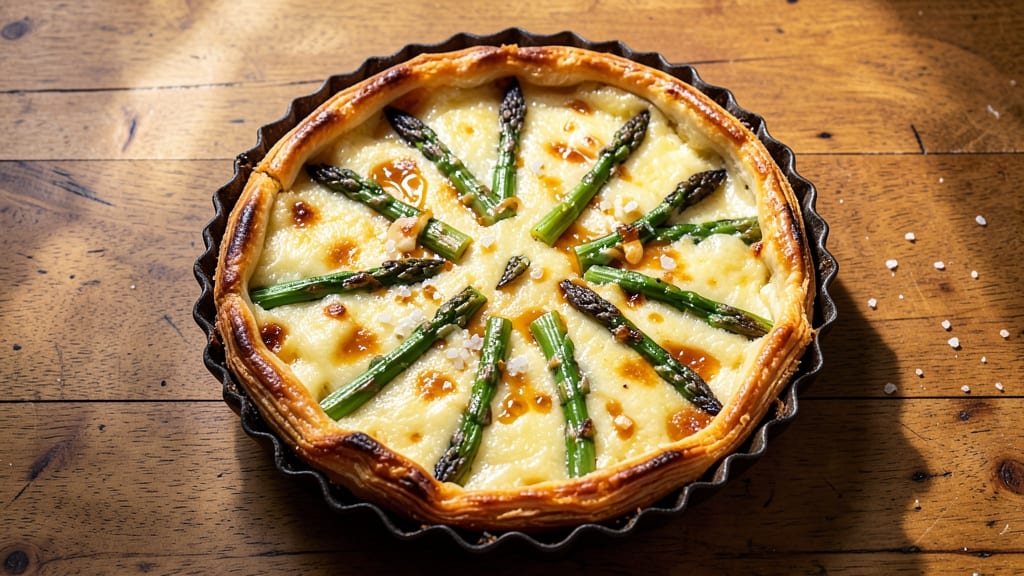
This asparagus and cheese tart delivers the perfect balance of crispy pastry and tender greens, elevated by melted cheese and fresh herbs. The secret lies in blind-baking the crust to achieve that golden, shatteringly crispy base that holds up to the rich filling—no soggy bottoms here.
I’ve perfected this technique over years of testing, ensuring the tart stays structurally sound while delivering restaurant-quality flavor at home.
The filling is where the magic happens: blanched asparagus keeps its vibrant green color and crisp-tender texture, while a blend of sharp cheddar and creamy goat cheese creates a velvety, melt-in-your-mouth center.
A sprinkle of lemon zest brightens the dish, cutting through the richness, and a drizzle of truffle oil adds an optional gourmet twist. This tart is elegant enough for dinner parties but simple enough for a weeknight supper.
Baking at 375°F for 20–25 minutes ensures the crust is perfectly golden and the cheese is bubbly and golden on top. The result is a tart with layers of texture—crispy crust, tender asparagus, and a gooey cheese center—that will impress even the most discerning guests.
Serve warm with a side salad or crusty bread to soak up every last bite.
For extra flair, garnish with fresh thyme or a drizzle of balsamic reduction before serving. The tart keeps well at room temperature for up to 2 hours, making it ideal for gatherings where you want to showcase your baking skills without the fuss. Let’s get baking!
Ingredients for asparagus and cheese tart
Crispy crust, tender asparagus, and gooey cheese—this tart delivers restaurant-quality flavor at home.
| Ingredient | Amount | Notes |
|---|---|---|
| All-Purpose Flour 🌾 | 2 ½ cups | Sifted for light texture |
| Unsalted Butter 🧈 | 1 cup | Cold, cubed for crust |
| Ice Water 💧 | ⅓ cup | Chilled for dough handling |
| Salt 🧂 | ½ tsp | Fine sea salt preferred |
| Fresh Asparagus 🥬 | 1 ½ lb | Thick stalks, trimmed ends |
| Sharp Cheddar Cheese 🧀 | 1 ½ cups | Shredded, block preferred |
| Goat Cheese 🧀 | ½ cup | Creamy, crumbled texture |
| Large Eggs 🥚 | 1 whole | Room temperature for blending |
| Lemon Zest 🍋 | 1 tbsp | Bright, organic preferred |
| Truffle Oil 🫒 | 1 tbsp | Optional gourmet touch |
| Fresh Thyme Leaves 🌿 | ¼ cup | Chopped, stems removed |
| Balsamic Reduction 🍷 | 2 tbsps | Store-bought or homemade |
The crust is everything here. King Arthur flour or Gold Medal gives the best texture, but any all-purpose works. Butter matters—use Plugrá or Land O'Lakes unsalted for richness, and keep it cold when mixing. For the asparagus, Trader Joe's or Whole Foods have the thickest stalks, which hold up best to blanching. If you can't find thick ones, use medium—just trim the tough ends. The cheeses are non-negotiable: sharp cheddar like Cabot and creamy goat cheese like La Tourangelle create that perfect balance of tang and melt.
No sharp cheddar? Pepper jack or Gruyère work in a pinch, though the flavor shifts. Goat cheese substitute? Cream cheese mixed with a splash of lemon juice mimics the creaminess (though it won't be as tangy). Short on truffle oil? Extra olive oil plus a pinch of garlic powder gives a similar richness. The thyme can be dried at half the amount, but fresh is worth hunting down—Trader Joe's sells it in little jars that last months. For the balsamic reduction, store-bought works fine—just avoid the syrupy kind; look for the thick, glossy version.
Prep the asparagus first—blanch it in boiling water for 2 minutes, then shock in ice water. This keeps it vibrant and tender. The crust needs to chill for 30 minutes after mixing, and 1 hour after rolling out. The tart reheats beautifully—350°F for 10 minutes revives that crispy crust. Store leftovers covered at room temperature for up to 2 hours, or refrigerate for 3 days. Freezing isn't recommended—the crust gets rubbery. To serve, drizzle the balsamic reduction just before eating so it stays glossy.
Why You'll Love This Recipe
- No Puff Pastry Needed: I’ll admit, I used to avoid tarts thinking they required fancy dough. But this crust? Just flour, butter, and ice water—mixed in a bowl, pressed into a pan, and baked. That’s it. No rolling, no stress, no store-bought shortcuts.
- Crispy-Creamy Magic: The asparagus gets a quick blanch to soften it just right, then nests into a buttery crust with melted cheese. The edges stay crisp while the center melts into that perfect, stretchy pull—like a hug for your taste buds. Honestly, the first bite makes me pause.
- Weeknight or Weekend: This tart works when you’re exhausted and when you’ve got company. Serve it warm with a salad for a lazy dinner or slice it cold for a picnic. I’ve even sent it to potlucks—no one ever asks what’s in it, they just keep reaching for seconds.
Step-by-step instructions for asparagus and cheese tart
Here's how to create a golden, crispy tart with tender asparagus and melty cheese layers.
Prepare the Crispy Tart Shell
In a large bowl, combine the 2.5 cups all-purpose flour and 0.5 tsp salt. Cut in the 1 cup cold unsalted butter using a pastry cutter or your fingers until the mixture resembles coarse crumbs with pea-sized butter pieces. This texture is crucial for flaky layers.
Gradually add the 0.33 cup ice water, 1 tablespoon at a time, mixing gently with a fork until the dough just comes together. The dough should hold when pressed but still feel slightly crumbly. Shape into a disk, wrap in plastic, and chill for 30 minutes. This resting period prevents shrinking during baking.
Roll and Blind-Bake the Crust
On a floured surface, roll the chilled dough into a 12-inch circle about ⅛-inch thick. Transfer to a parchment-lined baking sheet and trim the edges. Prick the bottom all over with a fork to prevent puffing. Line the crust with parchment and fill with pie weights or dried beans.
Bake at 375°F for 15 minutes, then remove the weights and bake another 8-10 minutes until the edges are golden brown and the crust feels set to the touch. This blind-baking ensures a sturdy base that won't get soggy from the cheese filling.
Prepare the Asparagus Filling
While the crust bakes, trim the 1.5 lb fresh asparagus, discarding the woody ends. Cut the stalks into 1-inch pieces. In a skillet over medium-high heat, add 1 tbsp truffle oil and sauté the asparagus for 3-4 minutes until just tender-crisp. Remove from heat and stir in the 0.25 cup chopped fresh thyme leaves and 1 tbsp lemon zest. Let cool slightly.
In a separate bowl, combine the 1.5 cups shredded sharp cheddar cheese and 0.5 cup crumbled goat cheese. Fold in the cooked asparagus mixture until evenly distributed. The filling should be creamy but still hold its shape when spooned into the crust.
Assemble and Bake the Tart
Spread the cheese-asparagus mixture evenly into the pre-baked crust, pressing down gently with a spatula. Drizzle the 2 tbsp balsamic reduction over the top in decorative swirls. The balsamic adds a tangy contrast that balances the rich cheeses.
Bake at 375°F for 20-25 minutes until the cheese is bubbling in the center and the edges are deep golden brown. The tart is done when the filling is set but still slightly jiggly in the center—it'll firm up as it cools.
Finish and Serve Warm
Remove from the oven and let rest for 5-10 minutes before slicing. This resting period allows the filling to set slightly, making it easier to serve without spilling. The crust should be crispy with flaky layers, while the cheese filling remains creamy with pockets of melted cheddar.
Cut into 6 wedges and serve immediately while the crust is still warm and the cheese is gooey. The tart pairs beautifully with a simple arugula salad or crusty bread to soak up any extra balsamic drizzle.
Pro Tips For Making Asparagus And Cheese Tart
- Blanch Asparagus First: Trim the tough ends, then plunge spears into boiling salted water for exactly 90 seconds—this softens them just enough to cook through in the tart without turning mushy. I used to skip this and ended up with either raw centers or overcooked, limp asparagus. Trust me, the 2-minute blanch makes all the difference when baking.
- Chill the Dough: Wrap the flour-butter dough in plastic and refrigerate for at least 30 minutes before rolling. I learned this the hard way after struggling to handle sticky dough that kept shrinking in the pan. Cold dough rolls out smoother and stays together—no last-minute panic when you’re ready to transfer it.
- Prevent Cheese Sog: Sprinkle a thin layer of flour over the cheese filling before adding the asparagus. It acts as a barrier, soaking up any excess moisture from the veggies instead of turning the crust into a sad, greasy mess. Sounds weird, but it works—your future self will thank you.
- Use Room-Temp Butter: Let the unsalted butter sit out for 30 minutes before mixing with flour. Cold butter creates pockets that make the crust flaky, but room temp ensures even distribution—no dry, crumbly patches or greasy streaks. I skip this when I’m lazy, and the difference in texture is noticeable.
Troubleshooting great asparagus and cheese tart
Crust Too Soggy
If your tart crust turns out soggy, it’s usually because the blind-baking wasn’t thorough enough or the filling was too wet. First, ensure you blind-bake for at least 20 minutes total—don’t skip the second bake without weights.
For the filling, drain any excess moisture from the asparagus after blanching, and avoid overmixing the cheese mixture. I’ve found that pre-cooling the filling for 10 minutes before adding it to the crust helps too. 🌡️
Cheese Not Melting
Uneven or unmelted cheese often happens when the oven temperature isn’t steady or the tart isn’t baked long enough. Use an oven thermometer to confirm your oven is at 375°F—many ovens run hot or cold.
If the cheese is still firm after 25 minutes, cover the tart loosely with foil and bake another 5-10 minutes. For extra insurance, sprinkle 1 tbsp heavy cream over the cheese before baking—it helps emulsify the melt. 🧀
Asparagus Overcooked
Asparagus turns mushy when overcooked or over-blanched. For the filling, sauté it for exactly 3-4 minutes over medium-high heat—no longer! If you’re blanching it first, shock it in ice water immediately and drain well.
Pro tip: Use thick asparagus stalks (about ½-inch diameter) because they hold up better. If yours is still too soft, mix in 1 tbsp crumbled bacon or toasted pine nuts for extra texture. 🥬
Filling Spilling Over
An overfilled tart will leak cheese everywhere, but this is easy to fix. First, press the filling down firmly with a spatula before baking—this creates a barrier between the filling and crust edge. If it still overflows, chill the tart for 15 minutes after baking before slicing.
For a foolproof method, I recommend underfilling slightly and adding a second thin layer of cheese after the initial bake to seal the edges. ✨
Crust Too Pale
A pale crust usually means it didn’t bake long enough or the butter wasn’t cold enough during mixing. For a deeper color, brush the crust with 1 tbsp melted butter before blind-baking, then bake 2-3 minutes uncovered at the end.
If the dough was too warm when rolling, chill it for 10 extra minutes before shaping. For a golden finish, I swear by egg wash—beat 1 egg yolk with 1 tsp water, brush on the crust, and bake until golden. 🔥
Filling Too Dry
Dry filling often happens when the cheese is too old or the asparagus was overcooked. Use freshly grated cheese (pre-shredded has anti-caking agents that make it dry out faster) and blanch the asparagus for exactly 2 minutes—no more!
For extra moisture, stir 1 tbsp crème fraîche or Greek yogurt into the cheese mixture. If the filling still looks dry, drizzle 1 tbsp warm heavy cream over it before the final bake. 💧
Nutrition facts
Frequently asked questions
Can I use frozen asparagus instead of fresh?
Fresh asparagus gives the best texture, but frozen works in a pinch! Thaw it first and pat completely dry to prevent a soggy filling. For extra flavor, sauté the thawed asparagus with 1 tbsp olive oil and a pinch of salt before mixing with the cheese. The texture won't be as crisp, but it'll still taste delicious.
How do I make this tart ahead of time?
Assemble the tart (without baking) up to 1 day ahead—cover tightly and refrigerate. When ready to bake, let it sit at room temperature for 30 minutes before baking as directed. For a fully baked tart, cool completely, wrap in foil, and refrigerate for up to 3 days. Reheat at 350°F for 10-15 minutes to restore crispiness.
What cheese substitutes work best?
For the sharp cheddar, try Gruyère or Pepper Jack for a richer flavor. Replace goat cheese with cream cheese mixed with 1 tsp lemon juice or ricotta for a lighter texture. Avoid pre-shredded cheese—it contains anti-caking agents that make the filling dry out.
Can I make this tart gluten-free?
Yes! Use a 1:1 gluten-free flour blend (like Bob's Red Mill) and add ½ tsp xanthan gum to the dough for structure. Chill the dough longer (45 minutes) and handle gently to prevent cracking. The filling and method stay the same—just expect a slightly denser crust.
How do I prevent the crust from shrinking?
Chill the dough for 30 minutes after mixing, then roll it gently between two sheets of parchment paper. Avoid overworking the dough, and let it rest 1 hour after rolling before blind-baking. For extra insurance, place a weighted baking sheet on top of the crust during the first 10 minutes of blind-baking.