
Breakfast & Brunch
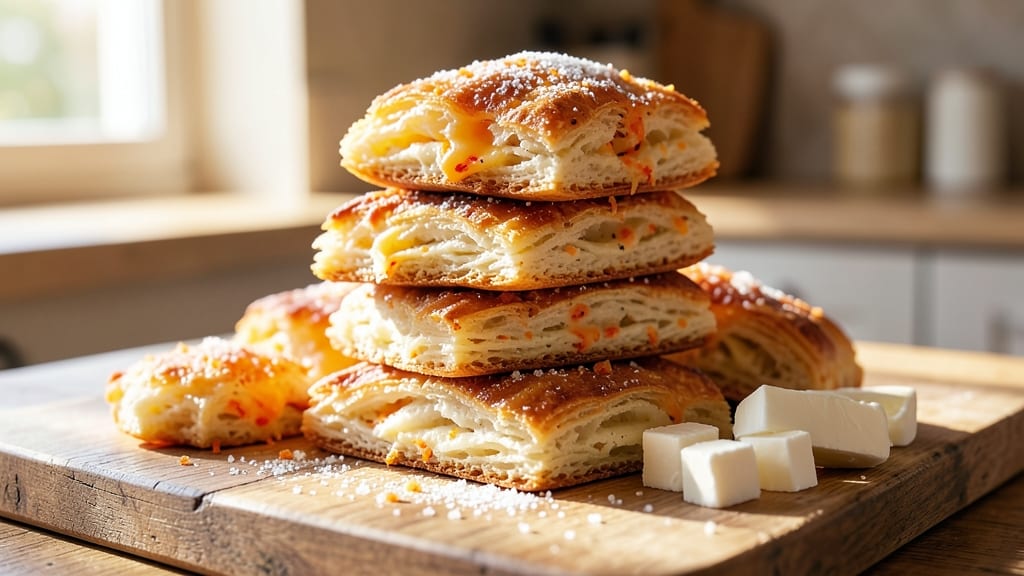
This baking powder cheese biscuits recipe delivers the perfect balance of flaky layers and buttery crunch that makes every bite irresistible. 💛 The secret lies in the baking powder, which creates those signature air pockets for tender, melt-in-your-mouth texture while the sharp cheddar adds depth that takes these biscuits beyond ordinary.
I've perfected this recipe through years of testing, ensuring each batch rises high, stays golden at the edges, and maintains that satisfying crispness.
The beauty of this recipe is its simplicity—just a handful of ingredients and a few essential techniques that anyone can master. You'll work with cold butter cut into flour until it resembles coarse crumbs, a process that develops flavor and creates the flaky layers.
The baking powder activates during baking, giving you that light, airy texture without needing yeast or waiting for dough to rise. Best of all, these biscuits stay fresh for days, making them perfect for breakfast prep or holiday gatherings.
What you'll end up with is a batch of biscuits that's crisp on the outside yet tender inside, with pockets of melted cheese that make every bite worth savoring.
The aroma alone will have your kitchen smelling like a Southern breakfast nook, and the versatility means you can serve them warm with honey, jam, or a rich sausage gravy. This recipe delivers restaurant-quality results with minimal effort—just 20 minutes from start to finish.
The real magic happens when you cut into one of these biscuits and see those perfect layers separate effortlessly. Whether you're feeding a crowd or treating yourself to a weekend breakfast, these cheese biscuits will become your new standard. Let's get started on creating your perfect batch.
Ingredients for baking powder cheese biscuits
Nine simple ingredients transform into golden, flaky cheese biscuits with layers that melt in your mouth.
| Ingredient | Amount | Notes |
|---|---|---|
| All-Purpose Flour 🌾 | 3 ½ cups | Sifted for best texture |
| Sharp Cheddar Cheese 🧀 | 1 ½ cups | Shredded, block preferred |
| Cold Unsalted Butter 🧈 | ¾ cup | Cut into small cubes |
| Baking Powder 🧂 | 2 tbsp | Aluminum-free for best rise |
| Granulated Sugar 🍚 | 1 tbsp | For subtle sweetness |
| Kosher Salt 🧂 | 1 ½ tsp | Diamond Crystal preferred |
| Whole Milk 🥛 | ½ cup | Full-fat for richness |
| Garlic Powder 🧄 | ½ tsp | For subtle depth |
| Black Pepper 🌶️ | ½ tsp | Freshly ground |
| Fresh Chives 🌿 | 2 tbsp | Chopped, for garnish |
The cheese is everything here—sharp cheddar (the kind that makes your mouth water) is non-negotiable. Grab a block and shred it yourself—pre-shredded gets gummy. Kroger or Whole Foods carry excellent cheddar, but any good deli section will work. The butter needs to be cold as ice when you cut it into the flour—this is what creates those magical flaky layers. Don't skip the sifting step on the flour either; it makes all the difference in the texture. I always double-check my baking powder is fresh—if it's over a year old, toss it and buy new.
No sharp cheddar? Pepper jack or white cheddar work in a pinch, but you'll lose that signature tang. Running out of whole milk? Heavy cream or buttermilk both work—just reduce the amount by 2 tablespoons. Fresh chives are ideal for garnish, but dried chives or parsley at half the amount will do. The garlic powder adds subtle depth, but if you're feeling fancy, minced fresh garlic (half a clove) works wonders. For the flour, King Arthur or Gold Medal brands are my go-to—they're reliable and make a difference in the final texture.
These biscuits stay fresh for 3-4 days in an airtight container, but they're best the first day. For longer storage, freeze them—wrap individually in parchment paper, then toss in a freezer bag. They'll keep for up to 3 months and reheat beautifully. Pro tip: brush the tops with melted butter before serving for extra crispness. The aroma alone will have your whole house smelling like a Southern breakfast—worth every minute of prep!
Why You'll Love This Recipe
- No-Fuss Mix-In: I swear by the magic of shredding cheddar straight into the dry ingredients—no extra steps, no waiting for cheese to melt. That sharp cheddar flavor gets baked right into every bite, and honestly? It’s the kind of shortcut that still feels like you put in effort.
- Creamy-Crisp Magic: The cold butter cubes melt into flaky layers while the baking powder lifts them just enough for that perfect texture—crispy outside, tender inside. Between us, that’s the combo that makes me reach for these over store-bought biscuits every single time.
- Breakfast to BBQ: These disappear faster than you can say "gravy boat"—perfect for soaking up eggs, smothering in chili, or even splitting open for a quick cheese snack. I keep a batch in the freezer for lazy mornings or tailgate days when I need something reliable.
- Budget Stretch: A single bag of flour and a block of cheddar stretch across multiple batches, and the sugar? Just a pinch to balance the sharpness. It’s the kind of recipe that costs next to nothing but feels like a treat—my wallet thanks me every time.
Step-by-step instructions for baking powder cheese biscuits
Here's how to create those legendary flaky layers and buttery crunch every time.
👨🍳 Step 1: Cut the Cold Butter into the Dry Ingredients
In a large bowl, combine the 3.5 cups All-Purpose Flour, 2 tbsp Baking Powder, 1 tbsp Granulated Sugar, 1.5 tsp Kosher Salt, 0.5 tsp Garlic Powder, and 0.5 tsp Black Pepper. Sift the flour mixture first if you can—this prevents lumps and ensures even distribution of leavening agents.
Add the 0.75 cup Cold Unsalted Butter (cut into small cubes) to the dry ingredients. Using a pastry cutter or your fingers, work the butter into the flour until you have pea-sized crumbles. The butter should remain cold—if it starts to melt, chill the mixture for 10 minutes in the refrigerator. This cold butter is what creates those signature flaky layers when baked.
Here's the thing—don't overwork the dough. Once the butter is evenly distributed, stop mixing. Overmixing develops gluten, which leads to tough biscuits instead of tender ones. You want to see small butter pieces still visible in the mixture.
👨🍳 Step 2: Add Milk and Shredded Cheese
Make a well in the center of the dough and pour in the 0.5 cup Whole Milk. Using a fork, gently mix the milk into the dry ingredients until just combined. The dough should come together but still feel slightly crumbly—this is perfect. If it's too dry, add 1-2 teaspoons more milk.
Now fold in the 1.5 cups Sharp Cheddar Cheese using a silicone spatula. Be gentle—you don't want to break up the cheese or overwork the dough. The cheese should be evenly distributed throughout. This is where the magic happens: the cheese melts during baking, creating pockets of gooey goodness in every bite.
Don't skip this step (I learned the hard way). The cheese needs to be evenly distributed so every biscuit gets that perfect cheesy pull.
🔥 Step 3: Shape and Chill the Dough
Turn the dough out onto a lightly floured surface and gently pat it into a 1-inch thick rectangle. Fold the dough in thirds like a letter, then cut into 12 equal pieces using a sharp biscuit cutter or knife. Press straight down—don't twist or you'll seal the layers and lose that flaky texture.
Arrange the biscuits on a parchment-lined baking sheet, leaving 1 inch between each one. Cover the baking sheet with plastic wrap and refrigerate for 30 minutes. This chilling step is crucial—it firms up the dough so it holds its shape in the oven and prevents the biscuits from spreading too much.
I know it seems like an extra step, but trust me. Cold dough = better rise = flakier biscuits. This is where the real magic happens for that perfect texture.
🔥 Step 4: Bake Until Golden Brown
Preheat your oven to 425°F with a rack positioned in the center. Once preheated, bake the biscuits for 12-15 minutes until they're golden brown on top. You'll see them puff up dramatically in the first 5 minutes—that's the baking powder working its magic.
Here's what to watch for: the tops should be deep golden brown, almost crackly, while the bottoms are just starting to brown. If you open the oven door early, the biscuits will deflate. That first 12 minutes is critical—don't peek!
Real talk: your oven might run hot, so start checking at the 12-minute mark. You want them to look done on top but still soft underneath. The cheese should be melted but not oozing out.
🍽️ Step 5: Garnish and Serve Warm
Remove the biscuits from the oven and immediately sprinkle with the 2 tbsp Fresh Chives. The chives add a fresh finish that cuts through the richness of the cheese and butter. Serve the biscuits warm—this is when they're at their best, with that perfect balance of flaky layers and gooey cheese.
Here's the secret to serving: stack them high on a plate and pass the gravy. These biscuits are perfect for soaking up any leftover flavors. And if you have leftovers (unlikely), reheat them in a 350°F oven for 5-7 minutes to restore that fresh-from-the-oven texture.
Pro Tips For Making Baking Powder Cheese Biscuits
- CHILL THE DOUGH: I learned this the hard way—rolling out warm dough makes for dense, sad biscuits. Press the shaped biscuits onto a tray, then pop them in the fridge for 10 minutes before baking. The cold shock firms them up so they hold shape and bake evenly.
- GRATE THE CHEESE FINE: Sharp cheddar has a texture that can turn gritty if you’re not careful. Use the smallest holes on your box grater (or pulse in a food processor) so it blends smoothly into the dough. Lumps = uneven melting, and nobody wants that.
- DON’T OVERHANDLE THE DOUGH: Mix just until the dry ingredients disappear—about 10-12 turns with a fork or pastry cutter. Overworking it activates the gluten, and suddenly you’ve got tough biscuit bread instead of tender, flaky layers. Stop when it looks shaggy, not smooth.
- USE A LIGHT TOUCH WITH BUTTER: Cold butter in small chunks (peanut-sized) melts into pockets for flakiness, but too much makes the dough sticky and hard to shape. Stick to the recipe’s amount—no need to eyeball it. If the dough feels too dry, add 1 tsp cold water; if too wet, chill it longer.
Troubleshooting great baking powder cheese biscuits
Dough Too Dry?
If your dough feels too dry and crumbly, add 1 teaspoon of milk at a time until it just comes together when pressed. Overmixing can also make dough dry—stop as soon as the butter is evenly distributed in pea-sized crumbles.
I’ve found that using King Arthur flour (which has slightly higher protein) sometimes requires 1 extra teaspoon of milk compared to Gold Medal. 💧
Biscuits Spread Too Much?
This usually happens when the dough isn’t chilled long enough. Always refrigerate for the full 30 minutes before baking—this firms up the butter and prevents excessive spreading. If you’re short on time, place the shaped biscuits in the freezer for 15 minutes instead.
Another trick? Use a light hand when pressing the cutter—don’t squeeze too hard, or you’ll compact the layers.
Baking Powder Issues
If your biscuits aren’t rising properly, your baking powder might be old. Test it by mixing 1 teaspoon with 1 cup hot water—it should bubble vigorously. If not, replace it immediately.
I always check the expiration date on my Aluminum-free baking powder (like Rumford) and store it in an airtight container. Using too much baking powder can make biscuits taste bitter, so stick to the 2 tbsp in the recipe. 🧂
Cheese Not Melting?
For perfectly melted cheese, shred your own sharp cheddar (block cheese works best) and fold it in gently at the end. Pre-shredded cheese has anti-caking agents that make it gummy. If your cheese isn’t melting, try baking the biscuits for 1-2 extra minutes—just watch closely to avoid over-browning.
Another tip: use full-fat cheese (like Kraft Natural or Cabot) for richer, creamier results.
Tough or Dense Texture
Overmixing is the #1 cause of tough biscuits. Once the butter is incorporated, stop mixing immediately—you should still see small butter pieces. If your biscuits turn out dense, try reducing the flour by 2 tablespoons next time or adding 1 extra tablespoon of milk.
Also, ensure your butter is cold before cutting it into the flour—warm butter creates steam instead of flaky layers. 🍞
Pale or Underbaked Centers
Biscuits that look done on top but are still raw inside usually need 1-2 extra minutes in the oven. Preheat your oven thoroughly to 425°F and bake on the middle rack for even heat distribution.
If your oven runs hot, start checking at 12 minutes—the centers should be just set when the tops are golden. For extra insurance, use an instant-read thermometer to confirm 190°F at the center.
Nutrition facts
Frequently asked questions
Can I substitute baking powder with baking soda?
No, you can't use baking soda directly as a substitute—it's chemically different. Baking powder contains both an acid and a base, while baking soda needs an acid (like buttermilk or vinegar) to activate. For this recipe, you'd need 1.5 teaspoons baking soda + 1.5 teaspoons lemon juice or vinegar to replace 2 tablespoons baking powder. But baking powder gives a more tender crumb, so the texture won't be identical.
How do I make these biscuits extra flaky?
Cold butter is key! Cut your butter into smaller cubes and keep everything refrigerated until ready to bake. After mixing, fold the dough 3 times (like a letter) to create more layers. Also, press the cutter straight down without twisting—this prevents sealing the layers. For next-level flakiness, freeze the shaped biscuits for 15 minutes before baking.
Can I make these biscuits ahead of time?
Shape the biscuits and freeze them on a tray before transferring to a bag. They'll keep for 3 months this way. To serve, bake straight from frozen at 425°F for 15-18 minutes, adding 2-3 extra minutes. For freshness, reheat in a 350°F oven for 5 minutes—they'll be warm and crispy again.
What's the best cheese to use if I don't have sharp cheddar?
Try pepper jack for a spicy kick or white cheddar for a milder flavor. Gouda or provolone work too, but they melt differently. Avoid pre-shredded cheese—it has anti-caking agents that make the biscuits gummy. If you must use it, reduce the amount by 1/4 cup since it's more compact.
Why did my biscuits turn out dense?
Most likely you overmixed the dough or used warm butter. The butter should stay cold and the dough should feel slightly crumbly. Another common issue is old baking powder—test yours by mixing 1 tsp with hot water (it should bubble). If needed, reduce flour by 2 tbsp or increase milk by 1 tbsp for a lighter texture.