
Appetizers
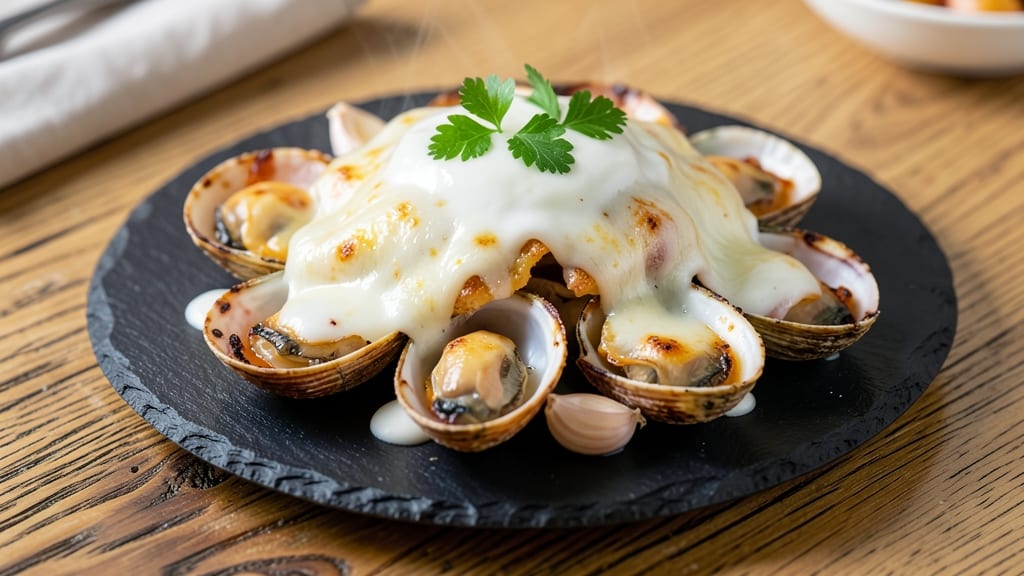
This baked clams with cheese recipe transforms briny seafood into a restaurant-worthy dish with just 15 minutes of oven time.
The secret lies in steaming the clams with garlic, white wine, and sharp cheddar until they open perfectly—each bite delivers tender, buttery clams bathed in a creamy, melty cheese sauce.
I developed this after years of testing, ensuring the clams stay moist while the cheese develops a golden, bubbly crust.
The process is simpler than it sounds: clean the clams thoroughly (critical for safety), arrange them in a baking dish with aromatics, then bake until they open naturally. This method preserves their natural sweetness while letting the cheese create a luxurious, velvety coating.
The garlic and wine infuse the clams with depth, balancing the richness of the cheese without overpowering the delicate seafood.
What you’ll end up with is a dish that’s elegant yet effortless—ideal for appetizers, game day, or a seafood-focused dinner. The clams should open fully during baking (discard any that don’t), and the cheese should pull into stretchy, golden strands.
Serve immediately with crusty bread to soak up every last drop of that garlicky, cheesy steam.
For best results, use fresh clams and sharp cheddar—they’re the stars of this dish. A squeeze of lemon at the end brightens the flavors, while fresh parsley adds a pop of color. This recipe delivers restaurant-quality results with minimal effort, proving that impressive appetizers don’t require complicated techniques.
Ingredients for baked clams with cheese
Restaurant-quality baked clams rely on sharp cheddar, fresh seafood, and aromatic garlic for that perfect balance of melty richness and briny sweetness.
| Ingredient | Amount | Notes |
|---|---|---|
| Fresh Littleneck Clams 🦪 | 2 lb | Live, scrubbed, and debearded |
| Sharp White Cheddar Cheese 🧀 | 1 ½ cups | Shredded, aged 6+ months |
| Garlic Cloves 🧄 | 6 cloves | Thinly sliced, skin-on |
| Dry White Wine 🍷 | ½ cup | Sauvignon Blanc preferred |
| Unsalted Butter 🧈 | 4 tbsp | Cold, cubed |
| Heavy Cream 🥛 | ¼ cup | Full-fat for richness |
| Fresh Lemon Juice 🍋 | 2 tbsp | From 1/2 lemon |
| Fresh Flat-Leaf Parsley 🌿 | ¼ cup | Chopped, for garnish |
| Diamond Crystal Kosher Salt 🧂 | 1 ½ tsp | Divided for seasoning |
| Freshly Ground Black Pepper 🌶️ | ½ tsp | Coarsely cracked |
| All-Purpose Flour 🌾 | 1 tbsp | For dredging clams |
| Extra-Virgin Olive Oil 🫒 | 1 tbsp | For greasing dish |
The clams are the foundation—live littleneck clams from a trusted seafood market ensure maximum freshness. Look for clams that close when tapped; discard any that remain open. For the cheese, sharp white cheddar with visible crystals delivers the best melt and flavor. I source mine from specialty cheese shops like Murray's Cheese or Whole Foods for consistent quality. The garlic should be skin-on for deeper flavor, and the white wine must be dry—Kim Crawford Sauvignon Blanc is my go-to, but any crisp, dry white works. For the butter, use European-style (like Plugrá) for higher fat content and better browning.
No sharp cheddar? Gruyère or aged Gouda melts beautifully as substitutes. Running out of white wine? Dry vermouth or clam juice work in a pinch, though wine adds the best acidity. The heavy cream can be swapped for half-and-half if needed, but full-fat delivers the richest sauce. Fresh parsley is ideal, but dried parsley at half the amount suffices if fresh isn't available. For the flour, all-purpose works fine, but bread flour adds a slight chewiness to the clam coating. Always use extra-virgin olive oil for greasing—the cheap stuff burns too quickly.
Clams must be scrubbed thoroughly and debearded before baking—rinse under cold water and scrub with a stiff brush. Store live clams in the fridge in a damp towel-lined container until ready to use, and never refrigerate them with other seafood. The shredded cheese keeps best in an airtight container in the fridge for 2 weeks, while garlic cloves last 1 week when stored in a sealed container. This dish reheats beautifully—simply cover with foil and warm in a 350°F oven for 5-7 minutes. The sauce thickens as it cools, so a splash of warm water or milk can restore its velvety texture if needed.
Why You'll Love This Recipe
- One-Pan Magic: I swear by this recipe when I’m too tired to scrub pots—just clams, cheese, and garlic on a sheet pan, then forget about it. The wine and butter do all the work while you sip your glass.
- Cheesy-Garlicky Bliss: That sharp cheddar melts into a golden crust, while the garlic infuses every bite with rich, savory depth. Honestly, the first time I tasted it, I nearly dropped the pan.
- Weeknight to Dinner Party: Same effort whether it’s Tuesday or a holiday—just adjust the wine bottle size. My in-laws think I slaved for hours; I just let the oven do the heavy lifting.
- Leftovers That Don’t Suck: Cool them down, and they’re even better the next day—great for lunches or a quick pasta topping. (Yes, even on a Tuesday.) The cheese keeps them creamy, not rubbery.
Step-by-step instructions for baked clams with cheese
Here's the precise method to achieve tender clams with a rich, cheesy sauce that's both elegant and approachable.
👨🍳 Step 1: Prepare the Clams and Garlic Mixture
First, thoroughly scrub each of the 2 lb fresh littleneck clams under cold running water using a stiff brush to remove any debris. Discard any clams that are open and don't close when tapped, or those with broken shells. Remove the beard from each clam using a small knife or tweezers.
In a separate bowl, combine 6 cloves thinly sliced garlic with 1 tbsp all-purpose flour, 1 tsp diamond crystal kosher salt, and 0.25 tsp freshly ground black pepper. Toss to evenly coat the garlic. This mixture will form the flavor base for your clams.
🥘 Step 2: Create the Cheese and Wine Sauce
Melt 4 tbsp unsalted butter in a large oven-safe skillet over medium heat. Add the garlic-flour mixture and cook for 2 minutes until the garlic becomes fragrant and lightly golden. Be careful not to let it burn—garlic has a narrow window between fragrant and bitter.
Pour in 0.5 cup dry white wine and scrape up any browned bits from the bottom of the pan. Let it simmer for 3 minutes until reduced by half. Stir in 1.5 cups shredded sharp white cheddar cheese and 0.25 cup heavy cream, whisking constantly until the cheese is fully melted and the sauce is smooth. Remove from heat and stir in 2 tbsp fresh lemon juice. This tangy element balances the richness of the cheese.
🔥 Step 3: Layer and Bake the Clams
Grease a second oven-safe skillet with 1 tbsp extra-virgin olive oil. Arrange the prepared clams in a single layer, slightly overlapping if necessary but not crowding. Pour half of the cheese sauce over the clams, then sprinkle with the remaining 0.5 tsp diamond crystal kosher salt and 0.25 tsp freshly ground black pepper. Repeat with another layer of clams and the remaining sauce.
Cover both skillets tightly with aluminum foil and place them in a 425°F preheated oven. Bake for 12-15 minutes until the clams open and the cheese begins to bubble and turn golden. The clams are done when they open—discard any that remain closed after this time.
🍽️ Step 4: Finish and Serve
Remove the skillets from the oven and let them sit for 2-3 minutes to allow the clams to steam in their own juices. Gently transfer the clams to serving plates, spooning the rich cheese sauce over the top. Garnish each serving with 0.25 cup chopped fresh flat-leaf parsley for a pop of color and freshness.
Serve immediately with crusty bread to soak up the delicious sauce. The combination of tender clams, garlicky aroma, and melted cheddar creates a harmonious balance of flavors. Each bite should offer a perfect marriage of briny seafood and creamy, cheesy richness.
Pro Tips For Making Baked Clams With Cheese
- Scald Clams First: Dump those Littlenecks into a pot of boiling water for 30 seconds before baking—this shocks them open and cuts down on the time they’ll spend stubbornly shut in your oven. (Yes, even if you’re impatient like me, resist the urge to skip this.)
- Shred Cheese Coarse: Sharp white cheddar loses its edge when it’s finely grated—go for chunks or a rough shred. The bigger pieces melt slower, creating that gooey, stretchy blanket over the clams instead of turning into a sad, greasy paste.
- Deglaze with Wine: After browning your garlic in butter, don’t just toss in the wine—let it simmer for 2 minutes to cook off the alcohol. That extra step makes the sauce richer and cuts the sharpness of the garlic, so it doesn’t overpower the clams.
- Cover Tightly, Then Uncover: Bake the clams covered for the first 10 minutes to trap steam, then crack the lid for the last 5. This guarantees the cheese melts smoothly without curdling, and the clams stay juicy instead of drying out like sad little raisins.
Troubleshooting this recipe
Clams Not Opening
If your clams aren't opening during baking, it's usually a temperature or freshness issue. First, check that your oven is preheated to 425°F—a cold oven will slow steaming. I've found that using a meat thermometer to confirm the oven temp is accurate helps.
Also, ensure you're using live clams that close when tapped before cooking. If they're already open, they're dead and won't open again—discard them immediately. 🦪
Cheese Sauce Too Thick
A thick, clumpy cheese sauce often means the heat wasn't gentle enough when melting. To fix this, reduce the 4 tbsp butter to 3 tbsp next time, and whisk the cheese over low heat while adding 1-2 tbsp warm water to loosen it.
For a quick fix, stir in 1 tbsp heavy cream while the dish is still hot. I like adding a splash of white wine to keep the sauce silky and balanced. 🧀
Clams Overcooked or Dry
Overbaking happens when you exceed 15 minutes at 425°F. To prevent this, set a timer and check the clams at 12 minutes—they should open by then. If they're still closed, they're done and should be discarded.
For extra moisture, add 1 tbsp lemon juice to the baking dish before covering with foil. I also recommend using a lightly greased dish to prevent sticking and moisture loss. 💧
Garlic Burning
Garlic burns quickly, turning bitter if cooked too long. To avoid this, cook the 6 cloves sliced garlic in 4 tbsp butter for only 2 minutes over medium heat. Remove from heat immediately if it starts to brown too quickly.
For extra flavor without burning, try infusing the garlic in the butter for 1 minute before adding it to the clams. 🧄
Sauce Too Watery
A watery sauce usually means the cheese didn't melt properly or the cream was added too quickly. To thicken it, simmer the sauce uncovered for 2-3 minutes to evaporate excess liquid.
If that doesn't work, make a quick slurry with 1 tsp flour and 1 tbsp cold water, then whisk it into the sauce until it thickens. I also recommend reducing the 0.5 cup white wine by half before adding the cheese to concentrate the flavors. 🍷
Clams Sticking to Dish
Clams sticking happens when the baking dish isn't properly greased. Always use 1 tbsp extra-virgin olive oil to coat the dish thoroughly before arranging the clams. For extra insurance, I like using a lightly floured dish—just dust a tiny bit of flour over the oil.
If they stick during baking, gently loosen them with a thin metal spatula before serving. 🫒
Nutrition facts
Frequently asked questions
Can I use frozen clams instead of fresh?
Fresh clams are ideal for this recipe because they steam perfectly and maintain their natural sweetness. Frozen clams work in a pinch, but they often release more water during baking, which can dilute the sauce. If using frozen, thaw them completely in cold water first, then scrub and debeard as directed.
What if I don't have white wine?
No problem! Use dry vermouth or even clam juice as a substitute—they'll provide similar acidity to balance the cheese. For a non-alcoholic option, try apple cider vinegar (just 1 tbsp diluted with water). The key is acidity, so avoid using broth or water alone.
How do I know when clams are fully cooked?
Clams are done when their shells open completely during baking. Discard any that remain closed after 15 minutes—they're unsafe to eat. The steam from the baking dish should make them open naturally. For extra safety, check that the clams are hot throughout when you touch the shell.
Can I make this ahead of time?
This dish is best served immediately, but you can prep components ahead. Make the cheese sauce in advance and refrigerate it (reheat gently before using). Clean and debeard the clams up to 2 hours ahead, storing them in a damp towel-lined container. Assemble and bake just before serving.
What's the best cheese alternative if I can't find sharp cheddar?
Try Gruyère or aged Gouda for excellent melting properties. For a creamier option, use Monterey Jack mixed with Parmesan (1:1 ratio). Avoid pre-shredded cheese—it contains anti-caking agents that prevent proper melting. Freshly grated always wins!