
Appetizers
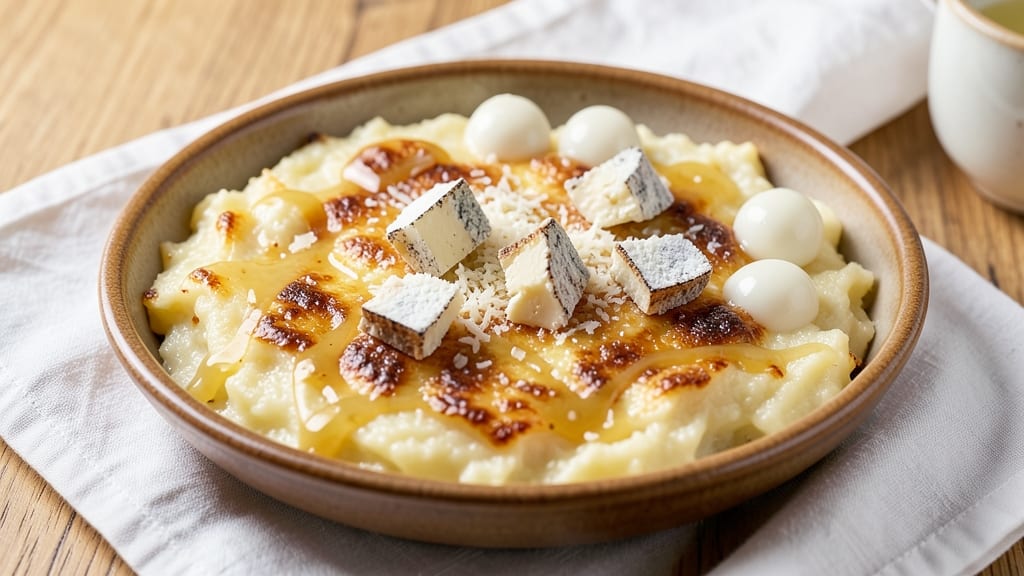
This baked cheese polenta recipe transforms humble polenta into a golden, crisp-edged masterpiece with a silky interior that melts in your mouth.
The secret lies in layering creamy polenta with melted cheeses—Gruyère for nutty depth, mozzarella for stretch, and Parmesan for that unmistakable umami kick—then baking until the crust turns irresistibly crisp. I perfected this after years of experimenting with casseroles, and it’s now a crowd-pleaser at every gathering.
The beauty of this dish is its versatility—it works as a satisfying appetizer or a hearty main when paired with a simple salad or roasted vegetables.
The polenta base absorbs the rich, cheesy flavors while maintaining its signature creaminess, and the high-heat bake creates that coveted crispy top layer that’s impossible to resist. No special equipment is needed, just a baking dish and patience for the golden finish.
What you’ll end up with is a dish that looks impressive yet requires minimal effort, with layers of cheesy goodness that hold together perfectly. The crust is crisp enough to hold a bite, while the interior remains tender and velvety, making every forkful a revelation.
The aroma alone—warm, cheesy, and slightly caramelized—will have everyone at the table asking for seconds.
For extra flavor, consider adding sautéed mushrooms or fresh herbs like thyme or rosemary before baking. A drizzle of olive oil and flaky salt after baking elevates the dish to restaurant-quality without extra effort. Ready to master this technique? Let’s get started.
Ingredients for baked cheese polenta
Six servings of cheesy perfection—just polenta, milk, butter, and three cheeses.
| Ingredient | Amount | Notes |
|---|---|---|
| Polenta (Cornmeal) 🌾 | 1 ½ cups | Fine grind for silky texture |
| Whole Milk 🥛 | 4 cups | Full-fat for creaminess |
| Unsalted Butter 🧈 | ½ cup | Cold, cubed for even melting |
| Gruyère Cheese 🧀 | 1 ½ cups | Freshly grated, nutty flavor |
| Mozzarella Cheese 🧀 | 1 ½ cups | Part-skim for perfect melt |
| Parmesan Cheese 🧀 | ½ cup | Freshly grated from block |
| Heavy Cream 🥛 | ½ cup | For extra richness |
| Garlic Cloves 🧄 | 3 cloves | Minced for subtle aroma |
| Fresh Thyme Leaves 🌿 | ¼ cup | Chopped, for herbal touch |
| Diamond Crystal Kosher Salt 🧂 | 1 ½ tsp | Adjust to taste |
| Freshly Ground Black Pepper 🌶️ | ½ tsp | Freshly cracked preferred |
| Extra-Virgin Olive Oil 🫒 | 2 tbsp | For drizzling after baking |
| Flaky Sea Salt 🧂 | 2 tbsp | For finishing crust |
The cheeses are non-negotiable here. Gruyère gives that signature nutty depth, while mozzarella provides the perfect melt and stretch. I always grab Whole Foods or Wegmans for the Gruyère—it's worth the splurge. For Parmesan, Parmigiano-Reggiano from a wedge is a game-changer over pre-grated. The polenta? Maille brand is my go-to for that ultra-fine grind that gives silky results. Don't skimp on the milk—whole milk is essential for that creamy texture that holds up during baking. And if you're feeling fancy, Trader Joe's carries a fantastic organic whole milk that works perfectly.
No Gruyère? Comté cheese is your next best bet—same family, slightly different flavor profile. Mozzarella substitute? Fontina melts beautifully, though it's a bit richer. Short on time? Pre-shredded mozzarella works (just don't overmix it or it gets gummy). The thyme can be dried if needed—use about one-third the amount. For the garlic, roasted garlic adds sweetness without overpowering. And if you're worried about the crust not getting crispy enough, broil for 2-3 minutes at the end—just watch it like a hawk. The olive oil matters too—use something with good fruity notes for that final drizzle.
This keeps beautifully—3-4 days in the fridge wrapped tightly. For longer storage, freeze portions for up to 2 months—just reheat covered at 350°F until warmed through. I always make a double batch because it reheats even better the second day. The crust gets extra crispy when reheated, and the cheeses meld into a perfect gooey texture. Store any leftovers in an airtight container with parchment between layers to prevent sticking. And trust me, the aroma when you take it out of the fridge? Worth every calorie.
Why You'll Love This Recipe
- One-Pan Magic: I swear by this recipe because it’s literally one bowl, one pan, and done. Just mix the polenta with warm milk and butter, fold in the shredded Gruyère and mozzarella, and bake—no stirring, no fuss. The only cleanup is a spatula and a bowl.
- Melty Perfection: That crispy top with the gooey, stretchy cheese center? It’s the kind of dish where the first bite makes you close your eyes. Gruyère adds nutty depth while the mozzarella pulls apart like silk—honestly, it’s the kind of comfort food that feels like a hug.
- Weeknight Hero: I make this when I’m too tired to think, too hungry to wait, or just need something that feeds a crowd without stress. It’s my go-to for dinner parties (looks impressive), lazy Sundays (zero effort), and even kids’ soccer night (they’ll eat it before the game starts).
- Budget-Friendly Luxury: Polenta and cheese are cheap, but this tastes like a fancy bistro dish. A single batch stretches for leftovers—reheat slices in the oven or microwave, or turn them into breakfast hash the next morning. My wallet and taste buds win.
Step-by-step instructions for baked cheese polenta
Here's how to create that perfect golden crust with a creamy, melt-in-your-mouth interior.
Cook the Polenta to Silky Perfection
In a large, heavy-bottomed saucepan, combine the 4 cups whole milk and 1.5 tsp Diamond Crystal kosher salt. Bring to a gentle boil over medium-high heat, then immediately reduce to medium-low heat. Slowly whisk in the 1.5 cups polenta (cornmeal) while maintaining a steady stream to prevent lumps.
Stir constantly for 15-20 minutes until the mixture thickens to a creamy consistency—it should coat the back of a spoon but still be pourable. You'll see the polenta transform from a rough grit to a smooth, velvety texture. If it gets too thick before it's fully cooked, whisk in 2-3 tablespoons of milk at a time. The key here is patience; rushing will give you a gummy texture instead of that luxurious silkiness we're after.
Finish with Butter and Cheese
Once the polenta reaches that perfect creamy stage, remove it from heat and stir in the 0.5 cup cold, cubed unsalted butter and 0.5 cup heavy cream. The butter should melt completely, creating a glossy sheen on the surface. Then, fold in the 1.5 cups gruyère cheese, 1.5 cups mozzarella cheese, and 0.5 cup freshly grated parmesan cheese until fully incorporated and melted.
For extra flavor, stir in the 3 minced garlic cloves and 0.25 cup chopped fresh thyme leaves. Let the mixture sit for 5 minutes while you prepare your baking dish—this resting period helps the cheeses meld together and the flavors develop. The polenta should be smooth, rich, and ready for the oven. If it's too thick, whisk in 1-2 tablespoons of warm milk to loosen it slightly.
Bake for a Golden Crust
Preheat your oven to 375°F. Lightly grease a 9x13-inch baking dish with 2 tbsp extra-virgin olive oil—this prevents sticking and helps create that beautiful crust. Pour the polenta mixture into the prepared dish, spreading it evenly with a spatula. Smooth the top with the back of a spoon for an even surface.
Bake for 25-30 minutes until the edges are deep golden brown and the center is just set. Here's the thing—you want the crust to be crispy and golden, but the interior should still have a slight wobble when you gently shake the dish. If it browns too quickly, tent loosely with foil to prevent over-browning. The polenta should have that perfect contrast: crispy on top, creamy inside.
Finish with Flaky Sea Salt
Remove the polenta from the oven and let it rest for 10 minutes—this allows the cheeses to set slightly and makes it easier to serve. While it rests, drizzle the top with the 2 tbsp extra-virgin olive oil and sprinkle generously with the 2 tbsp flaky sea salt. The salt enhances all the cheesy flavors and adds a beautiful contrast in texture.
Cut into squares and serve immediately while the crust is still crispy and the interior is warm and gooey. This dish pairs perfectly with a simple arugula salad or roasted vegetables. The combination of the golden crust and creamy interior makes every bite worth the effort—trust me, it's that good.
Pro Tips For Making Baked Cheese Polenta
- STIR LIKE MAD: I learned this the hard way—skipping the initial stir on high heat leaves you with a lumpy mess. Once you add the milk, crank the heat to medium-high and stir constantly for the first 3 minutes with a wooden spoon or silicone spatula. This breaks up the cornmeal properly before it thickens.
- GRATE THE CHEESE FINE: Skip the shredder if your cheese clumps—it’ll look ugly and bake unevenly. Use a box grater or pulse in a food processor until the Gruyère and mozzarella are rice-sized or smaller. This ensures even melting and a creamy texture instead of chewy pockets.
- BAKE COVERED FIRST: The top of your polenta will dry out if you bake it uncovered straightaway. Start with foil tented over the dish for the first 20 minutes to let the cheese melt smoothly. Only remove it for the last 5-10 minutes to get that golden crust—yes, even if you’re impatient like me.
- USE COLD BUTTER: Drizzle the butter over the hot polenta in small batches, letting each one melt into the creamy base before adding more. Cold butter creates pockets of richness instead of pooling at the bottom. (Your future self will notice the difference.)
Essential equipment for perfect results
Baking Dish Essentials
For this recipe, a 9x13-inch baking dish is your best friend—I use a Ceramic Non-Stick brand because it prevents sticking and ensures even browning. If you don’t have one, a heavy-duty stainless steel dish works too, but grease it well with extra-virgin olive oil to avoid sticking.
Avoid glass dishes unless they’re oven-safe up to 400°F, as they can cause uneven heating. 🌡️
Pro tip: If your dish has a dark bottom, check for browning earlier—dark pans absorb more heat and can overcook the edges. For extra insurance, place the dish on a baking sheet before sliding it into the oven to catch any potential drips or spills.
Must-Have Tools
A whisk is non-negotiable for achieving that silky polenta texture—OXO Good Grips is my go-to because it’s sturdy and won’t bend mid-stir. You’ll also need a spatula (I love Silpat-coated ones) to spread the polenta evenly in the dish.
For measuring, a liquid measuring cup ensures precision with the milk and cream. 🥄
Don’t skip the fine-mesh grater for the cheeses—Microplane works best for freshly grating Gruyère and Parmesan. Pre-shredded cheeses often contain anti-caking agents that prevent proper melting.
A small mixing bowl for combining the polenta and cheeses keeps everything tidy, and a kitchen timer ensures you don’t overbake (or underbake) the polenta.
Optional Upgrades
For a crispier crust, invest in a pizza stone or baking steel—they conduct heat better and create that coveted golden finish. Place your baking dish on top during the last 10 minutes of baking for extra crunch.
A laser thermometer (like Thermoworks Thermapen) helps monitor the polenta’s internal temperature—aim for 165°F at the center for perfect doneness. 🌟
If you’re feeling fancy, a pastry brush lets you glaze the top with olive oil or garlic-infused oil before baking for added flavor. For serving, a sharp chef’s knife ensures clean cuts through the crispy crust.
And trust me, a serving tray with a parchment-lined base makes plating effortless—no more scraping cheese off your counter!
Budget-Friendly Swaps
No fancy tools? No problem. Use a wooden spoon instead of a whisk—just stir more vigorously to avoid lumps. A butter knife works for spreading polenta in the dish, though it’ll take a little extra elbow grease.
For grating cheese, a box grater (even the cheap plastic kind) gets the job done. 💰
Skip the baking stone and use a wire rack on a baking sheet to elevate the dish—this allows heat to circulate underneath for a more even bake. A digital kitchen scale isn’t necessary, but if you have one, it’s perfect for measuring the polenta and cheeses by weight for consistency.
And if you’re in a pinch, aluminum foil can double as a makeshift baking sheet for easy cleanup.
Nutrition facts
Frequently asked questions
Can I make this recipe without Gruyère cheese?
If you can't find Gruyère, substitute with 1 cup Comté or 1 cup sharp cheddar for a similar nutty flavor. For a milder option, use 1 cup fontina—it melts beautifully and adds richness. Just be aware the texture might be slightly less firm than Gruyère's signature melt.
Why did my polenta turn out gummy instead of creamy?
Gummy polenta usually means one of two things: either you didn't cook it long enough (keep stirring for 20+ minutes until it pulls away from the pan) or you rushed the process. The key is patience—low and slow heat with constant stirring prevents lumps and ensures a silky texture. If it's still too thick, whisk in 1-2 tablespoons warm milk while off heat.
How can I make this dish ahead of time?
This polenta actually tastes better the next day! Assemble the dish as directed, then refrigerate uncovered for 1 hour to help the crust form. Cover tightly and refrigerate for up to 3 days. To reheat, cover with foil and bake at 350°F for 20-25 minutes until warmed through. The crust will crisp up beautifully during reheating.
What's the best way to serve this baked polenta?
This dish is incredibly versatile! Serve as a hearty appetizer with a drizzle of balsamic glaze and fresh arugula, or make it a main course with roasted mushrooms and a simple tomato salad. For extra decadence, top with crispy prosciutto or caramelized onions. The crispy crust makes it perfect for scooping up sauces too!
Can I use instant polenta instead of cornmeal?
Technically yes, but with some adjustments. Instant polenta cooks faster, so follow package instructions for cooking time (usually 5-7 minutes with milk). However, the texture will be slightly different—less silky and more firm. For best results, use 1:1 ratio and add 1 extra tablespoon butter to compensate for the drier texture. The baked result will still be delicious but with a denser interior.