
Breakfast & Brunch
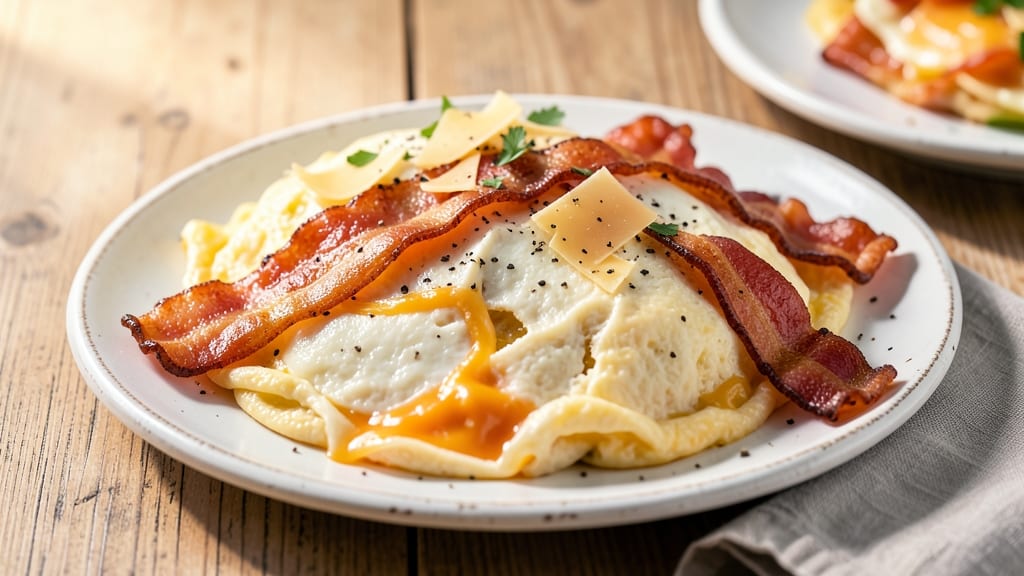
This bacon egg and cheese omelette recipe delivers the perfect balance of crispy bacon, fluffy egg centers, and melty cheese—every bite is a salty-sweet symphony. 🔥 The secret lies in cooking the bacon first for maximum crispiness, then using medium-low heat to create tender egg layers that stay custardy inside.
I’ve mastered the flip technique to ensure no runny yolks or uneven cooking, and the cheese stretches just enough to bind everything together.
The key to this omelette is patience—whisking the eggs until smooth creates those signature fluffy layers, while letting the cheese melt gradually prevents it from turning rubbery. Unlike French-style omelettes that are rolled tightly, this American version folds neatly for easy serving.
It’s a breakfast that feels indulgent yet comes together in under 15 minutes, making it ideal for busy mornings when you still want a restaurant-worthy meal.
What you’ll end up with is a golden-brown omelette with perfectly crispy bacon edges, a velvety egg center, and gooey cheese that pulls slightly when cut. The aroma alone will wake up your kitchen, and the first bite delivers that satisfying mix of textures—crunchy, creamy, and tender all at once.
This is the kind of omelette that makes you want to linger over breakfast instead of rushing through it.
Pair it with buttery toast, avocado slices, or a side of fresh fruit for a complete meal. The recipe scales easily too—whether you’re cooking for one or feeding a crowd, the technique stays the same. Let’s get started on making this breakfast classic your new go-to.
Ingredients for bacon egg and cheese omelette
Six crispy bacon slices, six fluffy eggs, and one cup of melty cheese—this is your breakfast game-changer.
| Ingredient | Amount | Notes |
|---|---|---|
| Center-Cut Bacon 🥓 | 6 oz | Thin-cut preferred for crispiness |
| Large Eggs 🥚 | 6 whole | Room temperature for even cooking |
| Shredded Sharp Cheddar Cheese 🧀 | 1 cup | Freshly shredded from block |
| Unsalted Butter 🧈 | 2 tbsp | Cold for even melting |
| Salt 🧂 | ½ tsp | Kosher or sea salt |
| Freshly Ground Black Pepper 🌶️ | ¼ tsp | Freshly cracked preferred |
| All-Purpose Flour 🌾 | 1 tbsp | For egg mixture smoothness |
| Milk 🥛 | 2 tbsp | Whole milk for creaminess |
| Garlic Powder 🧄 | ¼ tsp | Optional for subtle flavor |
| Onion Powder 🧅 | ¼ tsp | Optional for depth |
| Fresh Chives 🌿 | 2 tbsp | Chopped for garnish |
The bacon is non-negotiable here—thin-cut from Oscar Mayer or Costco gets the crispiest edges. Look for slices with good marbling for extra flavor. I always grab extra because leftovers make killer BLTs. For the eggs, room temperature is key—they’ll cook more evenly. If you’re in a rush, just take them out of the fridge 10 minutes before you start. The cheese? Freshly shredded from a block melts smoother than pre-shredded (trust me on this). Grab a wedge of sharp cheddar from the deli counter if you can—it’s worth the few extra bucks.
No thin-cut bacon? Regular bacon cut into strips works, but it’ll take longer to crisp. Egg substitutes? Tofu scramble for vegan, but it won’t be the same texture. Pre-shredded cheese? Add 1 tbsp milk to prevent clumping. The flour and milk in the egg mixture are secret weapons—they make those eggs fluffier than you’ve ever had. No chives? Green onions or parsley work too. Pro tip: Toast your skillet dry for 30 seconds before adding butter—this prevents sticking like magic. And if you’re feeling fancy, add a pinch of smoked paprika to the eggs for a smoky kick.
Bacon keeps 3 days in the fridge, wrapped tight in paper towels to absorb grease. Eggs? Use within 3 weeks of purchase for best fluffiness. The cheese stays fresh for 2 weeks if sealed properly. Make ahead: Prep everything except the eggs the night before—just whisk the eggs in the morning. These omelettes reheat beautifully in a 350°F oven for 5-7 minutes, perfect for meal prep. Store leftovers in airtight containers, but honestly? They’re best fresh off the heat.
Why You'll Love This Recipe
- Five-Ingredient Magic: I swear by this combo—crispy center-cut bacon, sharp cheddar, and fresh eggs. That’s it. No fancy prep, no hidden ingredients, just pure, salty, cheesy satisfaction in every bite.
- Crispy-Creamy Balance: The secret’s in the butter and timing: melt that unsalted butter until it’s just golden, then fold in the eggs before the bacon’s done. You get that crispy edge on the omelette with a creamy center—like a hug for your taste buds.
- Breakfast Reinvented: Honestly, this isn’t just breakfast. Pack it in a lunchbox for work, reheat it for a late-night snack, or serve it at brunch when friends overthink their avocado toast. It’s the one dish that actually works everywhere.
- Budget Breakthrough: Sharp chedddar stretches further than you’d think, and bacon freezes like a dream. I make a double batch on Sundays, portion it out, and boom—no more takeout splurges midweek. Plus, eggs? Always on sale. Win.
Step-by-step instructions for bacon egg and cheese omelette
Here's how to make a perfect omelette with crispy bacon, fluffy eggs, and melty cheese every time.
🔥 Step 1: Cook the Bacon to Crispy Perfection
Place the 6 oz center-cut bacon in a cold, nonstick skillet over medium-low heat. Start with low heat to render the fat slowly—this prevents burning and ensures maximum crispiness. Cook for 10-12 minutes, flipping every 2-3 minutes with tongs, until the bacon reaches deep golden brown and the edges curl slightly.
Remove the bacon from the skillet and transfer it to a paper towel-lined plate. Let it rest for 2 minutes to drain excess fat, then chop into ½-inch pieces. Save 1 tablespoon of the bacon fat in the skillet—this golden liquid is pure flavor and will help create crispy edges on your omelette. If you need more fat, add 1 tablespoon of the unsalted butter to the reserved bacon fat in the skillet.
🍳 Step 2: Prepare the Egg Mixture for Fluffy Texture
In a medium bowl, whisk together the 6 whole large eggs until the yolks and whites are fully combined with no streaks remaining. Add the 2 tablespoons milk, 1 tablespoon all-purpose flour, ½ teaspoon salt, ¼ teaspoon freshly ground black pepper, ¼ teaspoon garlic powder, and ¼ teaspoon onion powder. Whisk vigorously for 30 seconds until the mixture is completely smooth and homogenous.
Here's the thing—adding flour and milk creates a lighter, fluffier omelette. The flour helps bind the eggs while the milk adds creaminess. I like to let this mixture sit for 5 minutes at room temperature while I finish cooking the bacon. This resting time allows the ingredients to meld together for an even better texture.
🥘 Step 3: Cook the Omelette with Crispy Edges
Heat the skillet with reserved bacon fat (and added butter if needed) over medium heat until it shimmers but doesn't smoke. Pour in the egg mixture, tilting the pan to evenly distribute the eggs. Cook for 2 minutes without stirring—this allows the bottom to set and develop crispy edges.
When the edges start to lift slightly and the top looks slightly set but still slightly wet in the center, sprinkle ⅓ cup of the shredded sharp cheddar cheese evenly over one half of the omelette. Use a spatula to gently fold the empty half over the cheese-filled half, pressing down lightly to help the cheese melt. Cook for another 1-2 minutes until the cheese is fully melted and the omelette is cooked through.
🔪 Step 4: Add Bacon and Garnish for Perfect Finish
Remove the omelette from the skillet and transfer it to a warmed plate. Sprinkle half of the chopped bacon pieces and half of the 2 tablespoons fresh chives on top. Fold the omelette in half again to create neat quarters, or leave it as a half-moon if you prefer. Repeat with the remaining egg mixture, cheese, bacon, and chives to make a second omelette.
Here's where it gets fun—serve immediately while the cheese is still melty and the bacon is warm. The crispy edges contrast beautifully with the fluffy interior, and each bite delivers that perfect salty-sweet balance. For extra crispiness, you can even broil the omelette for 30 seconds under the oven's broiler right before serving, but watch it closely to avoid burning.
⏰ Step 5: Serve with Confidence
Cut each omelette into wedges and serve right away. The secret to a perfect bacon egg and cheese omelette lies in the timing—crispy bacon, perfectly cooked eggs, and melted cheese all need to come together at the same time. If you find the omelette is too moist, you might have used too much milk or cheese. Next time, reduce the milk by 1 teaspoon or the cheese by 2 tablespoons.
This recipe makes 4 servings, so you can enjoy one for breakfast and save the rest for lunch. I promise, once you master this technique, you'll never settle for a sad, rubbery omelette again. The key is patience—let the bacon cook low and slow, and don't rush the eggs. Trust the process, and you'll have a restaurant-quality omelette every time.
Pro Tips For Making Bacon Egg And Cheese Omelette
- CRISP THE BACON FIRST: Cook the bacon until it’s just past crispy—those edges should snap when you fold the omelette. I used to stop at "done," but the extra 30 seconds of sizzle makes the final fold taste like a bacon hug. Drain on paper towels, not a rack, so it stays crisp when you fold it in.
- USE ROOM-TEMP EGG MIX: Whisk your eggs in a bowl for 2 minutes before cooking—no need to warm them. Cold eggs from the fridge scramble unevenly and stick to the pan. If you’re in a rush, just let them sit out for 10 minutes while the bacon cooks.
- SALT THE CHEESE: Toss your shredded cheddar with a pinch of salt before adding it to the eggs. Store-bought cheese is often bland, and this step guarantees it melts into something flavorful, not just filler. Skip this, and you’ll wonder why your omelette tastes flat.
- LOWER THE HEAT AT FOLD: Once the eggs are set but still slightly wet on top, drop the heat to medium-low before folding. I learned this the hard way—high heat turns the outside rubbery while the inside stays runny. A gentle fold keeps everything creamy inside.
Troubleshooting this dish
Eggs Too Runny
Your omelette might be undercooked if the eggs are still liquidy in the center. This usually happens when you don’t cook them long enough or use too much milk.
For fluffy texture, cook the eggs for 2-3 minutes total—2 minutes to set the bottom, then 1 minute after folding. If using extra milk, reduce by 1 teaspoon for firmer results.
Also, ensure your skillet isn’t too hot—medium heat is ideal to avoid burning the outside before the inside cooks. 🔥
Cheese Not Melting
Cold cheese or high heat can leave chunks unmelted. Start by using freshly shredded cheese (pre-shredded has anti-caking agents that prevent melting). Sprinkle it over the eggs just before folding—this gives it direct heat contact.
If your skillet is too hot, reduce to medium-low to let the cheese melt gradually. For extra help, cover the skillet with a lid for 30 seconds to trap steam and melt the cheese faster.
Bacon Too Greasy
Excess bacon fat can make your omelette soggy. After cooking, let the bacon rest on paper towels for 2-3 minutes to absorb extra grease. Use only 1 tablespoon of reserved bacon fat in the skillet—adding too much will steam the eggs instead of crisping them.
If needed, wipe the skillet with a paper towel before adding butter. For crispier bacon, cook it at medium-low heat until fully rendered before increasing heat for crisping. 🥓
Omelette Sticking
Sticking happens when the skillet isn’t hot enough or properly prepped. Always use a nonstick skillet (like Calphalon or All-Clad) and heat it until shimmering before adding fat. Toast the skillet dry for 30 seconds before adding butter to remove any moisture.
If sticking still occurs, reduce heat slightly and avoid moving the omelette too soon—wait until edges lift naturally. A spray of cooking oil before adding butter can also help.
Uneven Cooking
Uneven cooking often means inconsistent heat distribution. Use a skillet with an even heating surface—avoid warped or old pans. Heat the skillet evenly by placing it on the back burner of your stove (heat rises more evenly there). If your stove has hot spots, rotate the pan halfway through cooking.
Also, tilt the pan slightly when pouring eggs to ensure even distribution. For extra insurance, use a thermometer to confirm the skillet is at 325°F before cooking.
Nutrition facts
Frequently asked questions
Can I make this omelette without butter?
Use olive oil or avocado oil instead—just heat 1 tablespoon in the skillet until shimmering. For extra flavor, try bacon fat (the reserved 1 tablespoon from cooking the bacon). The key is using fat to create crispy edges, so don't skip it entirely.
What’s the best cheese for this recipe?
Sharp cheddar is ideal for its bold flavor and meltiness, but you can swap it for Monterey Jack, Gruyère, or even Gouda. Avoid pre-shredded cheese—it contains anti-caking agents that prevent smooth melting. For a smoky twist, try smoked Gouda or add a pinch of smoked paprika to the eggs.
How do I make this omelette ahead of time?
Prep everything except the eggs the night before: cook and chop the bacon, shred the cheese, and measure all spices. Store components separately in the fridge. In the morning, whisk the eggs and cook the omelette fresh—it reheats best when made to order. For leftovers, reheat in a 350°F oven for 5-7 minutes to restore crispiness.
Why does my omelette turn out rubbery?
Overcooking or using too much milk are the usual culprits. Cook the eggs for only 2-3 minutes total—2 minutes to set the bottom, then 1 minute after folding. Reduce milk by 1 teaspoon if the mixture seems too loose. Also, ensure your skillet isn’t too hot—medium heat prevents burning before the inside cooks.
Can I add other ingredients like ham or spinach?
Yes! For ham, cook 2 oz diced ham with the bacon and add it to the omelette when folding. For spinach, sauté ½ cup until wilted and place it in the center before adding cheese. Keep additions to ½ cup total to avoid overfilling. Pro tip: Sauté veggies in the same bacon fat to maximize flavor.