
Snacks
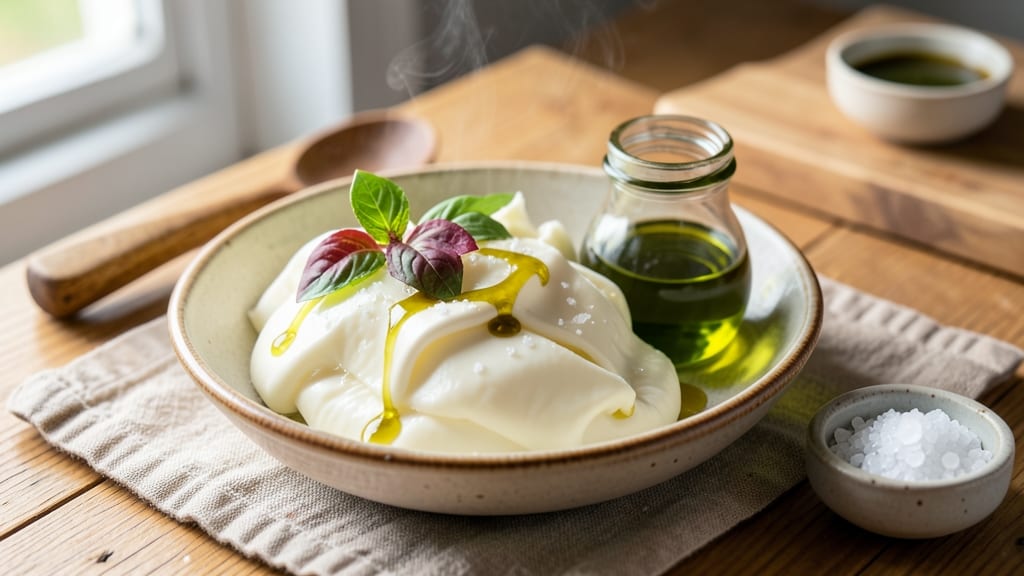
This authentic mozzarella cheese recipe transforms simple milk into the creamy, stretchy masterpiece that defines Italian cuisine. The secret lies in precise temperature control and the art of stretching curds by hand—no shortcuts, just technique honed over generations.
I’ve perfected this method after years of trial and error, and the results are worth every step.
The process begins with carefully selecting whole milk and acidifying it just right, then using rennet to create firm curds. After gentle heating, the magic happens when you stretch those hot curds in warm water until they become silky and elastic.
This isn’t just cheese—it’s a hands-on experience that rewards patience with restaurant-quality texture.
What you’ll end up with is fresh mozzarella so tender it melts on your tongue, perfect for caprese salads, fresh pasta, or gourmet burgers. The key is working quickly while maintaining the right temperature—too fast, and it toughens; too slow, and it loses its signature bounce.
Master this, and you’ll never buy store-bought again.
Once shaped, this mozzarella keeps beautifully in water for up to a week, or you can drain and store it in olive oil for richer flavor. The possibilities are endless: pair it with tomatoes and basil, melt it over pizza, or simply enjoy it with crusty bread.
Here’s how to make it from scratch.
Ingredients for authentic mozzarella cheese
Four simple ingredients transform milk into authentic mozzarella perfect for fresh pasta pairings.
| Ingredient | Amount | Notes |
|---|---|---|
| Whole Milk 🥛 | 4 cups | Room temperature preferred |
| White Vinegar 🍶 | 1 tbsp | For acidification |
| Vegetable Rennet 🧀 | ½ tsp | Liquid rennet preferred |
| Salt 🧂 | ½ tsp | Kosher or sea salt |
| Extra-Virgin Olive Oil 🫒 | ¼ cup | For stretching curds |
| Water 💧 | 2 cups | For stretching bath |
| Lemon Juice 🍋 | 1 tbsp | Optional for brightness |
| Fresh Basil Leaves 🌿 | ¼ cup | For storage water |
The milk is everything here—whole milk with at least 3.5% fat gives you that signature stretch. Store-brand works fine—organic or grass-fed if you want to splurge. Room temperature is key: cold milk won't coagulate properly. For the rennet, liquid versions from specialty stores are easiest, but powdered works too (just dissolve it first). The vinegar or lemon juice? White vinegar is traditional, but lemon adds a nice brightness if you're serving with tomatoes. I always double-check my milk's freshness—it should smell clean, not sour or off.
No vegetable rennet? Citric acid or lemon juice at double the amount can work in a pinch, though texture might suffer. The olive oil matters for stretching—extra-virgin with good fruity notes prevents the curds from toughening. Short on basil? Fresh parsley or oregano works just as well in the storage water. The salt is non-negotiable—it's what gives mozzarella its signature flavor. And if you're feeling fancy, add a pinch of black pepper to the storage water for a gourmet touch. Just don't skip the salt entirely!
Fresh mozzarella needs love—keep it submerged in water with basil in the fridge for up to 1 week. For longer storage, drain and roll in olive oil—keeps 2 weeks. The magic? Use it within 3 days for that restaurant-fresh texture. I always make extra because it disappears so fast. Freezing? Not recommended—it turns rubbery. But if you must, portion into small containers with a splash of olive oil first.
Why You'll Love This Recipe
- Five-Ingredient Magic: I swear by this recipe because it’s that simple—just whole milk, vinegar, rennet, salt, and olive oil. No fancy equipment, no stress, just you, a pot, and 20 minutes of hands-off time while the magic happens.
- Melt-in-Your-Mouth Creaminess: That first pull of warm, stretchy mozzarella? It’s like nothing store-bought can match. The acidity from the vinegar and the richness of whole milk create a bright, milky flavor that’s ridiculously satisfying—especially when you dip it in marinara or toss it on pizza.
- Pantry-to-Table Flexibility: Between us, this cheese is my secret weapon for weeknights. Use it fresh for caprese salads, shred it over pasta, or freeze it for later—it’s just as good reheated. Honestly, I’ve even thrown it in omelets when I’m lazy.
- Budget-Friendly Stretch: A gallon of whole milk makes way more cheese than a block you’d buy pre-packaged. Plus, the ingredients cost pennies compared to specialty cheeses. I’ve made enough batches to feed a crowd for less than half the price of store-bought—without sacrificing quality.
Step-by-step instructions for authentic mozzarella cheese
Here's how to make true Italian-style mozzarella with that signature stretch and melt.
Heat and Acidify the Milk
Pour the 4 cups whole milk into a heavy-bottomed pot and heat it over medium heat to 185°F, stirring occasionally to prevent scorching. You'll see small bubbles forming around the edges—this is your signal the milk is ready. Remove the pot from heat and let it cool slightly to 175°F while you prepare the acidification.
In a small bowl, whisk together the 1 tablespoon white vinegar and the 0.5 teaspoon vegetable rennet. Pour this mixture into the warm milk, stirring gently for about 30 seconds. The milk should begin to thicken almost immediately—it will look like thin pudding when properly set. If it doesn't thicken within 2 minutes, your milk might be too hot or the rennet too old.
Cut and Cook the Curds
Once the milk has set into a firm gel (about 5-7 minutes after adding rennet), use a clean knife to cut the curds into 1-inch cubes. Start by making two perpendicular cuts across the pot, then cut each resulting quarter into four pieces. This creates uniform curds that will cook evenly.
Return the pot to medium heat and let the curds cook for 5-7 minutes, stirring gently every 2 minutes with a wooden spoon. You're looking for curds that are smooth and firm but still slightly translucent. When they reach this stage, they'll begin to separate from the whey—this is when you'll know they're ready for stretching.
Drain and Prepare for Stretching
Line a colander with cheesecloth and drain the curds in the colander for 5 minutes to remove excess whey. While the curds drain, prepare your stretching bath by heating the 2 cups water to 185°F in a separate pot. Add the 0.5 teaspoon salt and 1 tablespoon lemon juice to the water—this will help preserve the mozzarella and add brightness.
Once the curds have drained, transfer them to a clean bowl. Add the 0.25 cup extra-virgin olive oil and the 0.25 cup fresh basil leaves. The oil will help create that signature stretch while the basil adds subtle herbal notes. Use your hands to gently knead the mixture until it forms a smooth, pliable mass—this is your mozzarella base.
Stretch the Mozzarella to Perfection
Working quickly, dip your hands in the hot water bath to keep them warm and pliable. Take a small piece of the mozzarella mixture and begin stretching it between your palms. As you stretch, the cheese will become more elastic—this is the magic moment where you create that authentic mozzarella texture. Keep stretching until you can form a long, thin strand that holds its shape.
Continue this process with the remaining mozzarella, shaping it into balls or logs as you go. The cheese should be smooth, elastic, and slightly springy to the touch. If it feels too firm, dip it briefly back into the hot water bath to soften. Once all the mozzarella is shaped, transfer it to a bowl of ice water to cool and set for 10 minutes—this stops the cooking process and helps preserve the texture.
Store and Use Your Fresh Mozzarella
Transfer the cooled mozzarella to an airtight container filled with cold water (about 2 cups) and add the remaining basil leaves. This water bath helps preserve the cheese for up to 3 days in the refrigerator. For best results, use your mozzarella within 24 hours—fresh mozzarella is at its peak when paired with fresh pasta dishes like capellini or marinara sauce.
When ready to use, drain the mozzarella and pat it dry with paper towels. It should be soft, slightly sticky, and ready to melt beautifully when heated. For the most authentic experience, serve it immediately after making—this is when it truly shines in Italian cuisine.
Pro Tips For Making Authentic Mozzarella Cheese
- Heat Milk Slowly: Start your milk over a pot of barely simmering water—not direct heat—until it hits 90°F (32°C). I learned this the hard way after scorching my first batch; indirect heat keeps the curds from forming too fast and turning rubbery. Once it reaches temp, hold it steady for 5 minutes before adding vinegar.
- Use Cold Water for Curds: After adding rennet, stir the milk gently for 30 seconds, then let it sit undisturbed for 5 minutes. When cutting the curds, plunge the pot into an ice bath (or use a bowl of cold water) to stop coagulation instantly—this keeps the texture tender, not grainy. Skip this, and you’ll end up with a sad, dense block instead of that melt-in-your-mouth mozzarella.
- Stretch in Hot Water: Once your curds are drained, fold them into a ball and knead in a bowl of water heated to 175°F (80°C). Work fast—this is where the magic happens. If the water’s too cool, the cheese will toughen; too hot, and it’ll break apart. I was skeptical until I tried it—now I won’t make mozzarella any other way.
- Salt the Curds, Not the Whey: Dissolve your salt in a small cup of warm water first, then mix it into the curds after draining, not before. This ensures even distribution without over-salting the final cheese. I used to just sprinkle salt on top of the whey—big mistake. The texture suffers, and you’ll taste it.
Dietary considerations for this dish
Lactose Content
Fresh mozzarella contains natural lactose since it's made from milk, though the amount is significantly lower than in milk itself. The stretching process reduces lactose content by about 30-40% compared to raw milk.
For those with lactose sensitivity, this makes fresh mozzarella more tolerable than other dairy products—but it's not lactose-free. Always check with your doctor if you're lactose intolerant. 🥛
Dairy-Free Alternatives
If you're avoiding dairy entirely, you can make nut-based mozzarella using cashews or almonds blended with nutritional yeast, lemon juice, and olive oil. Brands like Miyoko's or Violife also offer vegan mozzarella that melts well—though texture won't be identical to traditional mozzarella.
For a quick swap, try tofu marinated in lemon juice and olive oil, then warmed gently.
Gluten-Free Friendly
This recipe is naturally gluten-free since it only requires milk, vinegar, rennet, and olive oil. Always double-check your rennet label—some brands use gluten-containing additives.
The stretching process itself is also free of gluten, so you can enjoy this mozzarella with gluten-free pasta or as part of a gluten-free caprese salad. 🌾
Low-Fat Options
For a lighter version, use 2% milk instead of whole milk, though the texture will be slightly less stretchy. To compensate, add an extra 1 tablespoon of olive oil during the stretching phase.
The fat content drops from ~15g per serving (whole milk) to ~8g per serving (2% milk), making it a better fit for low-fat diets while keeping the process authentic.
Allergen Awareness
This recipe contains milk as its primary ingredient, which is a common allergen. If you're making mozzarella for others, clearly label it as "contains dairy." For those with tree nut allergies, avoid nut-based alternatives and stick to dairy-free brands that specify allergen-free production.
Always check ingredient labels for cross-contamination warnings if allergies are a concern.
Nutrition facts
Frequently asked questions
Why does my mozzarella turn rubbery when stretching?
The most common cause is working with curds that are too cool or stretching too aggressively. Always keep your hands and the stretching water at 185°F—this maintains the perfect elasticity. If the cheese feels too firm, dip it back in the hot water bath for 10-15 seconds to soften. Never overwork it, as this breaks down the proteins and creates that rubbery texture.
Can I make mozzarella without rennet?
Yes, but the texture will be less authentic. You can substitute 1 teaspoon citric acid or 2 tablespoons lemon juice per 4 cups milk, though the curds may be softer and less stretchy. For best results, use liquid rennet—it creates firmer curds that hold up better during stretching. If you're in a pinch, vinegar works too (use 1 tablespoon), but expect a slightly tangier final product.
How do I know when the curds are ready for stretching?
Ready curds should be smooth, firm, and slightly translucent—they'll also begin to separate cleanly from the whey when you lift them with a spoon. If they're too soft, cook them another 1-2 minutes; if they're too firm, they may have overcooked. The ideal moment is when they feel like warm tapioca pudding. Pro tip: Press a curd gently—it should hold its shape but still be pliable.
Can I make mozzarella ahead of time?
Fresh mozzarella is best used within 24 hours for peak texture, but you can store it in its water bath for up to 5 days in the fridge. For longer storage, drain and roll the cheese in olive oil, then wrap tightly in plastic wrap—this keeps it fresh for 2 weeks. Avoid freezing unless absolutely necessary, as it alters the melt and texture. If you must freeze, portion into small containers with olive oil first.
What's the secret to getting that perfect stretch?
Three things: temperature control, patience, and olive oil. Your hands and water must stay at 185°F—use a thermometer! Work quickly but gently, stretching small pieces at a time. The olive oil (at least 1/4 cup) acts as a lubricant, preventing the cheese from toughening. Practice makes perfect—even experienced cheesemakers sometimes need 2-3 tries to get it right.