
Appetizers
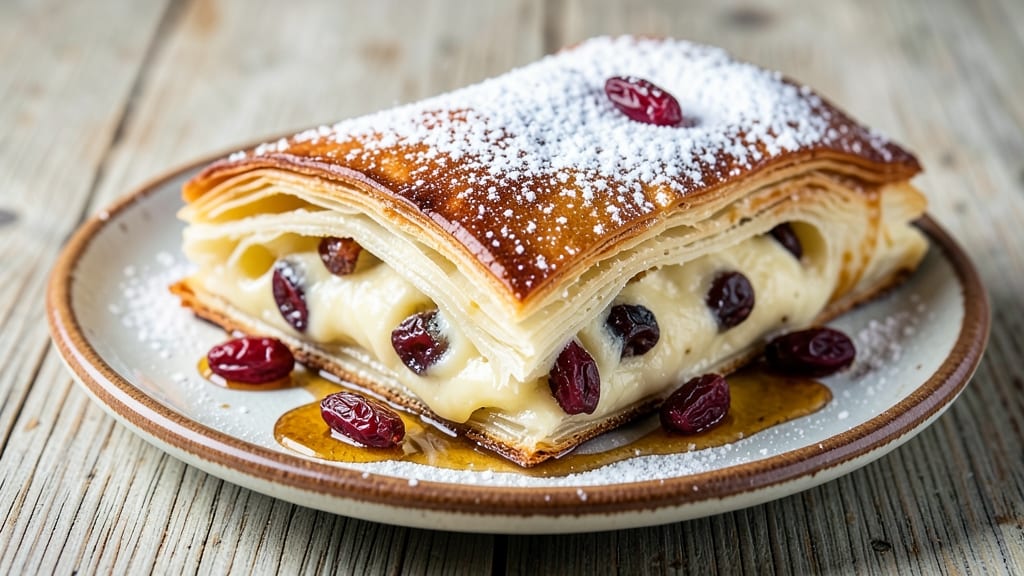
Austrian cheese strudel delivers the perfect balance of delicate, flaky layers and rich, spiced filling that's been a staple in European bakeries for generations. 🌟 The secret lies in stretching the dough paper-thin and rolling it tightly around the warm, vanilla-infused cheese mixture—a technique that transforms simple ingredients into something extraordinary. I've perfected this recipe through years of practice, ensuring every bite reveals that signature crispness and tender center.
The dough requires patience—it must be stretched to near-transparency, which creates those iconic flaky layers when baked. Meanwhile, the filling combines sharp cheddar with warm spices, raisins, and a touch of vanilla that deepens as it bakes.
This isn't just dessert; it's a showstopper that pairs beautifully with whipped cream or a dusting of powdered sugar for that final touch of elegance.
What makes this strudel truly special is how the dough caramelizes into golden perfection while keeping the filling warm and gooey inside. The aroma alone will fill your kitchen with nostalgia, and the contrast of textures—crispy, flaky, and creamy—makes each slice unforgettable.
Once you try this version, you'll understand why it's a beloved classic.
For those who love variations, try swapping the cheese for apples or cherries—just adjust the spices to complement the fruit. Serve warm with vanilla ice cream for the ultimate indulgence. Let's get started on creating your own masterpiece.
Ingredients for austrian cheese strudel
Flour, butter, and cheese transform into a showstopping strudel with just a few key ingredients.
| Ingredient | Amount | Notes |
|---|---|---|
| All-Purpose Flour 🌾 | 3 cups | High-protein for elasticity |
| Unsalted Butter 🧈 | ½ cup | Cold, cubed for dough |
| Granulated Sugar 🍚 | ¼ cup | For dough sweetness |
| Large Eggs 🥚 | 1 whole | Room temperature |
| Sharp Cheddar Cheese 🧀 | 1 ½ lbs | Shredded, aged variety |
| Raisins 🍇 | 1 cup | Plumped in warm water |
| Vanilla Extract 🌿 | 1 tbsp | Pure, high-quality |
| Ground Cinnamon 🌶️ | 1 tbsp | Freshly toasted preferred |
| Ground Nutmeg 🌶️ | ½ tsp | Finely ground |
| Salt 🧂 | ½ tsp | Diamond Crystal preferred |
| Powdered Sugar 🍚 | ¼ cup | For dusting |
| Heavy Whipping Cream 🥛 | 1 cup | For serving |
| Unsalted Butter 🧈 | 2 tbsp | Melted for brushing |
The flour is non-negotiable—King Arthur or Gold Medal brands have the protein content to stretch properly. Cold butter is crucial; it creates those signature flaky layers when baked. For the cheese, aged sharp cheddar (like Jarlsberg or Babybel) melts beautifully and adds that perfect tang. I always buy extra raisins—Trader Joe's has the best quality at a good price. The vanilla extract should be pure, not imitation—Nike or McCormick are reliable brands. Toast your cinnamon and nutmeg lightly in a dry pan before grinding for deeper flavor.
No sharp cheddar? Gruyère or Gouda work in a pinch, but they won't have the same sharpness. Substitute raisins for dried apricots or chopped dates if you prefer fruitier notes. For a nutty twist, fold 1/4 cup chopped walnuts into the filling. The dough requires patience—stretch it thin (near-transparent) for that iconic crispness. If the dough cracks while rolling, just patch it up—it's all part of the charm. For the serving cream, whip it with a pinch of vanilla and dust with powdered sugar for that final touch.
Store the strudel at room temperature for up to 2 hours before serving—it reheats beautifully. Leftovers keep for 3 days in an airtight container, though it's best enjoyed fresh. The dough can be prepped ahead and refrigerated for up to 24 hours before rolling. For a restaurant-worthy presentation, brush the baked strudel with melted butter and dust with powdered sugar right before serving. The aroma alone will have everyone gathering in the kitchen.
Why You'll Love This Recipe
- No-Fuss Dough: I swear, the dough only needs flour, butter, and a little sugar—no yeast, no waiting. You roll it out, fill it, fold it, and bake it. That’s it. Even if you’ve never made strudel before, this dough forgives mistakes.
- Cheddar Magic: Sharp cheddar isn’t just filling—it’s the star. The way it melts into that crispy, flaky crust? Chef’s kiss. Plus, the sugar in the dough balances the sharpness so it’s never overpowering.
- Weeknight or Showstopper: Same recipe, different vibes. Serve it warm with vanilla ice cream for a lazy Sunday dessert, or slice it for a picnic and watch it disappear. Honestly, I’ve even packed it in lunches—people think I’m fancy.
- Leftovers? More Like Leftovers Loved: This strudel reheats like a dream—just a quick warm in the oven or microwave. And because it’s so rich, a single pan bakes enough for seconds (or thirds). My kids ask for it more than pizza.
Step-by-step instructions for Austrian cheese strudel
Here's how to create that signature flaky pastry with a warm, spiced filling—every layer matters.
👨🍳 Step 1: Prepare the Raisin Filling
In a medium bowl, combine the 1 cup raisins with 1 cup warm water and let them soak for 15 minutes. This plumps them up and softens their texture—you want them to be tender but not mushy when folded into the strudel. Drain well using a fine-mesh strainer, pressing gently to remove excess water.
In a separate large bowl, mix the 1.5 lbs shredded sharp cheddar cheese with the drained raisins. Add the 1 tbsp vanilla extract, 1 tbsp ground cinnamon, 0.5 tsp ground nutmeg, and 0.5 tsp salt. Stir until the cheese is evenly coated and the spices are well distributed. The mixture should look crumbly and fragrant—this is your flavor foundation. Real talk: don't skip the cinnamon and nutmeg; they're what give Austrian strudel its signature warmth.
👨🍳 Step 2: Make the Strudel Dough
In a stand mixer fitted with the paddle attachment, combine the 3 cups all-purpose flour and 0.5 tsp salt. Mix on low speed to distribute evenly. Add the 0.5 cup cold cubed unsalted butter and mix on low until the butter is the size of small peas—you want it incorporated but still visible as little chunks. This creates those signature flaky layers.
Add the 1 whole large egg and 0.25 cup granulated sugar, then mix on medium speed for 3-4 minutes until the dough comes together. It should be smooth but slightly tacky—if it's too dry, add 1 tsp water at a time until it holds together when pressed. Wrap the dough tightly in plastic wrap and refrigerate for 30 minutes to firm up. Here's the thing—cold butter is crucial for flaky layers, so don't rush this step.
🥘 Step 3: Roll and Assemble the Strudel
Preheat your oven to 375°F. On a clean work surface lightly dusted with flour, unwrap the chilled dough. Using a rolling pin, roll the dough into a 12x18-inch rectangle, about 1/16-inch thick. This is where precision matters: if it's too thick, the strudel won't bake evenly; too thin, and it'll tear when you fill it.
Spread the cheese-raisin mixture evenly over the rolled dough, leaving about 1-inch border around the edges. This border prevents the filling from leaking out during baking. Starting from the long side closest to you, tightly roll the dough into a log, tucking the edges in as you go. Place the strudel seam-side down on a parchment-lined baking sheet.
🔥 Step 4: Bake to Golden Perfection
Brush the strudel generously with melted 2 tbsp unsalted butter, then dust lightly with 0.25 cup powdered sugar. Bake for 35-40 minutes until the strudel is deep golden brown and the cheese is bubbling. The edges should be crisp, and the filling should be warm through—you'll smell that delicious cinnamon aroma filling your kitchen.
Remove from the oven and let it rest for 10 minutes before slicing. This resting period allows the strudel to set and makes it easier to cut clean slices. Serve warm with 1 cup lightly whipped heavy whipping cream on the side for dipping. Each slice should reveal those beautiful flaky layers and a gooey, spiced cheese center—worth every minute of careful assembly!
Pro Tips For Making Austrian Cheese Strudel
- Roll Thin, Roll Fast: The dough’s magic isn’t in thickness—it’s in speed. Stretch it immediately after resting, while the butter’s still soft but firm. I learned this the hard way: dough left sitting turns gummy, and no amount of rolling fixes that. Work fast, keep the surface lightly floured, and don’t panic if it tears—just patch it.
- Shred Cheese Coarse: Sharp cheddar needs texture to shine. Skip the food processor—your hands (or a box grater) give you jagged edges that melt into gooey pockets. I used to buy pre-shredded cheese, and the filling ended up gluey. Freshly shredded? That’s the difference between "meh" and "wow."
- Butter the Pan: A dry pan = a stuck strudel. Brush the baking sheet with melted butter (not just oil) before laying down the dough. The butter crisps into a golden barrier, and the strudel lifts cleanly. I know, it’s an extra step—but trust me, you’ll curse yourself if you skip it.
- Preheat Like It’s Hot: 375°F isn’t just a number—it’s the line between "golden" and "soggy." Use an oven thermometer to confirm your oven’s accurate, and let it roar for at least 10 minutes before baking. Cold ovens = undercooked edges and a doughy center. No shortcut here.
Common mistakes when making perfect results
Over-Stretching Dough
I’ve seen many first-timers stretch the dough too thin, thinking it’ll make the strudel crispier. But here’s the deal: dough thinner than 1/16-inch will tear when you add the filling, and it won’t hold its shape in the oven.
Aim for 1/8-inch thickness—it’s sturdy enough to support the cheese while still creating those signature flaky layers. If your dough cracks while rolling, just patch it up with a bit of water. 💫
Skipping the Chill
Rushing the 30-minute chill for the dough is a common mistake. Cold butter is key for flaky layers, and skipping this step means the butter will melt too soon, resulting in a dense, cake-like texture instead of crisp, golden layers.
Trust me, the extra time pays off—your strudel will thank you with perfect layers and a buttery aroma. ⏰
Uneven Filling Distribution
Piling all the cheese-raisin filling in the center leaves thin, dry edges while the middle stays gooey. To avoid this, spread the filling evenly across the dough, leaving that 1-inch border all around.
This ensures every bite has that perfect balance of crispy dough and warm, spiced cheese. I like to use a bench scraper to smooth it out neatly. 🧀
Overfilling the Strudel
Stuffing the strudel too full forces the dough to burst open during baking. The filling should be generous but not packed—think of it like wrapping a gift: snug, but not bursting at the seams.
If your strudel looks overstuffed, gently press down on the filling to compress it slightly before rolling. This small adjustment keeps the shape intact and prevents messy leaks. 🌟
Baking at Wrong Temp
Ovens vary, but 375°F is non-negotiable for this recipe. Baking too hot (400°F+) causes the dough to brown too quickly on the outside while the center stays undercooked. Too low (350°F or less) results in a pale, soggy strudel.
Invest in an oven thermometer—it’s a game-changer for consistent results. The strudel should be deep golden brown with bubbling cheese inside. 🔥
Not Resting Before Slicing
Cutting into the strudel immediately after baking means the filling will ooze out, and the layers won’t hold together. Let it rest for 10 full minutes—this lets the filling set slightly and the dough firm up.
Patience here makes all the difference for clean, elegant slices that impress every time. ✨
Nutrition facts
Frequently asked questions
Can I make the strudel dough ahead of time?
The dough can be prepared up to 24 hours in advance and stored in the refrigerator, wrapped tightly in plastic. Just let it sit at room temperature for 30 minutes before rolling to make it more pliable. This is actually helpful if you're short on time—it gives the gluten time to relax for easier stretching.
What's the best cheese substitute if I don't have sharp cheddar?
For similar sharpness and meltiness, try Gruyère or aged Gouda. If you prefer something milder, Emmental works but won't have the same tang. Avoid pre-shredded cheese—the anti-caking agents make it less gooey. For extra richness, mix in 1/4 cup cream cheese with your main cheese.
How do I prevent the strudel from getting soggy?
Keep the cheese filling cool until you're ready to assemble—this prevents premature melting. Also, brush the baked strudel with melted butter and dust with powdered sugar right before serving to create a protective barrier. For storage, keep it in an airtight container at room temperature for up to 2 hours or refrigerate for 3 days.
Can I make this strudel without a stand mixer?
Mix the dough by hand using a fork or your fingers to cut the cold butter into the flour until it resembles coarse crumbs. Then knead gently with your hands until smooth. The key is to keep everything cold—work quickly and don't overmix. A pastry cutter works well for cutting butter into flour if you don't have a mixer.
What's the best way to reheat leftover strudel?
For best results, wrap the strudel slices in aluminum foil and warm in a 350°F oven for 5-7 minutes. This maintains the crispy layers while gently reheating the filling. Avoid microwaving—it makes the dough rubbery. If you have leftovers, store them in an airtight container between layers of parchment paper to prevent drying.