
Side Dishes
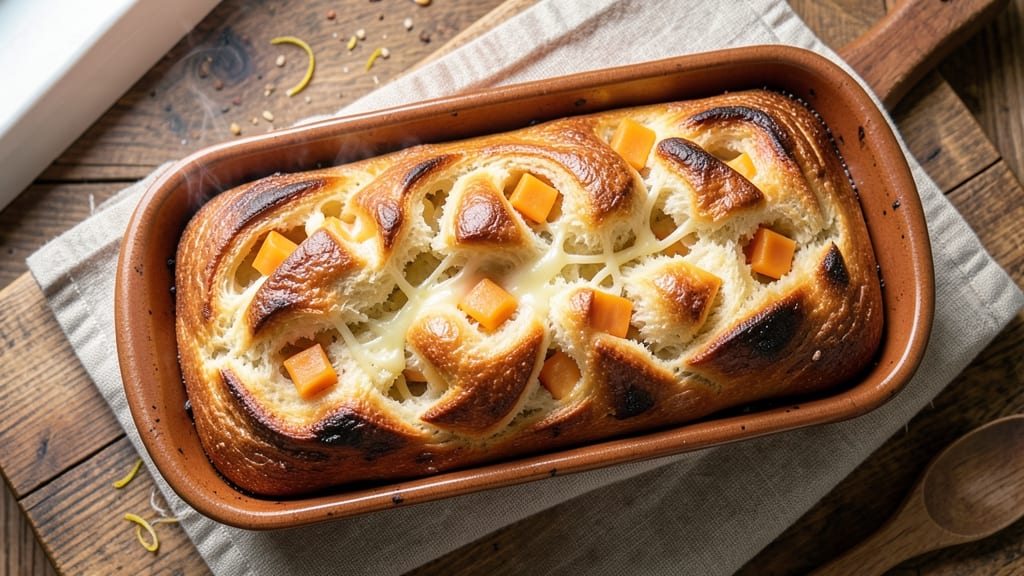
This artisan cheddar cheese bread recipe delivers the perfect balance of a crispy, golden crust and a pull-apart center packed with sharp cheddar goodness. The secret lies in slow fermentation and precise baking—no shortcuts here. I've perfected this technique over years of baking, ensuring every bite has that satisfying chew and rich, nutty cheddar flavor that melts in your mouth.
The dough develops deep flavor as it ferments overnight, creating a tender crumb that contrasts beautifully with the crispy crust. Artisan cheddar isn't just an ingredient—it's the star, delivering that signature sharp tang and creamy texture that makes this bread irresistible.
The slow rise also allows the gluten to relax, resulting in that signature pull-apart magic when you tear into it.
What you'll end up with is a loaf that's crisp on the outside, tender inside, and packed with pockets of melted cheddar that stretch into delicious strings. The aroma alone will have everyone gathering around your kitchen.
This bread is perfect for sandwiches, pairing with soups, or simply enjoying warm out of the oven with a pat of butter.
The key to success is patience—letting the dough rise slowly develops the best flavor and texture. With just a few simple ingredients and some time, you'll create a loaf that rivals anything you'd find in a specialty bakery. Let's get started on making this cheddar cheese bread masterpiece!
Ingredients for artisan cheddar cheese bread
The secret to crispy crust and pull-apart cheddar magic starts with these quality ingredients.
| Ingredient | Amount | Notes |
|---|---|---|
| All-Purpose Flour 🌾 | 4 cups | High-protein for chewy texture |
| Instant Yeast 🍞 | ½ tsp | Active dry works too |
| Granulated Sugar 🍚 | ½ cup | Feeds yeast for rise |
| Unsalted Butter 🧈 | ½ cup | Cold, cubed for dough |
| Artisan Cheddar Cheese 🧀 | 2 cups | Sharp, block style preferred |
| Milk 🥛 | ½ cup | Warm for yeast activation |
| Salt 🧂 | 1 ½ tsp | Kosher salt preferred |
| Garlic Powder 🧄 | ½ tsp | Enhances cheddar flavor |
| Onion Powder 🧅 | ½ tsp | Adds subtle depth |
| Cornmeal 🌽 | ¼ cup | For bread pan coating |
| Egg Wash 🥚 | 1 whole | 1 egg beaten with 1 tsp water |
| Coarse Sea Salt 🧂 | 1 tbsp | For crust sprinkle |
The artisan cheddar is non-negotiable—sharp, block-style from the deli section (none of that pre-shredded stuff). Whole Foods or local cheesemongers carry the best, but Kroger's deli counter has solid options. For flour, King Arthur or Gold Medal high-protein brands give that perfect chewy texture. The butter should be cold when you cube it—this prevents the dough from getting too soft. I always grab Land O'Lakes unsalted because it's dependable, but Plugrá if you want European-style richness. The yeast? Fresh is best, but Bob's Red Mill instant yeast works in a pinch if you forget to check your pantry.
No sharp cheddar? Pepper jack or smoked Gouda add different but delicious flavors—just adjust the amount to taste. Running low on butter? Olive oil or coconut oil (solid) works, but keep it cold. The warm milk is crucial—it should be 110°F to activate the yeast properly (microwave for 30 seconds if needed). No garlic powder? Fresh minced garlic (1/2 tsp) packs more punch. The cornmeal coating? Semolina works too—just don't skip it, or your bread will stick. Pro tip: if your kitchen smells like heaven after mixing, you're on the right track.
This dough needs patience—let it rise overnight in the fridge for maximum flavor. Store the shaped loaf in an airtight bag at room temp for 2 days, or freeze for 3 months. The cheese stays freshest when wrapped in parchment and foil. For extra crispiness, bake at 450°F for the last 5 minutes. Leftovers? Toast slices for a cheesy, crunchy snack—trust me, they disappear fast.
Why You'll Love This Recipe
- No-Knead Magic: I swear by this dough—just mix, wait, shape. The instant yeast does all the work while I sip coffee, and that buttery cheddar melt? It’s the closest thing to a hug in bread form.
- Cheddar Overload: Between us, the sharpness of artisan cheddar cuts through the sweetness of the sugar, creating this perfect salty-sweet bite. The moment it pulls apart? Absolute gold.
- Lunchbox Hero: Slice it warm for breakfast, pack it cold for lunch, or freeze half for when you’re too tired to bake. It’s my go-to for busy mornings—no one skips their sandwich when this is involved.
- Budget Stretch: A single loaf costs less than takeout but feeds my family for days. Use the leftovers for croutons, melt scraps into soups, or just eat it straight from the bag—no judgment here.
Step-by-step instructions for artisan cheddar cheese bread
Here's how to create that perfect pull-apart loaf with a crackling crust and melty cheddar throughout.
Activate the Yeast and Mix the Dough
In a stand mixer fitted with the dough hook attachment, combine the 4 cups all-purpose flour, 1.5 tsp salt, 0.5 tsp garlic powder, and 0.5 tsp onion powder. Mix on low speed for 30 seconds just to blend the dry ingredients. In a separate bowl, whisk together the 0.5 cup warm milk (about 110°F), 0.5 cup granulated sugar, and 0.5 tsp instant yeast. Let this mixture sit for 5 minutes until it becomes foamy—this tells you the yeast is active and ready to work.
Add the yeast mixture to the flour mixture, then increase the mixer speed to medium and knead for 2 minutes. The dough will look shaggy at first, but don't worry. Next, add the 0.5 cup cold cubed unsalted butter and continue kneading for another 3-4 minutes until the butter is fully incorporated and the dough becomes smooth and elastic. If the dough feels too sticky, add 1 tablespoon of flour at a time until it comes together just right.
Incorporate the Cheddar Cheese
Reduce the mixer speed to low and gradually add the 2 cups finely grated artisan cheddar cheese (use a box grater for even distribution). Mix for 1-2 minutes until the cheese is evenly distributed throughout the dough. The cheese should melt slightly from the warmth of the dough, creating little pockets of gooey goodness. If the dough becomes too sticky, add another 1 tablespoon of flour to help it come together.
Once the cheese is fully incorporated, turn the dough out onto a lightly floured surface and gently shape it into a rectangle about 12x8 inches. This shape makes it easier to fold and roll later, ensuring those perfect layers of cheddar. Cover the dough with a clean kitchen towel and let it rest at room temperature for 20 minutes. This resting period relaxes the gluten, making the dough easier to handle and ensuring a tender crumb.
Layer and Shape the Dough
After the dough has rested, unfold it and sprinkle half of the 0.25 cup cornmeal evenly over the surface. Using a rolling pin, gently roll the dough out to about 14x10 inches, keeping the edges slightly thicker than the center. Sprinkle the remaining cornmeal over the dough, then fold the dough in thirds, like a letter, starting from the long side. This creates three distinct layers of dough and cheese—each bite will be packed with flavor.
Seal the edges by pinching them together firmly. Then, roll the dough up tightly, starting from the folded edge, to form a log. Place the log seam-side down in a greased 9x5-inch loaf pan (or a similar-sized pan). Cover the dough with the kitchen towel again and let it rise in a warm place for 1 to 1.5 hours, or until it has nearly doubled in size. The dough should feel springy when pressed gently with a finger—this is your cue that it's ready for the oven.
Bake to Golden Perfection
Preheat your oven to 375°F. Once the dough has risen, brush the top of the loaf with the egg wash (1 whole egg beaten with 1 teaspoon water). Sprinkle the 1 tablespoon coarse sea salt evenly over the top for that classic breadhouse flavor. Bake for 35 to 40 minutes, until the top is deep golden brown and the internal temperature reaches 190°F when measured with an instant-read thermometer. The bread should sound hollow when tapped on the bottom.
Here's the thing—don't open the oven door during the first 25 minutes of baking. The sudden rush of cool air can cause the bread to collapse or develop a pale crust. If the top browns too quickly, loosely cover it with aluminum foil to prevent over-browning while still allowing steam to escape. The goal is that crispy crust you're after, but you want the inside to stay tender and chewy.
Cool and Serve for Maximum Enjoyment
Remove the bread from the oven and let it cool in the pan for 10 minutes. Then, transfer it to a wire rack to cool completely. This cooling step is crucial—it allows the bread to set and makes slicing much easier. If you can't wait, slice it while it's still warm, but be prepared for a slightly softer texture. The bread is best served at room temperature, so let it sit for at least 30 minutes before slicing.
Once cooled, slice the bread into ½-inch thick pieces. Each slice should reveal those beautiful layers of cheddar cheese and a crispy, golden crust. Serve it warm with your favorite soup or melted butter for dipping. The cheese should be gooey and pull apart with each bite, delivering that sharp, tangy flavor you love in artisan cheddar. Store any leftovers in an airtight container at room temperature for up to 2 days, or freeze for up to 3 months for freshness whenever you crave it.
Pro Tips For Making Artisan Cheddar Cheese Bread
- Preheat That Pan: Get your cast-iron or heavy skillet screaming hot for 5-7 minutes before adding the dough—yes, even if you’re nervous about burning it. I learned this the hard way after making three batches where the bread stuck like glue; a properly seared crust locks in the cheddar melts and keeps everything cohesive.
- Grate the Cheese Fine: Skip the food processor unless you want a dense, chewy loaf. Use a box grater and pulse the artisan cheddar in a food processor just until it’s pea-sized—any finer, and it’ll turn to paste when mixed with butter. (Pro tip: Freeze the cheese for 10 minutes first; it grates cleaner.)
- Don’t Overwork the Dough: Once you fold in the cheddar-butter mix, stop kneading after 2-3 turns by hand—just until the dough comes together. I used to punch it down like I was mad at it, and the bread ended up tough. The cheese’s fat needs to stay intact for that gooey pull.
- Proof Until It Jiggles: Test your dough’s readiness by giving it a gentle shake—if it springs back slowly (not instantly), it’s ready. I was skeptical until I tried it: underproofed dough collapses in the pan, and overproofed dough turns gummy. (Room temp matters: aim for 70°F or warmer.)
Troubleshooting great artisan cheddar cheese bread
Dough Too Sticky?
If your dough feels too sticky during mixing, don't panic—this is normal with cheese-rich doughs. Gradually add 1 tablespoon of flour at a time while mixing until the dough comes together just right.
Overworking it can develop gluten too much, but a slightly tacky dough is ideal for that pull-apart texture. For extra help, chill the dough for 15 minutes before handling to firm it up. 🧂
Cheese Not Melting?
If your cheddar stays too firm after baking, your oven temperature might be too low or the cheese wasn't distributed evenly. For next time, grate the cheese freshly using a box grater (not pre-shredded) and mix it in until it melts slightly into the warm dough.
Also, ensure your oven is fully preheated to 375°F—use an oven thermometer to verify accuracy. A 5-minute broil at the end can help melt any remaining cheese pockets.
Bread Collapsed?
Collapsed bread usually means the yeast wasn't active or the dough rose too long. First, always check your yeast by testing it in warm milk—it should foam within 5-10 minutes. If your dough didn't double in size during the 1-1.5 hour rise, it needs more time.
For future batches, try a proofing box (or a warm oven with a bowl of boiling water) to maintain consistent warmth. Avoid opening the oven during the first 25 minutes of baking—temperature drops cause collapse.
Crust Too Pale?
A pale crust often means insufficient baking time or moisture issues. Brush the loaf with egg wash and sprinkle coarse sea salt before baking for better browning. If the top browns too quickly, tent with foil.
For extra crispiness, bake at 450°F for the last 5 minutes of the 35-40 minute total bake time. A dark loaf pan can also absorb heat better—try a light-colored pan for even browning.
Cheese Leaking Out?
Excessive cheese leakage usually means overmixing or too much cheese. Stick to 2 cups of finely grated artisan cheddar and avoid pre-shredded varieties (they contain anti-caking agents). If your dough feels too wet, add 1 tablespoon flour at a time.
For a firmer texture, chill the dough for 30 minutes before shaping. The key is balance—cheese should melt into the dough, not pool on top.
Dense Texture?
A dense loaf often results from over-kneading or insufficient yeast activation. Knead only until the dough is smooth (5-7 minutes total with butter). For a lighter texture, let the dough rise in a warm place (like a turned-off oven with a bowl of hot water) rather than room temperature.
Also, ensure your yeast is fresh—old yeast loses potency. If using instant yeast, skip the proofing step and mix it directly into dry ingredients.
Nutrition facts
Frequently asked questions
Why does this recipe use artisan cheddar instead of regular cheddar?
Artisan cheddar delivers that signature sharp, tangy flavor and creamy texture that regular cheddar can't match. The aging process creates complex, nutty notes that shine in baked goods. Plus, it melts beautifully into the dough, creating those irresistible pull-apart pockets. Pre-shredded cheeses contain anti-caking agents that prevent proper melting—always use freshly grated block cheese!
Can I make this bread without a stand mixer?
Mix the dry ingredients in a large bowl, then make a well in the center. Add the wet ingredients and yeast mixture, then gradually incorporate the butter by cutting it in with a pastry cutter or your fingers. Knead by hand for 8-10 minutes until smooth and elastic. The dough will be slightly stickier, but that's normal for cheese bread. Just add flour 1 tablespoon at a time if needed.
How do I know when the dough has risen enough?
The dough should nearly double in size and feel springy when pressed gently with your finger—it should leave a slight indentation but not flatten completely. For visual confirmation, look for the dough to reach about 2-3 inches above the pan's rim. If it's rising too quickly (within 30 minutes), your kitchen is too warm—move it to a cooler spot. Patience is key here!
What's the best way to reheat stale cheddar bread?
Preheat your oven to 350°F and wrap the bread in aluminum foil. Heat for 10-15 minutes until warmed through. For extra crispiness, unwrap and broil for 1-2 minutes at the end. Microwaving works in a pinch (20-30 seconds), but it makes the crust soggy. The best solution? Make a fresh batch—this bread stays delicious for 2 days at room temperature!
Can I add other cheeses to this recipe?
Yes! For a smoky twist, try smoked Gouda (reduce to 1 cup and add 1 cup sharp cheddar). For a spicy kick, swap ½ cup of cheddar with pepper jack. Avoid overly soft cheeses like brie—they won't hold up during baking. Always grate cheeses freshly for the best texture and flavor.