
Appetizers
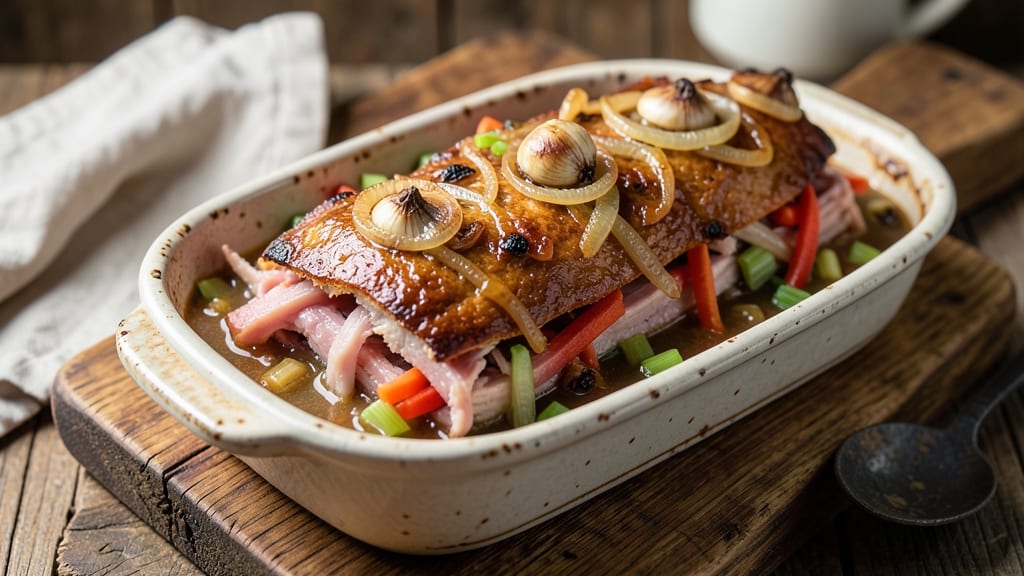
This Amish head cheese recipe transforms humble pork into a rich, spiced loaf that’s been a staple at Amish gatherings for generations. The secret lies in slow simmering pork head and broth until the meat falls apart, then binding it with gelatin for that signature firm-yet-tender texture.
I first made this during a family reunion when we needed a dish that could feed a crowd—it disappeared faster than the mashed potatoes.
What sets traditional Amish head cheese apart is its balance of savory pork, aromatic herbs, and warm spices like cloves and cinnamon. The recipe preserves the pork head’s collagen-rich gelatin naturally, creating a loaf that’s both hearty and elegant.
Unlike modern versions, this method skips shortcuts—simmering for hours develops deep, meaty flavor that store-bought substitutes can’t match.
Once chilled, this loaf slices beautifully into thick, gelatinous pieces that hold their shape when served cold with crackers or crusty bread. The spices infuse every bite with a comforting warmth, making it perfect for holiday spreads or potlucks.
My version includes a touch of mustard for brightness, but the classic approach relies entirely on black pepper and herbs for a purer taste.
The best part? This dish rewards patience—those long hours on the stove pay off in a centerpiece that’s equal parts rustic and refined. Serve it at room temperature with a sharp mustard or apple slices for contrast. Here’s how to make it the traditional way, step by step.
Ingredients for amish head cheese
Traditional Amish flavors meet rustic technique in this hearty pork loaf recipe.
| Ingredient | Amount | Notes |
|---|---|---|
| Pork Head 🐷 | 1 whole | Fresh, cleaned, and trimmed |
| Pork Shoulder 🥩 | 4 lb | Bone-in for flavor |
| Onions 🧅 | 2 whole | Yellow or red, quartered |
| Carrots 🥕 | 3 whole | Medium, peeled and chopped |
| Celery Stalks 🥬 | 4 whole | Trimmed and chopped |
| Garlic Cloves 🧄 | 6 cloves | Fresh, peeled and minced |
| Black Peppercorns 🌶️ | 2 tbsp | Freshly cracked |
| Ground Cloves 🌿 | 1 tsp | Whole cloves ground |
| Ground Cinnamon 🌿 | ½ tsp | Freshly ground preferred |
| Mustard 🌶️ | 1 tbsp | Dijon or whole grain |
| Unsalted Butter 🧈 | 4 tbsp | Cold, cubed |
| Unflavored Gelatin 🧪 | 1 package | 4 oz or 113g |
| Salt 🧂 | 1 ½ tsp | Kosher or sea salt |
| Fresh Thyme 🌿 | 1 tbsp | Leaves only, chopped |
| Fresh Parsley 🌿 | ½ cup | Chopped, for garnish |
The pork head is the star—look for it at specialty butchers or Amish markets where it's often sold whole. If unavailable, pork shoulder works as a substitute, though the texture will differ slightly. Butcher shops often have it pre-cleaned, but if not, remove all fat and membrane carefully. The bone-in pork shoulder adds depth of flavor, so don't trim it completely. For spices, Penzeys or bulk sections at grocery stores offer the freshest ground cloves and cinnamon—critical for that authentic Amish warmth. Fresh herbs make all the difference here, so check the stems for any wilted leaves before purchasing.
No pork head? Pork shoulder or pork neck bones work well, though you may need to add extra gelatin to achieve the same firmness. Substituting ground allspice for cloves or nutmeg for cinnamon keeps the spice profile close. The mustard adds brightness—Dijon is classic, but whole grain gives extra texture. If you're avoiding mustard entirely, 1 tsp apple cider vinegar works as a substitute. For the gelatin, unflavored powdered gelatin can replace the sheet version at a 1:1 ratio, but bloom it properly in cold water first. The onions, carrots, and celery form the aromatic base—don't skip them, even if you're short on time.
This loaf develops best when made a day ahead, allowing flavors to meld fully. Store the unmolded loaf in the fridge for up to 5 days or freeze for 3 months by wrapping tightly in plastic. For serving, slice into 1/2-inch thick pieces—they hold their shape beautifully when chilled. The parsley garnish adds freshness, but it's purely decorative. If you're prepping ahead, make the broth first and refrigerate it separately until ready to use. The gelatin mixture should be completely dissolved before adding to the hot broth to prevent clumping.
Why You'll Love This Recipe
- One-Pot Magic: I swear by this recipe because it’s basically a set-it-and-forget-it kind of meal. The pork head and shoulder simmer together with onions, carrots, and celery until the flavors meld into something rich and unctuous—no flipping pans or fussy steps.
- Deep, Savory Payoff: That first bite? Chef’s kiss. The pork head adds a tender, gelatinous richness, while the shoulder stays juicy and flavorful. The veggies caramelize right in the pot, turning the broth into a velvety, aromatic base that makes every spoonful worth it.
- Potluck Star: Between us, this dish is a crowd-pleaser at gatherings—no one expects it, but everyone loves it. It’s hearty enough for a winter supper but still feels special enough for a holiday table. Plus, it travels well, so you won’t spend the whole event stuck in the kitchen.
- Budget Meal, Big Impact: Honestly, this is one of those recipes where you stretch a few inexpensive cuts of meat into a meal that feels luxurious. The pork head and shoulder are affordable, and the veggies bulk it up without breaking the bank. Leftovers? They’re even better the next day—perfect for quick lunches or sandwiches.
Step-by-step instructions for savory spiced pork and herb loaf
Transforming pork into this rich, spiced loaf requires patience and precision—each step builds layers of flavor.
Prepare and Simmer the Pork Base
In a large stockpot, combine the 1 whole Pork Head and 4 lb Pork Shoulder. Add 2 whole Onions, 3 whole Carrots, 4 whole Celery Stalks, and 6 cloves Garlic Cloves to the pot. Cover everything with 8 cups cold water—just enough to submerge the meat completely. This ensures maximum flavor extraction during the simmer.
Bring to a boil over medium-high heat, then reduce to a gentle simmer for 3-4 hours. Skim off any foam that rises to the surface during the first 30 minutes—this keeps the broth clear. The pork should become fork-tender, and the broth should reduce to about 4 cups, concentrating its rich flavor. If it reduces too quickly, add small amounts of hot water as needed.
Build the Spiced Broth and Season
Once the pork is tender, carefully remove it from the broth and set it aside to cool slightly. Strain the broth through a fine-mesh sieve into a clean pot, pressing down on the solids to extract every last drop of flavor. Return the strained broth to the pot and stir in 2 tbsp Black Peppercorns, 1 tsp Ground Cloves, 0.5 tsp Ground Cinnamon, 1 tbsp Mustard, and 1.5 tsp Salt. Bring to a gentle simmer for 15 minutes to infuse the spices.
While the broth simmers, shred the cooled pork using two forks. Discard any bones or connective tissue. The shredded pork should yield about 6 cups of meat—enough to create a dense, flavorful loaf. Taste the broth and adjust seasoning if needed; the spices should be subtle but present, enhancing the pork’s natural richness.
Prepare the Gelatin and Herb Mixture
In a small bowl, sprinkle 1 package Unflavored Gelatin over 1 cup cold water and let it bloom for 5 minutes. Meanwhile, melt 4 tbsp Unsalted Butter in a small saucepan over low heat, then remove from heat. Stir the bloomed gelatin into the melted butter until fully dissolved. This creates a smooth, flavorful binder that will hold the loaf together.
In a separate bowl, combine the shredded pork with 1 tbsp Fresh Thyme and 0.5 cup Fresh Parsley. Gently fold in the gelatin mixture, ensuring even distribution. The texture should be thick but still pourable—like a dense, herby custard. If the mixture feels too loose, chill it for 10 minutes to firm up slightly before proceeding.
Assemble and Chill the Loaf
Pour the pork mixture into a loaf pan lined with parchment paper, pressing down gently to remove any air bubbles. Smooth the top with a spatula, then cover the pan with plastic wrap, pressing it directly onto the surface to create a smooth, even finish. This step prevents a rough texture and ensures the loaf holds its shape during chilling.
Refrigerate the loaf for at least 4 hours, or until fully set. The cold temperature allows the gelatin to firm up, transforming the mixture into a sliceable, gelatinous loaf. For best results, chill overnight—this deepens the flavors and makes slicing effortless. Once set, the loaf should hold its shape when gently shaken and have a firm, jiggly texture.
Serve and Store for Maximum Freshness
Remove the loaf from the refrigerator and let it sit at room temperature for 10 minutes before slicing. Use a sharp knife to cut ½-inch thick slices, wiping the blade between cuts to ensure clean edges. Serve the loaf chilled or at room temperature, accompanied by mustard or a simple green salad. The gelatin gives it a delicate, wobbling texture that contrasts beautifully with the savory pork and herbs.
For storage, wrap the loaf tightly in plastic wrap and refrigerate for up to 5 days. The flavors continue to meld over time, making it even more delicious after a day or two. If you prefer, you can also freeze the loaf for up to 3 months—thaw it overnight in the refrigerator before serving. Each slice delivers a harmonious blend of spiced pork, herby notes, and the rich depth of the broth.
Pro Tips For Making Amish Head Cheese
- SIMMER LOW AND SLOW: Amish head cheese isn’t a race—aim for 6-8 hours at 170°F (77°C) or until the shoulder shreds easily. I’ve seen people rush it, and the result is tough, dry meat that falls apart when sliced. Patience here makes the difference between a loaf that holds together and one that crumbles like stale bread.
- SKIN THE PORK HEAD: That thick, hairy hide on the pork head? Leave it on. It protects the meat from scorching and adds depth to the flavor. I used to peel it off, thinking it was gross—until I realized how much better the finished loaf tasted when I skipped that step. Just rinse it well first.
- CHOP VEGETABLES UNIFORM: Dice onions, carrots, and celery into ¼-inch pieces—no larger, no smaller. Big chunks stay tough; tiny bits turn to mush. I learned this after serving a batch where the celery was still crunchy while the pork was falling apart. A sharp knife and a little extra time here save headaches later.
- PACK THE MOLD TIGHT: After layering meat and veggies, press down firmly with a spoon or your hand to eliminate air pockets. I used to tap it lightly—big mistake. The loaf would shrink unevenly, leaving gaps that let moisture escape. Pack it like you’re stuffing a sausage casing, and the texture will be firm and cohesive.
Creative variations of these flavors
Classic Amish Spice Blend
The traditional Amish version relies on whole spices for depth—ground cloves and cinnamon are non-negotiable. I grind my own cloves using a mortar and pestle for maximum freshness, but a spice grinder works too.
For a milder touch, reduce cinnamon to ¼ tsp while keeping cloves at 1 tsp. The mustard (Dijon preferred) brightens the rich pork—skip it if you dislike tang, but don’t replace it with vinegar, as it lacks body. 🌿
Vegetarian Adaptation
For a meat-free version, replace pork with shredded king oyster mushrooms (about 6 cups) and 1 cup cooked lentils for texture. Simmer mushrooms in broth with the same veggies for 2 hours until tender.
Use agar-agar (½ tsp dissolved in ¼ cup hot water) instead of gelatin—it sets firmly when chilled. The result is earthy, not pork-like, but holds shape beautifully. 🍄
Smoked Version
Infuse the broth with smoky depth by adding 1 smoked paprika and 2 slices bacon (removed after simmering). For extra smoke, use a smoker box with applewood chips during the 15-minute spice infusion step.
The pork absorbs the aroma, creating a BBQ-inspired twist that’s perfect for summer potlucks. Pair with pickled onions for contrast. 🔥
Herb Variations
Swap thyme for rosemary (½ cup, finely chopped) for a piney note, or add 1 tsp dried sage with the spices. For a garlicky kick, increase garlic to 8 cloves and add 1 tbsp minced fresh sage to the pork mixture.
Fresh herbs should always be added last to preserve their brightness. 🌿
Gluten-Free Gelatin
Traditional gelatin comes from pork, but beef gelatin works for non-pork observant diets. For vegans, agar-agar (½ cup) or carrageenan (1 tsp) replaces gelatin—bloom these in 2 tbsp cold water first.
The texture will be slightly firmer but still sliceable. Adjust liquid in the broth by ½ cup if using plant-based thickeners. 🌱
Holiday Twist
Transform this into a Christmas loaf by adding 1 tsp orange zest and 1 tbsp brandy to the broth. Garnish slices with candied cranberries and toasted pecans for a festive touch.
The citrus cuts through the richness, while the nuts add crunch. Serve with holiday mustard (mix Dijon with 1 tsp honey). ❄️
Nutrition facts
Frequently asked questions
What’s the difference between Amish head cheese and regular head cheese?
Traditional Amish head cheese uses pork head and shoulder simmered with aromatic vegetables and warm spices like cloves and cinnamon, then bound with natural gelatin. Unlike modern versions that may include liver or other fillers, this recipe focuses on tender pork and herbs for a cleaner, more rustic flavor. The gelatin comes from the pork itself, not added powder.
Can I make this without a pork head?
Yes! Substitute with 4-5 lbs pork shoulder or neck bones—just add ½ cup extra gelatin to ensure the loaf holds its shape. The flavor will be slightly different but still rich and satisfying. For a vegetarian version, see the creative variations section for mushroom-based alternatives.
Why does my head cheese turn out too soft?
This usually happens when the gelatin isn’t fully dissolved or the mixture wasn’t chilled long enough. Always bloom gelatin in cold water first, then heat it gently with butter. Chill the loaf for at least 4 hours (overnight is best) and ensure your fridge is cold (38°F or below). If it’s still too soft, add 1 extra package gelatin and re-chill.
How do I serve Amish head cheese at a gathering?
Slice into ½-inch thick pieces and serve chilled on a platter with crusty bread, crackers, or apple slices for contrast. Pair with mustard or a tangy green salad. For a festive touch, garnish with fresh parsley or candied cranberries. It’s especially popular at holiday meals or potlucks—just bring a sharp knife for clean slices!
Can I make this ahead of time?
This loaf tastes even better after 24 hours in the fridge, as flavors meld further. Wrap tightly in plastic and store for up to 5 days. For long-term storage, freeze for 3 months—thaw overnight in the fridge before slicing. The texture holds up beautifully when properly stored.