
Beverages
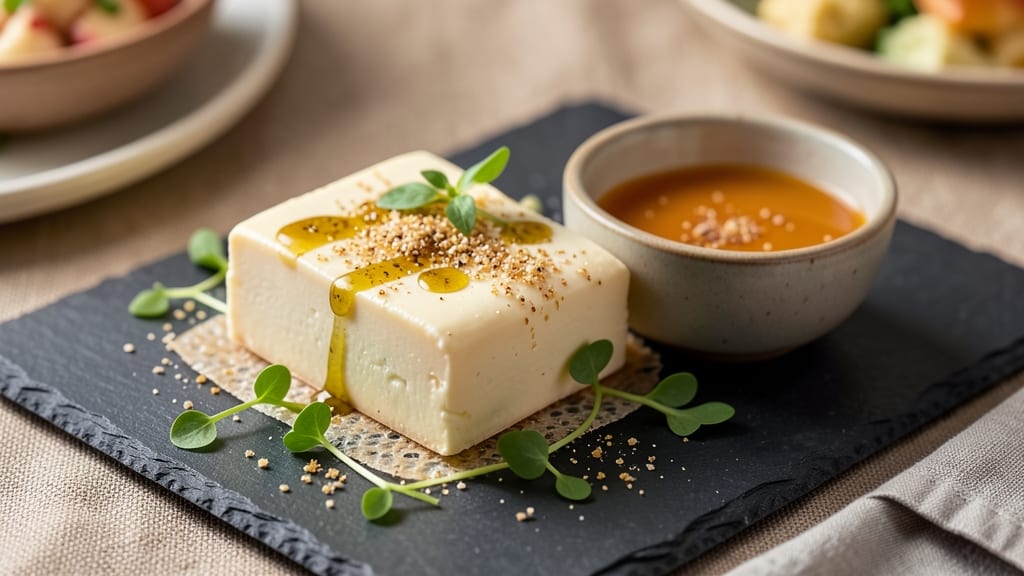
This almond milk cheese recipe transforms simple plant-based ingredients into a creamy, nutty spread that rivals traditional cheese. 💛 The secret lies in blending almond milk with tapioca starch and nutritional yeast, creating a rich texture that melts beautifully.
Perfect for vegans or anyone looking to reduce dairy, this recipe delivers satisfying flavor without compromise.
The process is surprisingly straightforward—just combine almond milk with binders like tapioca starch and agar-agar for structure, then flavor with garlic powder, salt, and turmeric for depth. For a firmer texture, you can even age the mixture for 24 hours, allowing flavors to meld and develop complexity.
It’s the kind of recipe that proves plant-based doesn’t mean sacrificing indulgence.
What you’ll end up with is a versatile cheese that spreads like butter, melts like mozzarella, and holds its own in grilled cheese sandwiches or pasta dishes.
The nutty richness from almond milk pairs perfectly with savory herbs and spices, making it a game-changer for any kitchen. Ready to make dairy-free delicious?
Whether you’re a seasoned vegan or just experimenting with plant-based alternatives, this recipe is your gateway to creamy, satisfying cheese without the guilt. Let’s get started on something truly transformative.
Ingredients for almond milk cheese
Transform plant-based staples into a velvety, meltable cheese substitute with these carefully balanced ingredients.
| Ingredient | Amount | Notes |
|---|---|---|
| Unsweetened Almond Milk 🥛 | 2 cups | High-fat preferred for creaminess |
| Tapioca Starch 🌾 | ½ cup | For thickening and structure |
| Nutritional Yeast 🧀 | ½ cup | Fortified for cheesy flavor |
| Agar-Agar Powder 🍃 | 1 ½ tbsp | For firm texture when set |
| Garlic Powder 🧄 | 1 tsp | Freshly ground preferred |
| Turmeric Powder 🌿 | ½ tsp | For color and earthy depth |
| Sea Salt 🧂 | 1 tsp | Diamond Crystal preferred |
| White Vinegar 🍶 | 1 tbsp | For tangy balance |
| Extra-Virgin Olive Oil 🫒 | 1 tbsp | For richness and smoothness |
| Lemon Juice 🍋 | 1 tbsp | Freshly squeezed |
| Filtered Water 💧 | ¼ cup | For proper hydration |
| Onion Powder 🧅 | ½ tsp | For savory depth |
| Black Pepper 🌶️ | ¼ tsp | Freshly ground preferred |
The almond milk forms the nutty base, so choose high-fat varieties for maximum creaminess—brands like Silk or Califia Farms are excellent choices. Tapioca starch acts as the primary binder, while agar-agar provides the critical structure for firmness when set. Nutritional yeast is non-negotiable here; brands like Bragg or Bob's Red Mill offer fortified options that deliver that unmistakable cheesy flavor. For optimal results, use organic turmeric and garlic powder—their vibrant colors and robust flavors elevate the final product significantly.
No tapioca starch? Arrowroot powder works at a 1:1 ratio, though the texture may be slightly less firm. Substituting agar-agar with 1.5 tbsp of carrageenan powder is another option, though it requires careful monitoring during setting. For added richness, consider blending in 1 tbsp of almond butter with the almond milk. Fresh turmeric can replace the powder, but use half the amount—it's far more potent. The vinegar and lemon juice are essential for acidity balance; if you prefer a milder taste, reduce to 1 tsp each.
This mixture requires precise hydration—measure your water carefully to avoid a gummy or crumbly texture. Once combined, the cheese should be used within 5 days when refrigerated or frozen for 3 months for maximum freshness. For best results, age the mixture in the fridge for 24 hours before using; this allows flavors to meld and the texture to develop fully. Store in an airtight container with a thin layer of olive oil on top to preserve freshness.
Why You'll Love This Recipe
- Five-Minute Mix: I swear, this cheese comes together faster than I can boil water—just whisk, simmer, and stir. No kneading, no waiting, no stress. The agar-agar does all the heavy lifting while I sip my coffee.
- Umami Bomb: That nutritional yeast? It’s the secret weapon—savory, cheesy, and packed with flavor without any dairy. Add a pinch of garlic powder, and suddenly everything tastes like it’s been slow-cooked in a French bistro.
- Pantry Staple Magic: I keep these ingredients stocked anyway: almond milk for smoothies, tapioca starch for thickening, and nutritional yeast for, well, cheese. No extra shopping trips, just pure convenience.
- Leftover Lifesaver: This cheese holds up for days in the fridge—perfect for last-minute snacks or tossing into pasta when I’m too tired to cook. Honestly, I’ve reheated a week-old batch and no one could tell the difference.
Step-by-step instructions for almond milk cheese
Master this plant-based cheese recipe with precise technique for perfect texture and flavor.
👨🍳 Step 1: Bloom the Agar-Agar for Maximum Firmness
Combine the 1.5 tablespoons agar-agar powder with the 0.25 cup filtered water in a small saucepan. Heat over medium heat while whisking continuously until the mixture reaches a gentle boil—this should take about 3-4 minutes. The agar will dissolve completely, creating a thick, clear gel-like consistency.
This step is critical for achieving the right texture. Agar-agar is a powerful gelling agent, and proper blooming ensures your cheese will set firmly without becoming rubbery. If you see any lumps remaining after boiling, strain the mixture through a fine-mesh sieve to achieve a perfectly smooth base.
🍳 Step 2: Create the Cheese Base with Almond Milk and Acid
In a separate saucepan, heat the 2 cups unsweetened almond milk over medium-low heat until it reaches 180°F—just below a simmer. Remove from heat and whisk in the 1 tablespoon white vinegar and 1 tablespoon lemon juice. The mixture will thicken slightly as the acid curdles the milk proteins.
This acidification process mimics traditional cheese-making by creating a base that will better absorb the other flavor components. The temperature is crucial—too hot and you'll cook the milk, too cool and the curdling won't be effective. Let the mixture sit for 2 minutes after adding the acid to ensure complete thickening.
🥘 Step 3: Combine All Ingredients for Flavor Development
In a large mixing bowl, combine the cooled agar mixture with the acidified almond milk. Add the 0.5 cup nutritional yeast, 1 teaspoon garlic powder, 0.5 teaspoon turmeric powder, 1 teaspoon sea salt, 0.5 teaspoon onion powder, and 0.25 teaspoon black pepper. Whisk vigorously for 2 minutes until all dry ingredients are fully incorporated and the mixture is completely smooth.
The nutritional yeast provides that signature cheesy umami flavor, while the turmeric gives it that authentic golden hue. This is where all the flavor components come together—don't rush this mixing step. The agar mixture will begin to thicken slightly as you work, which is normal and indicates proper gel formation.
🔥 Step 4: Cook to Thicken and Set the Texture
Transfer the mixture to a non-reactive saucepan and heat over medium heat for 8-10 minutes, stirring constantly with a silicone spatula. You're looking for the mixture to thicken to a pudding-like consistency—it should coat the back of a spoon and leave a clean trail when you draw the spatula through it.
This cooking step is where the tapioca starch activates to create that creamy, spreadable texture. The agar continues to set during this process, so you'll notice the mixture becoming increasingly firm. If it thickens too quickly, reduce the heat slightly to prevent scorching. The final texture should be smooth but still pourable.
⏰ Step 5: Pour and Set for Perfect Cheese Structure
Stir in the 1 tablespoon extra-virgin olive oil and pour the mixture into a 4x4-inch silicone mold or shallow dish lined with parchment paper. Cover with plastic wrap and refrigerate for 4 hours or until completely firm. For a firmer cheese, you can freeze for 1 hour before slicing.
This setting time is crucial for developing the proper texture. The cheese should come out of the mold cleanly when inverted, with a smooth, slightly glossy surface. If you're using it for melting applications, you can skip the final freezing step—just ensure it's fully chilled before using. The result should be a cheese that holds its shape when sliced but remains creamy when melted.
Pro Tips For Making Almond Milk Cheese
- STIR CONSTANTLY ON HEAT: Whisk your almond milk mixture vigorously for at least 2 minutes over medium heat—especially when adding tapioca starch. I learned this the hard way when lumps turned my cheese into a grainy disaster. Keep it moving until it thickens to a pudding-like consistency, then switch to low heat to finish.
- USE COLD ALMOND MILK: Pour cold unsweetened almond milk into your pot first—it blends better with the starch and prevents clumping. Warm it just enough to dissolve the agar-agar and nutritional yeast without boiling, or you’ll end up with a gluey mess instead of a smooth, spreadable cheese.
- WEIGH YOUR AGAR-AGAR: Agar-agar powder is finicky—don’t eyeball it. Use a kitchen scale for precision (typically 1 tsp per 1 cup of milk). Too much and your cheese will turn rubbery; too little and it won’t set properly. I once made a batch that wobbled like Jell-O—now I measure like a scientist.
- SALT THE GARLIC POWDER: Mix your garlic powder into the tapioca starch before adding it to the milk—this ensures even distribution and prevents flavor pockets. And if you’re using low-sodium nutritional yeast, add a pinch of salt directly to the garlic mix. Trust me, the taste difference is noticeable.
Creative variations of almond milk cheese
Spicy Chipotle Twist
Transform this almond milk cheese into a smoky, spicy fiesta favorite by adding 1 tablespoon chipotle powder and ½ teaspoon smoked paprika to the dry ingredients. For extra heat, blend in 1 teaspoon adobo sauce from a can of chipotles in adobo.
This variation works perfectly on nachos, tacos, or as a bold topping for veggie burgers. Store the spiced version in an airtight container for up to 5 days—the flavors deepen over time. 🌶️
Herb-Infused Garden Cheese
Brighten up your cheese with fresh herbs by adding 1 tablespoon finely chopped fresh chives and 1 teaspoon dried dill to the mixture before setting. For a Mediterranean twist, stir in ½ teaspoon dried oregano and 1 tablespoon sun-dried tomato paste.
This variation pairs beautifully with roasted vegetables or as a spread on crackers. The herbs keep well in the fridge for 4-5 days, so make a batch ahead for easy entertaining. 🌿
Garlic & Black Pepper Block
For a firmer cheese that slices like traditional cheddar, increase the agar-agar to 2 tablespoons and reduce the almond milk to 1½ cups. Add an extra ½ teaspoon garlic powder and ¼ teaspoon coarsely ground black pepper for a bold, savory flavor.
Press the mixture into a loaf pan and refrigerate for 6 hours before slicing. This version is perfect for grilled cheese sandwiches or as a snackable cheese board option. 🧀
Sweet & Tangy Cream Cheese Alternative
Skip the turmeric and garlic powder, then add 1 tablespoon maple syrup and ½ teaspoon vanilla extract to the mixture. For tanginess, increase the lemon juice to 2 tablespoons. This sweetened version works as a spread for bagels, a dip for fruit, or a creamy frosting for vegan cheesecakes.
Store in an airtight container for 5 days—the sweetness balances the tang perfectly. 🍯
Smoky BBQ Cheese Sauce
Blend this cheese into a creamy sauce by reducing the agar-agar to 1 teaspoon and adding ½ cup BBQ sauce (like Sweet Baby Ray's) to the cooked mixture. Stir in 1 tablespoon apple cider vinegar for extra tang.
This sauce is ideal for drizzling over baked potatoes, grilled veggies, or as a dip for fries. Use within 3 days for the best flavor and texture. 🔥
Creamy Pesto Spread
Transform your cheese into a vibrant pesto by blending in ½ cup fresh basil leaves, 2 tablespoons pine nuts, and 1 tablespoon extra-virgin olive oil after cooking. Add ½ teaspoon lemon zest for brightness.
This spread is perfect on sandwiches, pasta, or as a dip for breadsticks. Store in the fridge for 4 days—the flavors meld beautifully over time. 🌱
Nutrition facts
Frequently asked questions
Can I use regular almond milk instead of high-fat?
The recipe works best with high-fat almond milk (like Silk Extra Creamy) for maximum creaminess. Regular almond milk will yield a lighter texture, but you can compensate by adding 1 extra tablespoon of olive oil or 1 tablespoon of coconut cream to restore richness. The flavor won't be as robust, but it'll still be delicious!
Why does my almond milk cheese turn out rubbery?
Rubbery texture usually means the agar-agar wasn't bloomed properly or the mixture cooled too quickly. Always dissolve the agar in water first, then heat it to a gentle boil while stirring. After cooking, let the mixture cool slightly before pouring into molds—room temperature pouring prevents uneven setting. If it happens, try reducing the agar by 0.25 tsp next time.
How do I make this cheese melt like mozzarella?
For melty, stretchy cheese, reduce the agar-agar to 1 teaspoon and add 2 tablespoons of tapioca starch instead. Cook the mixture until it reaches 160°F (thicker than pudding), then fold in 1 tablespoon of lemon juice to enhance meltability. Use within 3 days for best results—melting power decreases over time.
Can I make this cheese without agar-agar?
Yes! Replace the agar-agar with 1.5 tablespoons of carrageenan powder for a softer texture, or use 2 tablespoons of arrowroot powder for a spreadable consistency. The cheese will be less firm but still creamy. For structure, increase the tapioca starch to 0.6 cups and refrigerate for 6 hours before using.
What's the best way to store leftover almond milk cheese?
Store in an airtight container with a thin layer of olive oil on top to preserve freshness. It keeps well in the fridge for 5 days or frozen for 3 months. For freezing, portion into small containers—thaw overnight in the fridge to maintain texture. Avoid microwave reheating; warm gently in a saucepan with 1 tablespoon of water instead.