
Appetizers
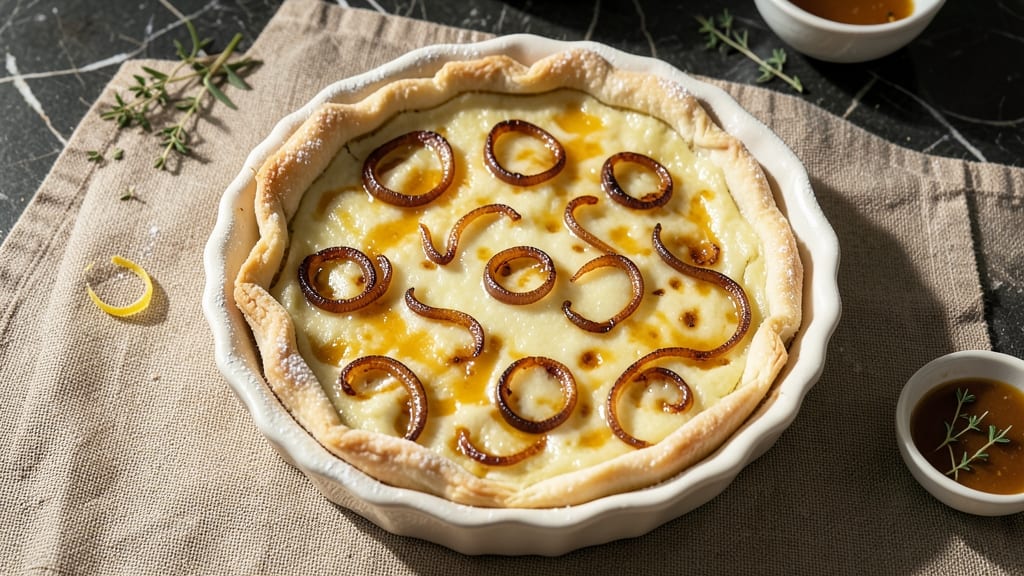
This basic cheese and onion quiche recipe delivers the perfect balance of crispy golden crust and rich, caramelized filling—every bite is a testament to classic French technique with modern convenience.
The secret lies in a properly blind-baked crust that stays flaky and sturdy, while the onions soften into sweet, savory layers that melt into the creamy egg mixture. I’ve perfected this over years of trial and error, ensuring the filling sets just right without becoming rubbery.
What sets this recipe apart is the combination of traditional methods and practical shortcuts—whether you blind-bake your crust from scratch or use a pre-made one, the end result is the same crispy, buttery perfection that makes quiche a standout appetizer or brunch centerpiece.
The filling comes together in minutes, with onions caramelizing slowly to deepen their natural sweetness before being folded into a velvety egg custard.
By the time it emerges from the oven, you’ll have a quiche with a golden, crackling crust that holds its shape, topped with a smooth, slightly puffed custard where the onions peek through like edible jewels.
The aroma alone—warm, buttery, and unmistakably savory—will have everyone asking for seconds. This is the kind of dish that elevates any meal, whether served as an appetizer or a hearty brunch main.
The beauty of this recipe is its versatility—it’s simple enough for weeknight dinners but impressive enough for gatherings, and the technique scales easily for larger crowds.
Once you master the balance of crust and filling, you’ll have a foolproof method for creating quiche that rivals your favorite café’s. Let’s get started on making yours.
Ingredients for basic cheese and onion quiche
Here's what you need to make that perfect golden crust and creamy filling.
| Ingredient | Amount | Notes |
|---|---|---|
| All-Purpose Flour 🌾 | 1 ½ cups | For homemade crust or pre-made |
| Yellow Onions 🧅 | 2 large | Thinly sliced for caramelization |
| Unsalted Butter 🧈 | 1 cup | Cold, cubed for crust |
| Large Eggs 🥚 | 6 whole | Room temperature for custard |
| Heavy Cream 🥛 | 1 cup | Full-fat for richness |
| Shredded Sharp Cheddar 🧀 | 1 ½ cups | Freshly grated preferred |
| Salt 🧂 | 1 ½ tsp | Kosher or sea salt |
| Black Pepper 🌶️ | ½ tsp | Freshly ground preferred |
| Granulated Sugar 🍚 | 1 tbsp | For caramelizing onions |
| Ice Water 💧 | ¼ cup | For pie crust |
| Dried Parsley 🌿 | 1 tbsp | Optional garnish |
The crust is everything—whether you go homemade or pre-made. King Arthur flour is my go-to for homemade crusts, but any all-purpose works. For the butter, grab Plugrá if you can find it—it's European-style and makes the flakiest crust. If you're making the crust from scratch, chill it for at least 30 minutes before rolling. Pre-made crusts? Use whatever's on sale—Pepperidge Farm or Pillsbury both work fine. The onions are key here—yellow or sweet onions caramelize best, but red onions add color if you're feeling fancy.
No sharp cheddar? Gruyère or Swiss will give you that same nutty depth. Fresh herbs are ideal, but dried parsley at half the amount works in a pinch. The heavy cream can be swapped for half-and-half if you're watching calories, though the texture won't be quite as rich. For the onions, don't skip the sugar—it helps them caramelize faster and deeper. If you're in a hurry, pre-sliced onions from the grocery store save time, but fresh-cut always tastes better. And if you're making this ahead, cook the onions fully before assembling the quiche—it keeps better overnight.
This quiche reheats beautifully—just 10 minutes at 350°F covered with foil. Keeps for 3-4 days in the fridge, frozen for up to 3 months. I always make a double batch—one for dinner, one to freeze for lazy mornings. The crust gets crispier when reheated, so it's worth it. For serving, a sprinkle of fresh parsley or extra cheese makes it look restaurant-worthy. And trust me, the first bite after it comes out of the oven? Worth every minute.
Why You'll Love This Recipe
- One-Bowl Wonder: I swear by this recipe when I’m too tired to measure separate crust and filling. Just mix the flour, butter, and onions in a bowl, crack in eggs and cream, and boom—ready to bake. No rolling, no fuss, just golden perfection.
- Caramelized Magic: The onions here aren’t just chopped—they’re slow-cooked until sweet and jammy, right in the crust. That deep, almost candy-like flavor? It turns a simple quiche into something ridiculously satisfying. (Honestly, I’ve been known to eat it straight from the pan.)
- Weeknight Hero: This feeds four but takes less than 10 minutes of active work. Pack it for lunches, reheat slices for dinner, or serve it cold with a salad—it’s the kind of dish that makes me feel like I’ve actually cooked, even when I haven’t.
- Budget Breakthrough: Eggs, onions, butter, flour—these are pantry staples that won’t break the bank. I’ve made this for $3 a serving, and it still tastes like a restaurant quiche. Leftovers? Even better the next day, if you can resist eating the whole thing fresh out of the oven.
Step-by-step instructions for cheese and onion quiche
Here's how to build a quiche with a golden crust and perfectly caramelized onions.
Prepare the Crust
In a large bowl, combine the 1.5 cups all-purpose flour with 1.5 teaspoons salt and cut in the 1 cup cold, cubed unsalted butter using a pastry cutter or your fingers until the mixture resembles coarse crumbs. Add the 1 tablespoon granulated sugar and mix lightly. Gradually sprinkle in the ¼ cup ice water while stirring with a fork until the dough just comes together.
Turn the dough onto a lightly floured surface and knead gently for 30 seconds until smooth. Roll it out to about 12 inches in diameter, then transfer to a 9-inch pie dish. Press the dough evenly into the bottom and up the sides, trimming any excess. Chill the crust in the refrigerator for 30 minutes while you prepare the filling.
Caramelize the Onions
Heat 1 tablespoon of the butter in a large skillet over medium heat. Add the 2 large yellow onions, sliced thinly, and sprinkle with ½ teaspoon salt. Cook for 10-12 minutes, stirring occasionally, until the onions are soft and golden brown. Add the 1 tablespoon granulated sugar and cook for another 5 minutes until deeply caramelized.
Remove the onions from the skillet and set aside. Wipe out the skillet with a paper towel, then melt the remaining 8 tablespoons butter over medium heat. This will be used to create a rich, flavorful base for your custard.
Make the Custard Filling
In a medium bowl, whisk together the 6 whole large eggs, 1 cup heavy cream, 1.5 cups shredded sharp cheddar, ½ teaspoon black pepper, and ½ teaspoon salt until fully combined. The mixture should be smooth and slightly thickened. Fold in the caramelized onions, reserving any juices from the skillet.
Pour the egg mixture into the pre-baked crust, spreading it evenly. The filling should come about ¾ of the way up the sides of the crust. Sprinkle the top with the remaining ½ teaspoon black pepper and 1 tablespoon dried parsley for a touch of freshness.
Bake to Golden Perfection
Preheat your oven to 375°F. Place the quiche on the center rack and bake for 40-45 minutes, until the crust is deep golden brown and the custard is set but still slightly jiggly in the center. If the edges brown too quickly, cover them loosely with aluminum foil.
To check doneness, gently shake the quiche—if it doesn’t jiggle much, it’s ready. Let it cool for 10 minutes before slicing. The crust should be crispy, the onions perfectly caramelized, and the custard creamy with a slight wobble in the center.
Pro Tips For Making Basic Cheese And Onion Quiche
- Pre-Cook the Onions: Sauté them until soft and golden—about 10 minutes on medium-low—then drain all the liquid. I learned this the hard way: soggy onions turn your quiche filling into a watery mess, and nobody wants that.
- Blind-Bake the Crust: Sprinkle dried beans or pie weights on the crust before baking, then remove them after 10 minutes. This guarantees a crisp bottom without waiting for the filling to set—especially useful if you’re impatient like me.
- Whisk the Eggs Cold: Crack the eggs straight from the fridge into a bowl with the heavy cream, then whisk vigorously. Cold eggs blend smoother and prevent curdling, which saves you from scraping gunk later.
- Salt the Butter Hard: Use all the salt in the unsalted butter (about 1 tsp per ½ cup) right in the crust dough. Skimping here means your quiche tastes bland, and nobody notices the extra effort—just the result.
Common mistakes when making perfect results
Overfilling the Crust
One of the most common mistakes is overfilling the crust, which can cause the custard to overflow or create a soggy bottom. The filling should only reach about ¾ of the way up the sides—any higher and it risks spilling over during baking.
I’ve learned this the hard way when my first attempt ended up with custard dripping down the oven door! 🧈
Skipping Blind Baking
If you’re making a homemade crust, blind baking is non-negotiable. Without it, the crust will absorb moisture from the filling and turn soggy instead of crispy. I recommend pre-baking the crust for 10-12 minutes at 375°F with pie weights or dried beans before adding the filling.
This step ensures a sturdy base that holds up to the custard’s weight.
Undercooking the Onions
Rushed caramelization leads to bland onions that won’t add the sweet depth this quiche needs. Cook them for at least 15 minutes until deeply golden and syrupy. Skimping here means your quiche will taste more like a cheese omelet than a rich, savory dish.
I like to add a pinch of sugar in the last few minutes to boost caramelization even further.
Not Preheating the Oven
A cold oven is the enemy of even baking. Always preheat to 375°F for at least 15 minutes before sliding in your quiche. I’ve seen quiches with uneven tops—one side undercooked, the other burnt—because the oven wasn’t hot enough.
Use an oven thermometer to confirm accuracy if your oven runs hot or cold.
Overmixing the Eggs
Whisking the eggs too vigorously incorporates too much air, which can cause the custard to puff up unevenly or even overflow. Gently combine the eggs, cream, and cheese just until smooth—no need for vigorous whisking.
Overmixing also creates a grainy texture, which ruins the silky finish. Think "light and airy," not "frothy."
Opening the Oven Too Soon
Peeking at your quiche too early disrupts the baking process and can cause the custard to sink or develop a skin. Wait until 40-45 minutes have passed before checking for doneness.
If you’re worried, use the "gentle shake" test: if it barely jiggles, it’s ready. Patience here ensures a smooth, golden top every time. 🌟
Nutrition facts
Frequently asked questions
Can I use a pre-made crust instead of making it from scratch?
Pre-made crusts save time without sacrificing flavor. Choose a high-quality brand like Pepperidge Farm or Pillsbury, and follow the package instructions to blind-bake it for 10-12 minutes at 375°F before adding your filling. Just avoid crusts with too much oil—they can make the final quiche greasy.
How do I know when the custard is fully cooked?
The custard is done when it’s set but still has a slight jiggle in the center—like 2-3 minutes of gentle shaking doesn’t move it much. The edges should be golden brown, and a toothpick inserted should come out clean (or with just a few moist crumbs). Overbaking makes it rubbery, so trust the 40-45 minute guideline.
Can I make this quiche ahead of time?
Yes! Assemble the quiche (without baking) up to 24 hours ahead, then refrigerate. Bake straight from the fridge, adding 5-10 minutes to the baking time. For leftovers, store in an airtight container for 3-4 days. To reheat, cover with foil and warm at 350°F for 10 minutes—the crust gets crispier this way!
What can I substitute for sharp cheddar?
Gruyère or Swiss work beautifully for a nutty depth, while Gouda adds a mild sweetness. For a vegetarian option, swap in 1 cup crumbled feta or ½ cup cream cheese blended into the custard. Just reduce the heavy cream by ¼ cup to balance moisture. Avoid pre-shredded cheese—it has anti-caking agents that make the filling grainy.
Why did my crust turn soggy?
Soggy crusts usually mean one of two things: either you skipped blind-baking (critical for homemade crusts!) or the filling was too wet. The custard should coat the back of a spoon but not drip. If using a pre-made crust, ensure it’s fully pre-baked. For extra insurance, sprinkle the bottom with ½ teaspoon cornstarch before adding filling.